


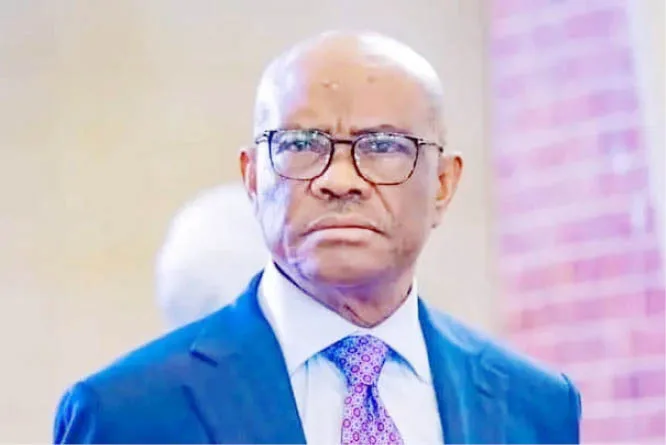
2027: Wike and the Challenge of Delivering FCT for Tinubu
By Matthew Eloyi
For Nyesom Wike, Minister of the Federal Capital Territory (FCT), the 2027 presidential election presents another opportunity to demonstrate his political influence, this time in a territory that has become increasingly important in Nigeria’s electoral calculations.
Having thrown his weight behind President Bola Tinubu’s re-election, Wike appears determined to make Abuja a stronghold of the ruling All Progressives Congress (APC). But delivering such an outcome may require more than political alliances, campaign structures and declarations of confidence.
The minister’s recent directive to the 466-member APC presidential campaign council and Rainbow Coalition in the FCT offers a glimpse into the scale of the political task ahead.
At the inauguration of the campaign council on Monday, Wike charged members to ensure that opposition parties, particularly the African Democratic Congress (ADC) and Nigeria Democratic Congress (NDC), do not secure up to 25 per cent of the votes in the territory.
“We’re not talking about winning; we’re talking about winning overwhelmingly,” he said.
“We must not allow them to go with 25 percent. They don’t deserve to get 25 percent.”
The statement underscores Wike’s determination to deliver an overwhelming victory for Tinubu, rather than settle for a narrow electoral advantage. It also suggests that the minister understands the importance of the FCT in the broader calculations surrounding the 2027 presidential contest.
Unlike many states where political loyalties are often influenced by established party structures and longstanding regional affiliations, the FCT presents a more complicated electoral environment. Its population comprises Nigerians from virtually every part of the country, with different political interests, expectations and voting preferences.
This diversity makes Abuja a particularly interesting political battleground. The minister must contend not only with established party structures but also with the competing interests of indigenous communities, residents of satellite towns, civil servants, business owners, professionals and the large population of non-indigenous Nigerians.
Wike’s strategy appears to rest on two major pillars: showcasing the achievements of the Tinubu administration in the FCT and consolidating political support through alliances that cut across party lines.
In defending the administration’s record, the minister highlighted several institutional and infrastructural changes introduced since Tinubu assumed office in May 2023.
Among them, he cited the appointment of an FCT representative to the Federal Executive Council for the first time since Abuja’s creation in 1976, the establishment of dedicated mandate secretariats for women and youth, and the creation of the FCT Civil Service Commission.
He also pointed to the appointment of the first Head of Service for the territory and the opportunity created for career civil servants to rise to the rank of permanent secretary.
On financial administration, Wike said the removal of the FCT from the Treasury Single Account had enabled the territory to access financial markets directly to fund capital projects.
He further claimed that more than 20,000 Certificates of Occupancy had been signed within three years, compared with approximately 8,000 issued between 1999 and 2023.
The minister also listed road construction, new police stations, educational infrastructure and the elevation of traditional rulers among the administration’s achievements. The proposed University of Science and Technology in Abaji was another project he highlighted.
These initiatives will likely form a significant part of the APC’s campaign message in the FCT. However, the political value of such achievements will ultimately depend on how residents experience their impact in their daily lives.
For residents of satellite towns and rural communities, for instance, the condition of roads, access to healthcare, educational opportunities, transportation and other essential services may carry greater weight than administrative reforms. Similarly, civil servants and property owners may assess the administration based on improvements in their respective areas of concern.
Wike’s ability to translate the administration’s record into electoral support will therefore be an important measure of his political strategy.
Another significant component is the Rainbow Coalition, which brings together political actors from the APC and PDP in the FCT to support Tinubu’s re-election and APC candidates for the National Assembly.
The minister commended the leadership of both parties for setting aside their differences to work together, describing the arrangement as a model that other states could emulate.
The coalition has identified Philip Aduda as its candidate for the FCT senatorial seat, John Gabaya for the AMAC/Bwari Federal Constituency and Danladi Chiya for the Abuja South Federal Constituency.
PDP FCT chairman, Mohammed Dogara, also praised Wike for bringing different political camps together, describing his leadership as impartial.
The alliance is particularly interesting given the history of political rivalry between the APC and PDP. Its success will depend on whether the agreement among political leaders can translate into genuine cooperation at the grassroots, where party members and supporters ultimately determine electoral outcomes.
But Wike’s political challenge extends beyond managing the Rainbow Coalition.
The emergence of the ADC as a major opposition platform, with former Vice-President Atiku Abubakar as its presidential candidate and former Rivers State governor Rotimi Amaechi as his running mate, introduces another dimension to the contest.
Wike has already questioned the opposition’s claims of popularity in northern Nigeria and the FCT. He also challenged Atiku over his record during his tenure as vice-president between 1999 and 2007, particularly regarding foundational policy reforms in Abuja.
His challenge to Amaechi to test his political popularity in Rivers State further illustrates the minister’s determination to turn the election into a contest of political records and influence.
Nevertheless, the APC cannot afford to underestimate the importance of grassroots mobilisation. Establishing campaign committees across the six area councils, as Wike directed, is only the beginning. The real task will be reaching voters in communities, markets, traditional institutions and residents’ associations with a message that resonates with their concerns.
The FCT has six area councils: Abaji, Abuja Municipal Area Council, Bwari, Gwagwalada, Kuje and Kwali. Each has its own political dynamics, community interests and electoral considerations. A strategy that works in the urban districts of Abuja may not necessarily produce the same results in the rural communities.
This is why Wike’s directive to campaign among indigenes, non-indigenous associations, traditional rulers, traders and residents of satellite towns will be crucial to the coalition’s efforts.
Ultimately, the minister’s political influence will be tested by his ability to harmonise different interests, sustain the coalition and convince residents that the Tinubu administration deserves another mandate.
Wike has demonstrated considerable enthusiasm for the President’s re-election campaign, but the 2027 contest will require more than enthusiasm and political declarations. It will demand effective organisation, sustained engagement and a convincing presentation of the administration’s achievements.
For a minister who has publicly assumed responsibility for delivering the FCT, the stakes are considerable. The outcome will not only shape the APC’s fortunes in Abuja but also provide an important measure of Wike’s influence in the nation’s evolving political landscape.
The challenge, therefore, is not simply to inaugurate a large campaign council or assemble politicians from different parties. It is to convert political structures into popular support and translate the administration’s record into votes when Abuja residents eventually head to the polls.
