


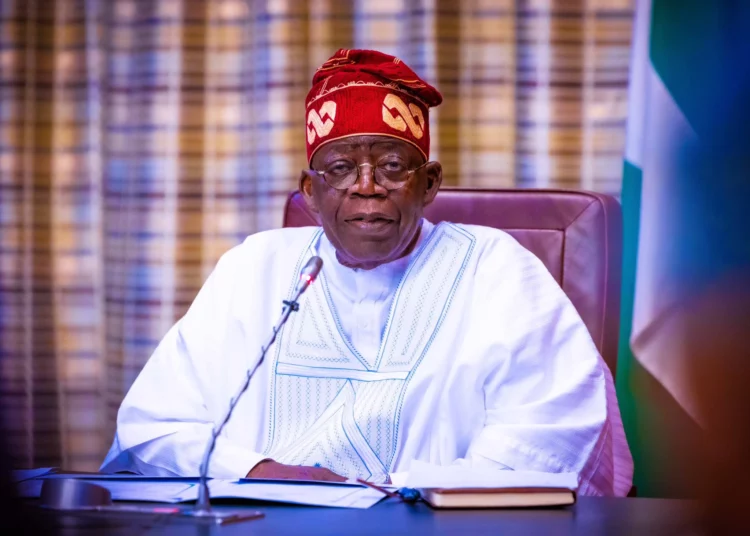
Why Continuity Is What Nigeria Needs Now
By Professor Ojo Emmanuel Ademola
The Historical Pattern of Major Reforms
History teaches a simple but powerful lesson: nations are transformed not merely by introducing reforms but by allowing those reforms to mature. The greatest developmental successes across the world have emerged from sustained commitment to clear strategic objectives over extended periods.
Following the devastation of the Second World War, Britain did not rebuild through constant reversals of policy. The foundations of the modern welfare state, housing programmes, industrial reconstruction, and social safety systems were maintained across successive administrations. Likewise, Singapore’s extraordinary transformation from a resource-poor island into a global financial and technological hub was not accomplished through short-term experimentation. It was built through decades of policy consistency under a leadership that prioritised long-term institutional development over political expediency.
READ ALSO: Mene Zaasi Nor: Understanding Buratai’s New Ogoni Title
China’s rise from widespread poverty to becoming the world’s second-largest economy also reflects the power of continuity. Economic reforms initiated under Deng Xiaoping were sustained, improved, and expanded over several decades. Each administration built upon the foundations laid by its predecessor. Rather than dismantling previous efforts, policymakers focused on strengthening and refining them.
Nigeria’s own reform history supports the same conclusion. The telecommunications revolution that connected millions of Nigerians was not achieved overnight. The banking sector reforms that enhanced financial stability required years of implementation and adjustment. Pension reforms similarly took time to earn public confidence and deliver measurable benefits. These successes became possible only because the underlying policies survived beyond a single political cycle.
The lesson is unmistakable: transformation belongs to nations that complete the journey, not those that repeatedly restart it.
Nigeria’s Development Challenge: The Habit of Interrupted Transitions
One of Nigeria’s recurring governance challenges has been the tendency for incoming administrations to discontinue, review extensively, or completely reverse policies initiated by their predecessors. This pattern has imposed enormous economic, institutional, and developmental costs on the nation.
Projects are abandoned midway. Strategic plans are redesigned before implementation is completed. Agencies spend years reviewing recommendations while pressing national challenges remain unresolved. New administrations often seek immediate political differentiation rather than institutional continuity.
The result is a cycle of perpetual beginnings without sufficient endings.
Roads remain unfinished. Industrial zones fail to achieve their intended objectives. Educational reforms lose momentum. Public confidence diminishes because citizens rarely experience the full benefits of policies before another transition alters direction.
A nation cannot progress efficiently when every administration begins by reinventing the wheel. Sustainable development requires that worthwhile initiatives be strengthened rather than discarded simply because political leadership changes.
Tinubu’s Political Antecedents Reveal a Consistent Pattern
President Bola Ahmed Tinubu’s political trajectory illustrates the value of continuity in governance. As Governor of Lagos State from 1999 to 2007, he pursued structural reforms in revenue generation, tax administration, urban development, public-private partnerships, and institutional strengthening instead of focusing on short-term political gains.
Many of these reforms did not yield immediate results. Their full impact emerged over time as successive administrations consolidated rather than abandoned the foundations already laid. This continuity contributed significantly to Lagos’ emergence as Nigeria’s commercial hub and one of Africa’s leading sub-national economies.
The Lagos experience highlights a governance philosophy centred on building enduring institutions rather than temporary programmes. For many observers, it reflects Tinubu’s longstanding preference for reforms whose benefits grow progressively as systems mature and implementation deepens.
Understanding the Nature of Structural Reforms
Many of the reforms currently being implemented at the federal level are structural in nature, designed to address deep-rooted economic distortions rather than deliver immediate political gains. Measures such as fuel subsidy removal, foreign exchange reforms, tax modernisation, and public finance restructuring aim to improve efficiency, attract investment, strengthen institutions, and promote sustainable growth.
Such reforms often come with short-term difficulties. As economies adjust, prices may rise, sectors may experience transitional challenges, and households may face temporary pressures. However, this pattern is not unique to Nigeria. Across the world, major economic reforms have typically involved initial sacrifices before yielding broader benefits.
For this reason, structural reforms should not be judged solely by their early challenges. The more important test is whether they address the fundamental weaknesses that have long constrained national development and position the economy for stronger long-term growth and stability.
The Economic Logic of Continuity
Investors thrive on predictability. Both local and international investors commit capital where policies are stable and long-term planning is possible. Major investments in infrastructure, manufacturing, energy, and digital transformation depend on confidence that government priorities will remain consistent.
Policy reversals create uncertainty, discourage investment, delay expansion, and slow economic growth. Continuity, therefore, carries substantial economic value. It reassures investors, strengthens policy credibility, and enables institutions to focus on implementation rather than constant restructuring.
For a nation seeking industrial growth, infrastructure expansion, energy security, and greater competitiveness, continuity is not merely a political convenience. It is a strategic economic advantage.
The Cost of Starting Over
The economic and developmental costs of starting over are substantial.
Every abandoned reform represents invested resources that fail to generate their anticipated returns. Every discontinued infrastructure initiative creates efficiency losses. Every major policy reversal requires fresh reviews, new planning frameworks, revised implementation structures, and additional administrative expenditures.
More critically, restarting delays progress.
A nation that consistently resets its development journey spends valuable years revisiting questions that should already have been resolved.
Nigeria can ill afford another cycle of interrupted transitions. The country’s demographic growth, unemployment pressures, security challenges, infrastructure gaps, educational needs, and industrial ambitions require accelerated progress rather than periodic resets.
The coming years will be particularly important. Decisions taken today regarding energy systems, transportation networks, digital infrastructure, educational reform, industrial development, and institutional strengthening will shape economic outcomes for future generations.
Such ambitions demand sustained commitment.
Continuity Does Not Mean Blind Loyalty
Supporting continuity should never be confused with endorsing uncritical loyalty to any political leader.
Democracy requires accountability, transparency, constructive criticism, and continuous evaluation of government performance. Citizens retain the responsibility to demand results, challenge shortcomings, and insist upon improved governance.
However, there is a crucial distinction between demanding better implementation and abandoning reform altogether.
Mature democracies recognise that reforms should be evaluated based upon their long-term effectiveness rather than their immediate popularity. Where policies possess strategic merit, refinement is often preferable to reversal.
Continuity should therefore be viewed not as a political endorsement of personality but as a developmental commitment to national progress.
The question is not whether leaders should be held accountable. They absolutely should.
The question is whether potentially transformative reforms should be prematurely terminated before their outcomes can be fully assessed.
Why Continuity Is a Strategic Necessity for Nigeria
Nigeria stands at a pivotal moment in its national development journey.
The country seeks expanded energy access, stronger industrial production, modern digital infrastructure, quality education, effective healthcare delivery, improved security architecture, enhanced agricultural productivity, and globally competitive institutions.
Achieving these objectives will require more than visionary policies. It will require sustained implementation.
Nations develop when strategies are executed consistently over time. Roads are completed through continuity. Institutions mature through continuity. Economic transitions succeed through continuity. National competitiveness strengthens through continuity.
In many respects, Nigeria’s greatest challenge is no longer identifying what needs to be done. The challenge is maintaining sufficient consistency to complete what has already been started.
For this reason, continuity increasingly emerges not merely as a political consideration but as an economic and developmental necessity.
Conclusion
The strongest argument for continuity is simple: meaningful national transformation requires time. Economic restructuring, institutional strengthening, and sustainable development are not achieved within a single political cycle.
President Bola Ahmed Tinubu’s political trajectory reflects a consistent pattern of laying foundations, consolidating reforms, and delivering greater results as those reforms mature. The Lagos experience remains a powerful example of how patient institution-building can generate lasting dividends.
Nigeria now stands between sustained reform and renewed experimentation. History repeatedly shows that nations advance when worthwhile reforms are completed rather than interrupted. If Nigeria seeks lasting prosperity, stronger institutions, and enhanced competitiveness, continuity should be viewed not merely as a political choice, but as a strategic national necessity.
Professor ojo Emmanuel Ademola is the first African Professor of Cybersecurity and Information Technology Management, Global Education Advocate, Chartered Manager, UK Digital Journalist, Strategic Advisor & Prophetic Mobiliser for National Transformation, public intellectual, and African governance thinker and General Evangelist of CAC Nigeria and Overseas
