

Olu of Warri Calls for Tolerance, Unity to Drive Africa’s Peace, Shared Prosperity
Olu of Warri Calls for Tolerance, Unity to Drive Africa’s Peace, Shared Prosperity

Olu of Warri Calls for Tolerance, Unity to Drive Africa’s Peace, Shared Prosperity
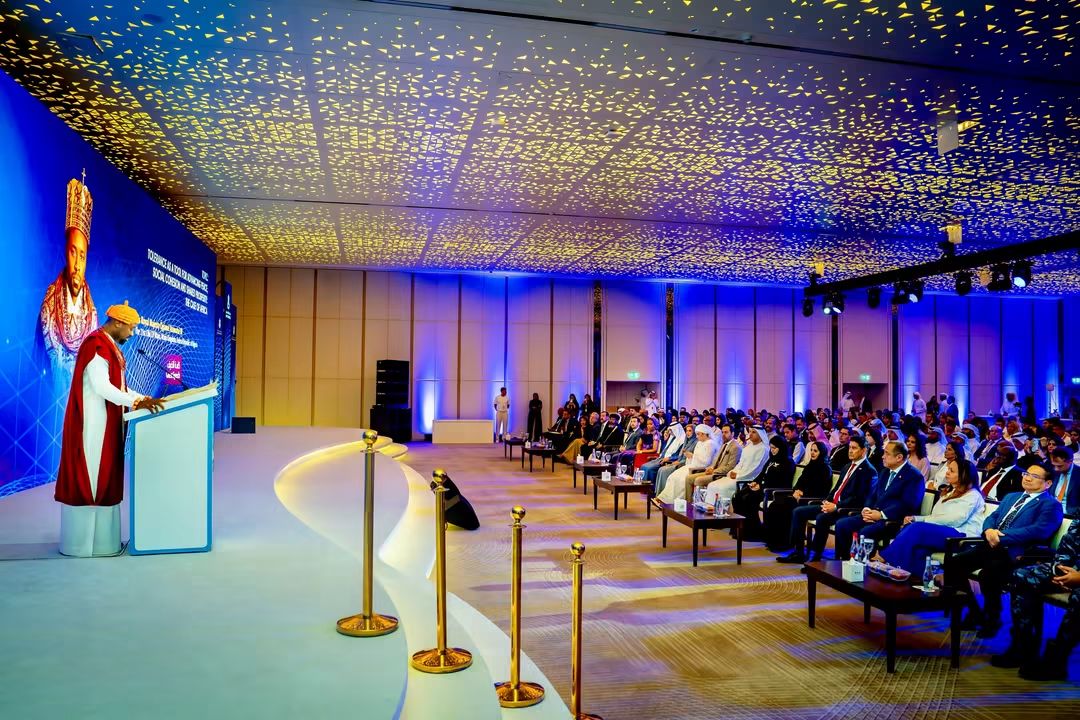
The Olu of Warri, His Majesty Ogiame Atuwatse III, has called for greater tolerance, social cohesion and collaboration among Africa’s diverse communities, saying the continent’s diversity should be used as a strength rather than an instrument of division.
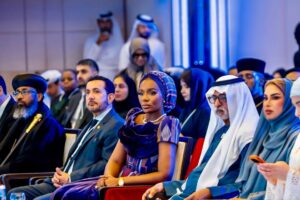
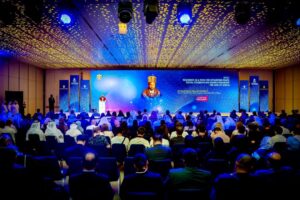
The monarch made the call while delivering a speech titled “Tolerance as a Tool for Advancing Peace, Social Cohesion and Shared Prosperity: The Case of Africa” at the AIM Congress 2026, themed “World Governments as Incubators for Tolerance and Shared Growth.”
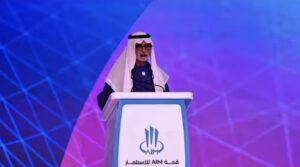
Speaking to dignitaries, including the UAE Minister of Tolerance and Coexistence, Sheikh Nahayan Mubarak Al Nahyan, Ogiame Atuwatse III described himself as the 21st Olu of Warri and custodian of more than five centuries of Warri Kingdom history.
He said his experience on the throne had taught him that no kingdom could survive by standing alone, noting that the history of the Warri Kingdom itself demonstrated the value of engaging with other cultures without losing one’s identity.
The Olu recalled that more than four centuries ago, a prince of his royal house travelled to Coimbra, Portugal, to study and returned to Warri with new knowledge, relationships and a broader worldview.
According to him, the prince returned fully Itsekiri, demonstrating that exposure to other cultures could strengthen rather than diminish identity.
Reflecting on his five years on the throne, the monarch said he recognised early that lasting peace with neighbouring communities could not be achieved without first strengthening unity within his own kingdom.
He therefore introduced Ghigho Aghofen, meaning “Palace Watch,” under which different Itsekiri communities take turns every three months to keep watch over the royal palace.
The communities bring their music, dances, traditions and leadership structures to the palace, while the Olu personally visits their communities to understand their challenges and develop ways of addressing them.
He explained that the initiative was designed to reconnect communities that had, in some cases, been disconnected from the palace for years or even decades.
“What sounds like a ceremony — is governance,” the monarch said.
Having strengthened cohesion within the Itsekiri community, the Olu said the palace expanded its approach to the wider Warri Kingdom through the Warri Unity Games, bringing together major ethnic groups in the kingdom to participate in football, paintball, tug-of-war and other activities.
He also disclosed that the palace had prohibited the use of derogatory terms against other ethnic groups, describing such expressions as “wounds disguised as speech” that had been carried across generations of conflict.
Highlighting the impact of the Unity Games, Ogiame Atuwatse III recalled a paintball competition involving communities with a history of conflict.
He said the activity allowed participants to channel their competitive instincts in a controlled environment, with the Ijaw emerging winners, the Urhobo finishing second and the Itsekiri coming third.
According to him, the outcome sent a powerful message to the communities that unity was more important than ethnic rivalry.
“The king’s tribe finished third at the king’s own games. And everyone celebrated together,” he said.
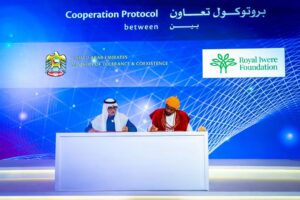
The monarch also highlighted the work of the Royal Iwere Foundation, the human capital development arm of the Warri Kingdom monarchy, saying its initiatives in education, healthcare, skills development, climate action and women’s empowerment had reached more than 250,000 people across Nigeria.
He said sustainable peace could not depend solely on agreements, stressing that communities must also have access to education, healthcare, skills and opportunities that enable people to participate meaningfully in society.
Turning to the wider African continent, the Olu noted that Africa’s more than 3,000 ethnic groups across 54 countries represent a significant source of strength, but warned that diversity without collaboration could instead breed suspicion and division.
“Diversity without the architecture of collaboration produces suspicion, not cohesion,” he said.
He cited the Elevate Africa initiative as an example of efforts to build stronger continental collaboration, noting that 22 fellows from 18 African countries were working across areas including artificial intelligence, agriculture, healthcare, women’s empowerment, media and communications.
He particularly highlighted the collaboration between two fellows, Maya from Tunisia and Grace from Ghana, who worked to further develop an AI tool designed to help women detect cervical cancer at an early stage.
The initiative, he said, had subsequently expanded to Rwanda, reaching more than 2,000 women at the grassroots level.
“We are not asking Africans to think alike. We are creating the conditions for Africans to think together,” he said.
The Olu commended the United Arab Emirates for institutionalising tolerance and coexistence through government structures, describing the UAE’s approach as a model for nations seeking to build peaceful and inclusive societies.
He said the UAE’s experience demonstrated that tolerance and coexistence could be translated from ideals into practical governance and long-term national policy.
Ogiame Atuwatse III stressed that Africa also had centuries of experience and indigenous knowledge in managing diversity, saying the continent now needed stronger platforms, partnerships and institutions to share those lessons and build upon them.
He concluded by emphasising the connection between coexistence and development, saying: “A people who can live together can build together. And a people who can build together can change the world.”
Olu of Warri Calls for Tolerance, Unity to Drive Africa’s Peace, Shared Prosperity
