

Dangote Refinery Opens Landmark ₦2.15tn IPO to Public Investors
Offer creates opportunity for Nigerians and African and international investors to take stakes in one of the continent’s biggest industrial projects

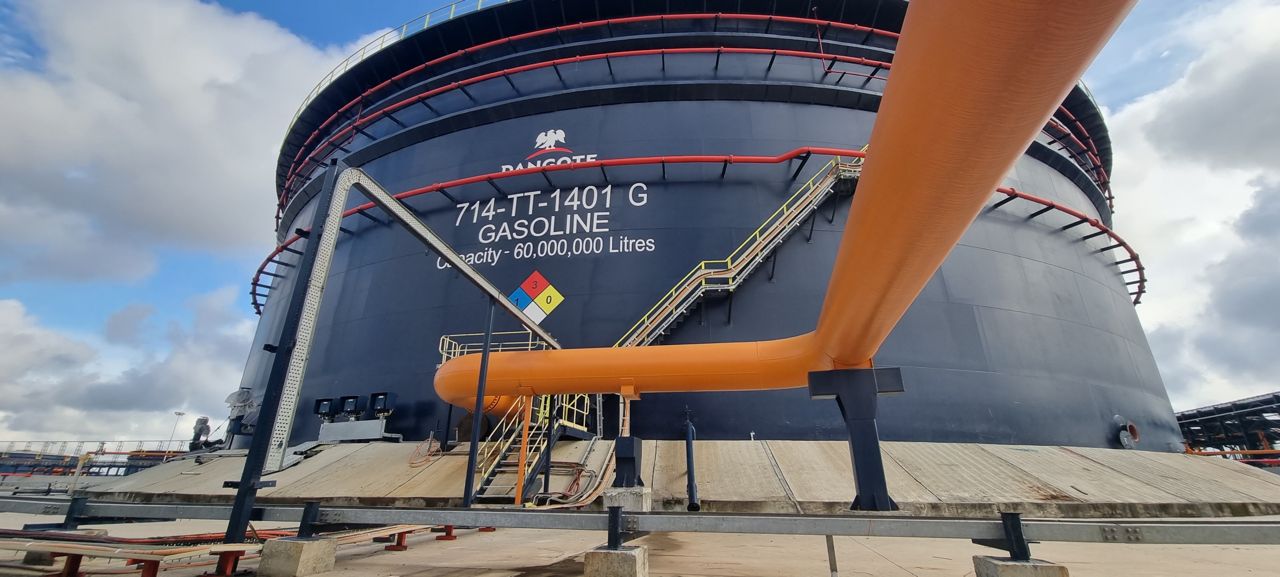
Dangote Refinery Opens Landmark ₦2.15tn IPO to Public Investors
By Jerry Adesewo
The Dangote Petroleum Refinery and Petrochemicals FZE has opened its Initial Public Offering (IPO) to investors, marking a significant new chapter for one of Nigeria’s most ambitious industrial projects and potentially one of the largest equity offerings in Africa.
The public offer, which commenced today, September 14, 2026, will formally be launched at a ceremony on the trading floor of the Nigerian Exchange (NGX) in Lagos. The offering gives retail, institutional, and eligible African investors an opportunity to acquire shares in the refinery for the first time.
The IPO comprises 4.1 billion new ordinary shares at ₦525 per share, with a minimum subscription of 10 shares valued at ₦5,250. The offer is scheduled to remain open until October 13, 2026, subject to the terms contained in the prospectus.
READ ALSO: Unity Colleges at a Crossroads: Workers Resist Government’s Concession Plan
If fully subscribed, the offer is expected to raise approximately ₦2.15 trillion, placing it among the largest equity offerings ever undertaken in Africa. The proceeds are expected to support the refinery’s long-term growth plans, operational expansion, and strategic investments while creating additional value for shareholders and other stakeholders.
The opening of the IPO represents more than a major corporate fundraising exercise. It marks a potential transition in the Dangote Group’s industrial story—from building large-scale productive assets with private capital to widening participation in their ownership through the capital market.
For years, the Dangote Refinery has been one of the clearest symbols of Nigeria’s attempt to move from exporting raw resources to developing domestic industrial capacity. Its entry into the public market now places that industrial ambition directly within the investment portfolios of Nigerians and other eligible investors.
President and Chief Executive of Dangote Industries Limited, Aliko Dangote, described the IPO as the beginning of a new chapter for the refinery and the Nigerian economy.
“This offering is about more than raising capital; it is about creating an opportunity for ordinary Nigerians, Africans, and investors across the globe to participate directly in one of the most transformative industrial projects ever built on the continent,” Dangote said.
He said the refinery was established to transform Africa’s energy landscape, create jobs, conserve foreign exchange, and promote shared prosperity, adding that the IPO would extend that vision by broadening ownership.
“We believe that broad-based ownership is one of the most effective ways to build wealth, strengthen the capital market, and accelerate economic inclusion,” he said.
The significance of the offer is also being viewed from the perspective of Nigeria’s capital-market development.
Temi Popoola, Group Managing Director and Chief Executive Officer of Nigerian Exchange Group, described the transaction as an important moment for the Nigerian capital market, arguing that the market must increasingly enable Nigerians to participate in the value created by major domestic businesses.
“Our capital market must increasingly become a place where Nigerians can participate in the value created by our country’s most important businesses,” Popoola said.
According to him, the Dangote Refinery transaction demonstrates the importance of connecting Nigerian businesses seeking long-term capital with a broader population of investors seeking opportunities to participate in their growth.
NGX Group, he added, has been building infrastructure to make public-market participation more accessible, including NGX Invest and connectivity across more than 50 distribution channels involving stockbrokers, banks and fintechs.
The development comes against the backdrop of growing calls for Nigeria to mobilise more domestic capital for productive investment. The Dangote Refinery IPO potentially provides a significant test of whether Nigeria’s capital market can channel substantial private savings and institutional funds into a large-scale industrial asset.
The refinery itself represents a massive concentration of industrial infrastructure. Located in Ibeju-Lekki, Lagos, the complex occupies approximately 2,635 hectares and has a stated refining capacity of 700,000 barrels per day. It also includes a 900,000-ton-per-annum polypropylene plant and a dedicated 435-megawatt power plant.
Its infrastructure includes marine facilities, storage tanks, quays and other facilities designed to support the movement, processing and distribution of crude oil and refined petroleum products.
The refinery has emerged as a strategic component of Nigeria’s energy and industrial ambitions, with the company positioning it as an important contributor to domestic fuel supply and an emerging exporter of refined petroleum products.
The company said the facility has supplied petroleum products to domestic and international markets since commencing commercial operations, while contributing to efforts to reduce dependence on imported refined products and conserve foreign exchange.
The IPO could consequently mark an important shift in the way the refinery’s future growth is financed. Rather than relying solely on private capital, the company can potentially draw on a much broader pool of investors as it expands its operations and pursues its long-term ambitions.
That broader ownership model could also deepen the relationship between Nigeria’s industrial sector and its capital market.
For decades, Nigeria has struggled to convert its substantial domestic savings and investment potential into the long-term capital required for major infrastructure and manufacturing projects. Large pension funds, institutional investors, and retail investors represent significant pools of capital, but the challenge has often been finding sufficiently attractive and scalable productive assets through which that capital can be deployed.
The Dangote Refinery IPO therefore arrives at an important intersection between industrialisation and capital formation.
At the recent Lagos Economic Summit, themed “The Real Deal: Africa’s Greatest Investment Opportunity,” Africa Finance Corporation President and Chief Executive Officer Samaila Zubairu described Dangote Group investments as catalysts for industrialisation and economic transformation.
Chief Executive Officer of the Centre for the Promotion of Private Enterprise, Muda Yusuf, similarly emphasised the importance of industrialisation to sustainable development, while Nairametrics founder and CEO Ugodre Obi-Chukwu highlighted Africa’s growing population as a major opportunity for industrial production and investment.
Financial Derivatives Company Managing Director Bismarck Rewane also pointed to Nigeria’s gradual movement from a consumption-led economy towards an investment- and production-driven model.
The IPO fits into this emerging narrative. It is not simply about raising ₦2.15 trillion. It is about whether a major Nigerian industrial enterprise can successfully connect itself to a wider investment public and demonstrate the capacity of the domestic capital market to finance enterprises of global scale.
The challenge, however, extends beyond the success of a single transaction.
Nigeria needs more productive assets across energy, manufacturing, agriculture, technology, infrastructure and other sectors. The ultimate measure of the Dangote Refinery’s wider impact will therefore be whether its success encourages more industrial ventures and stimulates the emergence of businesses within its supply and value chains.
The refinery can produce fuel, but a broader industrial ecosystem requires engineering companies, logistics operators, technology firms, manufacturers, service providers, skilled workers and financial institutions capable of supporting sustained production.
That is why today’s IPO could be more significant than the headline figure suggests. For Dangote, it represents the opening of another chapter in the evolution of the refinery—from an enormous private industrial investment into a publicly accessible investment opportunity.
For Nigeria, it is an opportunity to test whether the capital market can help transform industrial ambition into broader economic participation.
The real significance of the transaction may ultimately be determined not by how much money the IPO raises, but by what comes after it: whether more Nigerian capital can be mobilised for productive investment, whether more industrial champions can emerge, and whether the country can build an economy in which large-scale production becomes the rule rather than the exception.
The Dangote Refinery may have been built as a landmark industrial project. With today’s IPO, the next question is whether its story can become part of a much larger Nigerian story of shared ownership, deeper capital markets, and sustained industrialisation.