

New Book Chronicles Shaibu-Era Transformation of Nigerian Army Amid Security Challenges

New Book Chronicles Shaibu-Era Transformation of Nigerian Army Amid Security Challenges
By Matthew Eloyi
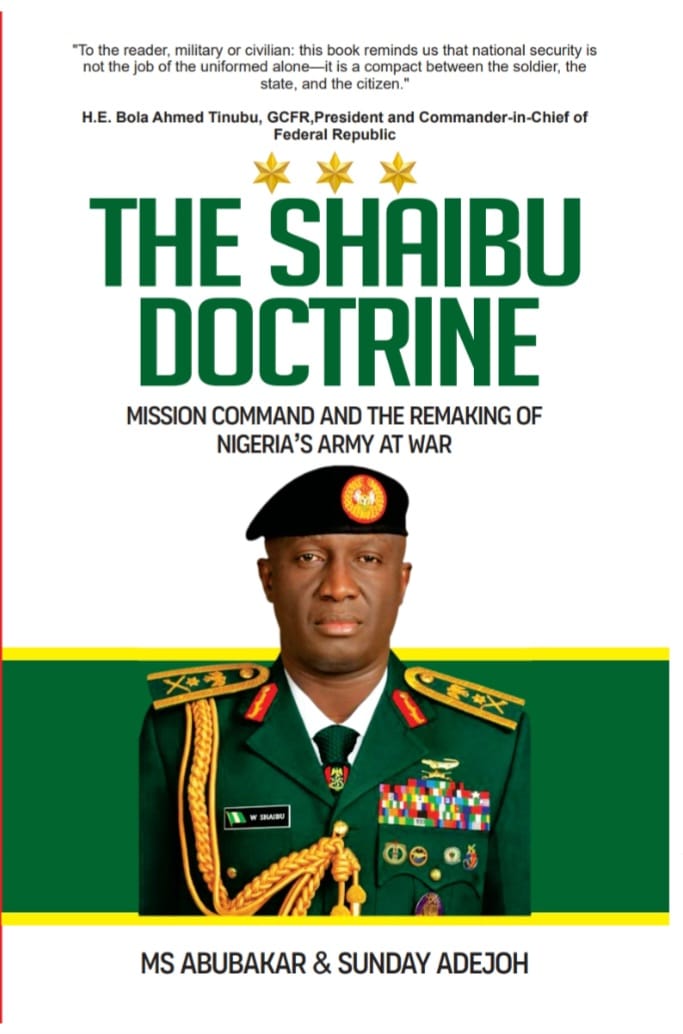
The Strategic Leadership Initiative, in collaboration with CLARIVOX Creatives, has announced the public presentation of a new book examining the transformation of the Nigerian Army’s leadership, doctrine and operations amid the country’s prolonged battle against insurgency, terrorism and banditry.
Titled “The Shaibu Doctrine: Mission Command and the Remaking of Nigeria’s Army at War,” the book will be presented to the public on October 30, 2026, at the Transcorp Hilton Hotel, Abuja.
According to the organisers, the book examines the evolution of mission command and operational leadership in the Nigerian Army, while drawing practical lessons for national security, military effectiveness and institutional reform.
The presentation is expected to attract policymakers, security experts, academics, members of the defence community and other stakeholders interested in the future of military leadership and national security in Nigeria.
The book features a foreword by the President and Commander-in-Chief of the Armed Forces of the Federal Republic of Nigeria.
A statement by the organisers says the publication is particularly significant given the complex security challenges confronting the country.
“At a time when Nigeria faces complex security challenges, this book offers doctrine, not just narrative. It is a contribution to how we think, lead, and win,” the statement says.
The publication traces what it describes as the “Shaibu Era”, focusing on the transformation of the Nigerian Army under the leadership of Lieutenant General Waidi Shaibu.
According to the synopsis, the Nigerian Army, despite being one of Africa’s largest and most combat-experienced military forces, has faced more than a decade of asymmetric warfare that tested its doctrine, logistics, morale and relationship with civilian communities.
The book examines how the institution responded to those challenges through changes in strategy, operations, organisational culture and ethics.
It is structured into four major parts, beginning with “The Diagnosis,” which examines doctrinal stagnation, logistical shortcomings, welfare deficits and the crisis of civil-military trust that affected the Army’s operational effectiveness.
The second section, “The Kinetic Shift,” focuses on changes in battlefield strategy and operations. It examines the move away from static “Super Camps” towards more mobile offensive operations, alongside the integration of drone warfare and intelligence, surveillance and reconnaissance capabilities.
The section also highlights efforts towards the indigenisation of weapons and military platforms, as well as the adoption of joint and multi-agency operational approaches aimed at overcoming inter-service and institutional silos.
Specific operations in the North-East and North-West are cited as examples of the doctrine being applied in combat.
The third part, “The Human Element,” examines developments beyond battlefield operations, including improvements in soldiers’ welfare, ethical conduct, human rights compliance, mental health, psychological resilience and efforts to rebuild trust between the military and Nigerian communities.
The final section, “The Legacy,” assesses the sustainability of the reforms while considering emerging security threats, including cyber warfare and climate-driven insecurity. It also proposes measures for political and military leaders to preserve institutional gains and strengthen the Army’s capacity to respond to future threats.
The organisers said the publication draws from declassified operational reports, interviews with theatre and formation commanders, insights from defence policymakers and testimonies from serving and former soldiers.
They described the book as more than a historical account, saying it offers lessons for leadership and institutional resilience during periods of crisis.
Details of the Chief Presenter, Book Reviewer and other Distinguished Guests are expected to be announced ahead of the event.
The Strategic Leadership Initiative has also invited members of the public, the media and the defence community to attend the presentation, while partnership and media accreditation opportunities are available through the organisation.
