

From Teenage Runaway to Japan’s Only Known Female Yakuza: The Extraordinary Story of Mako Nishimura
From Teenage Runaway to Japan’s Only Known Female Yakuza: The Extraordinary Story of Mako Nishimura

From Teenage Runaway to Japan’s Only Known Female Yakuza: The Extraordinary Story of Mako Nishimura
For nearly three decades, Mako Nishimura lived inside one of Japan’s most secretive and feared criminal worlds. She entered that life as a teenager, became a formally recognised member of the Yakuza in a male-dominated organisation, endured prison, addiction and the brutal consequences of organised crime—and eventually walked away to help others escape the same world.

Born in 1966 in Aichi Prefecture, Japan, Nishimura grew up in a family of civil servants. Her father was reportedly strict, and during her teenage years she began running away from home. By the time she was in her late teens, she had become involved with Japan’s bōsōzoku motorcycle-gang culture, a world that historically served as a recruiting ground for some members of organised crime.
At 17, she joined a biker gang known as the Worst. Her life quickly moved further into the criminal underworld. She was arrested as a teenager for drug possession and spent time in juvenile detention. Rather than pulling her away from the streets, those experiences brought her closer to the world of the Yakuza.
The fight that changed her life
Nishimura’s reputation for fearlessness reportedly began after she intervened during a violent confrontation involving people close to her. Her willingness to fight and protect others attracted the attention of Yakuza figures.
Around 1986, when she was about 19 or 20, she came to the attention of a local Yakuza boss in Gifu. Impressed by her toughness, he offered her a place in his organisation—an extraordinary development because women were traditionally excluded from formal membership of Japan’s male-dominated criminal syndicates.
Nishimura accepted.
She eventually underwent the sakazuki, the traditional sake-exchange ceremony through which a person formally enters a Yakuza organisation. According to accounts of her life, she wore a man’s kimono during the ceremony and became the only woman publicly documented as having completed the formal initiation into the Yakuza in this manner.
Her story therefore became extraordinary not simply because she was involved with organised crime, but because she occupied a position that was almost exclusively reserved for men.
A life marked by violence, crime and tattoos
Inside the organisation, Nishimura reportedly became involved in activities including debt collection, drug dealing, prostitution-related operations, extortion and mediating disputes between rival groups. She developed a reputation for toughness and claimed that she never lost a fight against a man.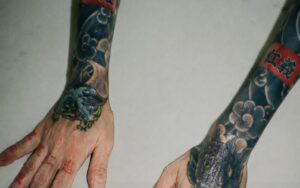
Her body also became a permanent record of her years in the underworld.
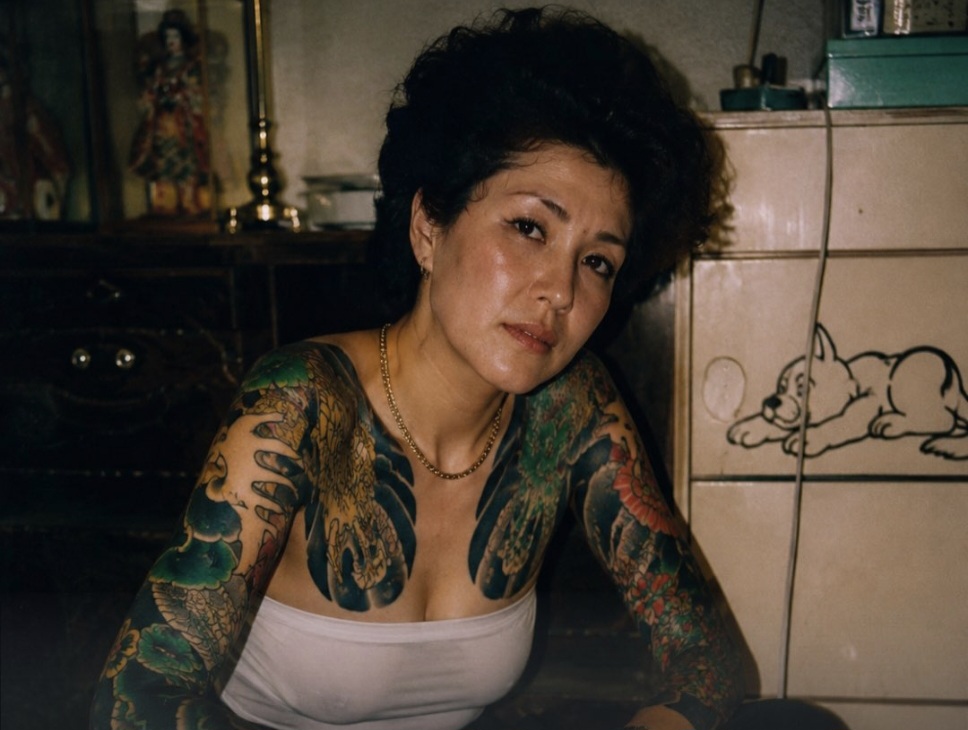
Nishimura acquired extensive traditional Japanese tattoos, known as irezumi, eventually covering much of her body. Her tattoos became both an expression of her identity and a visible reminder of her connection to the Yakuza—something that would later make it extremely difficult for her to return to ordinary society.
Then came one of the most painful chapters of her story.
The missing finger
Within the Yakuza, yubitsume is a traditional form of self-punishment associated with apologising for serious mistakes or failures. Nishimura reportedly cut part of her little finger herself as an act of apology.
She remained calm during the ritual and subsequently became known among some members as the “master of finger cutting”, with others reportedly asking her to perform the painful procedure for them when they lacked the courage to do it themselves.
Her missing fingertip remains one of the most visible reminders of the life she once lived.
Addiction and the collapse of the life she had built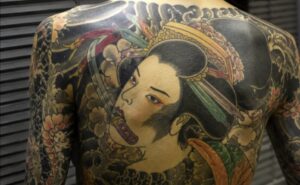
But the criminal world eventually began consuming Nishimura herself.
By the late 1990s, methamphetamine had become increasingly important to her group’s activities, and Nishimura developed a serious addiction. She was arrested on drug-related charges and spent years in prison. Her criminal life was beginning to unravel.
She eventually became involved with a member of another Yakuza group and became pregnant. The pregnancy forced her to reconsider the future she wanted for herself and her child.
Nishimura eventually left the organisation and attempted to build an ordinary life.
But leaving the Yakuza was easier said than done.
Her tattoos, missing fingertip and criminal history immediately marked her as someone from the underworld. Employers were reluctant to hire her, and opportunities for a conventional life were extremely limited.
From the underworld to helping others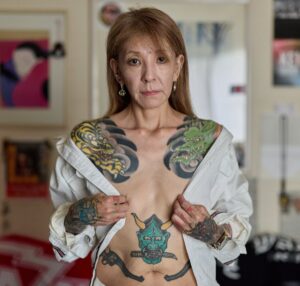
In 2012, Nishimura finally broke decisively with her former criminal life. Rather than allowing her past to define the rest of her existence, she began working to help former offenders rebuild their lives and reintegrate into society.
She has since spoken publicly about her experiences, including the consequences of addiction, violence and organised crime. In 2024, she published an autobiography recounting her life, with the stated aim of discouraging young people from entering the criminal world and helping expose the realities behind Yakuza life.
Her later work has given her story a completely different meaning.
The woman who once fought to earn her place in Japan’s criminal underworld now works to help people leave organised crime behind.
A life that became a warning
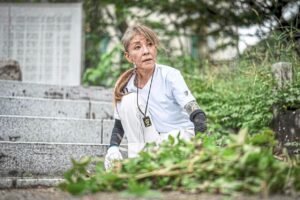
Nishimura’s story is not simply one of toughness or rebellion. It is also a story about the price of belonging to a violent organisation.
She entered the streets as a teenager, became a rare female member of a traditionally male criminal fraternity, accumulated tattoos and physical scars, experienced imprisonment and addiction, became a mother, and ultimately walked away.
Today, her missing fingertip and heavily tattooed body remain reminders of a past she cannot erase.
But instead of hiding that past, Nishimura has chosen to use it as a warning.
She once fought to become part of one of Japan’s most feared criminal organisations. Now, she uses the lessons of that life to help others find a way out.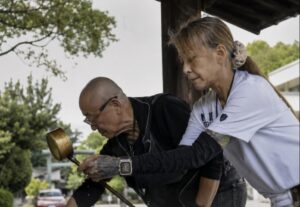
Her journey from teenage runaway to Yakuza member, from addiction and imprisonment to rehabilitation and advocacy, is one of the most unusual personal transformations to emerge from Japan’s organised-crime history.
From Teenage Runaway to Japan’s Only Known Female Yakuza: The Extraordinary Story of Mako Nishimura
