

Healing Minds, Holding Peace: Why Mental Health Is Becoming Nigeria’s Quiet Frontline Against Conflict

Healing Minds, Holding Peace: Why Mental Health Is Becoming Nigeria’s Quiet Frontline Against Conflict
By Jerry Adesewo
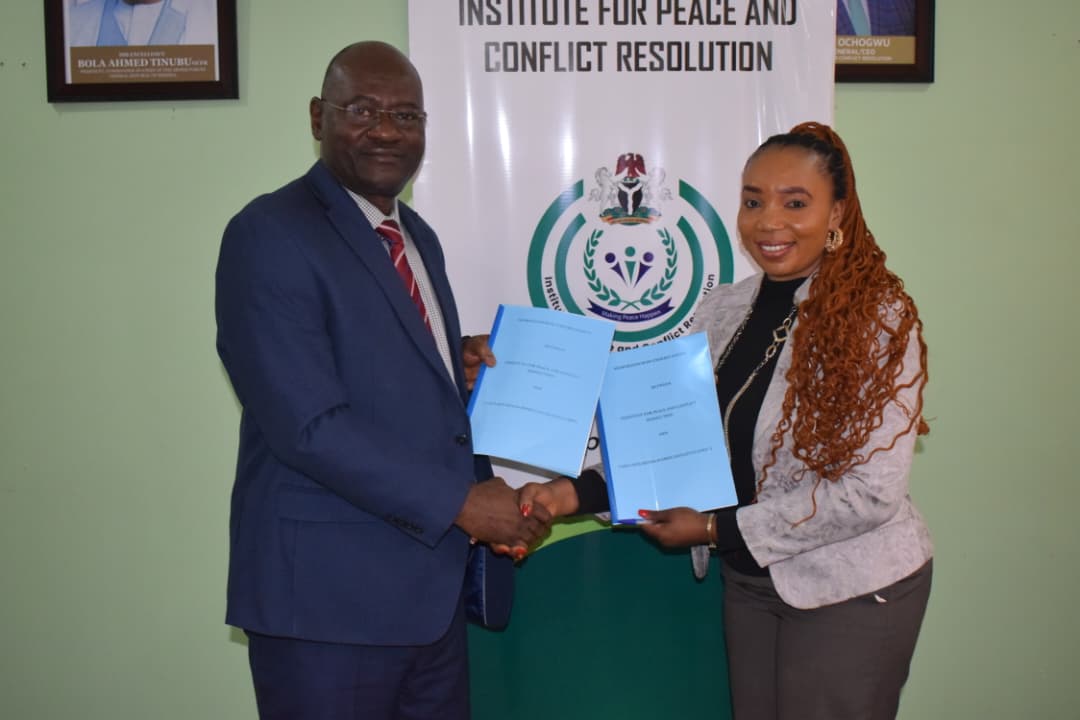
In Abuja, far from the noise of protest lines and political rallies, a quieter conversation is taking place—one that insists Nigeria’s deepest conflicts do not always begin with guns, politics, or ideology, but with unaddressed pain. When the Fabulous Minds Women Initiative (FMWI) and the Institute for Peace and Conflict Resolution (IPCR) signed a Memorandum of Understanding, it marked more than a formal partnership. It signaled a shift in how peace itself is being understood.
READ ALSO: Chidoka Advocates Single-Term Presidency to Curb Electioneering, Refocus Governance
For decades, Nigeria’s conflict management strategies have focused on symptoms—violence, unrest, displacement—often arriving after tensions have already boiled over. Yet beneath these visible crises lie invisible wounds: trauma from loss, chronic stress from poverty, emotional fatigue from insecurity, and the quiet despair that turns frustration into anger. This new collaboration places those unseen struggles at the center of peacebuilding.
The agreement was signed by Joseph Ochogwu, Director-General of IPCR, and Elizabeth Nwachukwu Agunobi, President of Fabulous Minds Women Initiative, in the presence of senior officials and civil society leaders. But the moment was less about ceremony and more about conviction. Both institutions are united by a belief that peace cannot be sustained where minds are fractured and emotional wounds are left untreated.
Dr. Ochogwu, speaking at the event, was direct in his assessment. Mental health, he noted, has long been treated as peripheral in discussions of security and conflict prevention. Yet communities under prolonged stress—whether from displacement, unemployment, or violence—are more vulnerable to breakdown. When trauma goes unacknowledged, it does not disappear; it mutates, often emerging as aggression, distrust, or radicalization. Sustainable peace, he argued, must therefore begin with psychological and emotional wellbeing.
This perspective aligns closely with the lived experience of Fabulous Minds Women Initiative. Over the years, FMWI has worked with women and girls across communities where hardship is a daily reality. Their programs—rooted in education, empowerment, and community-based mental health support—have revealed a simple but powerful truth: when people are helped to process pain, manage stress, and rebuild self-worth, they become less reactive and more resilient.
For Mrs. Agunobi, the partnership represents an opportunity to scale what grassroots work has long demonstrated. “Women and girls are often the emotional anchors of families,” she has observed in past engagements. “When they are supported mentally and emotionally, entire households stabilize.” In many conflict-prone areas, women bear the cumulative weight of violence, displacement, caregiving, and economic uncertainty. Addressing their mental health is not only an act of compassion—it is strategic peacebuilding.
Under the terms of the MoU, FMWI will lead the design and implementation of community-based mental health and psychosocial support programs. These will include trauma-informed care, stress management workshops, and emotional wellness initiatives tailored to women, girls, families, and other vulnerable groups. Rather than clinical abstractions, these interventions are practical tools—helping individuals understand their emotional responses, regulate conflict, and rebuild trust within their communities.
IPCR’s role will be to provide technical depth and institutional backing. Through research, conflict-sensitive programming, and policy engagement, the Institute will help embed mental health considerations into broader national peace and conflict resolution frameworks. This integration is critical: without policy alignment, community-level healing efforts often remain isolated, unable to influence systemic change.
The partnership’s focus on underserved and conflict-affected communities reflects a recognition that prevention is more effective—and humane—than reaction. By intervening early, before frustration hardens into hostility, the collaboration aims to reduce the likelihood that social stress will escalate into open conflict. In this sense, mental health becomes a form of early warning system—one that listens to emotional distress before it manifests as violence.
Those present at the signing underscored the collaborative spirit of the initiative. Members of the FMWI executive team, including Theodora Obayojie, a Mental Health and Emotional Wellness Communication Specialist; Joy Onyenwe, Vice President; Okiti Eguono, General Secretary; and Angela Omokaji, Treasurer, stood alongside IPCR officials. Their presence reflected the multidisciplinary nature of the work ahead—where communication, psychology, policy, and peacebuilding intersect.
What makes this partnership particularly significant is its challenge to conventional thinking. It asks policymakers and citizens alike to reconsider what peace looks like. Not merely the absence of violence, but the presence of emotional stability. Not just ceasefires, but coping mechanisms. Not only security deployments, but safe spaces for healing.
In a country where conflicts are often discussed in terms of territory, religion, or ethnicity, the FMWI–IPCR collaboration introduces a quieter, more human lens. It insists that development, peace, and mental health are inseparable—and that neglecting one undermines the others.
As Nigeria continues to navigate complex social and security challenges, this partnership offers a modest but profound proposition: that healing minds is not a soft option, but a necessary foundation for lasting peace. By placing mental wellbeing at the heart of conflict prevention, Fabulous Minds Women Initiative and the Institute for Peace and Conflict Resolution are redefining what it means to build peace—not from the top down alone, but from the inside out.
Healing Minds, Holding Peace: Why Mental Health Is Becoming Nigeria’s Quiet Frontline Against Conflict