


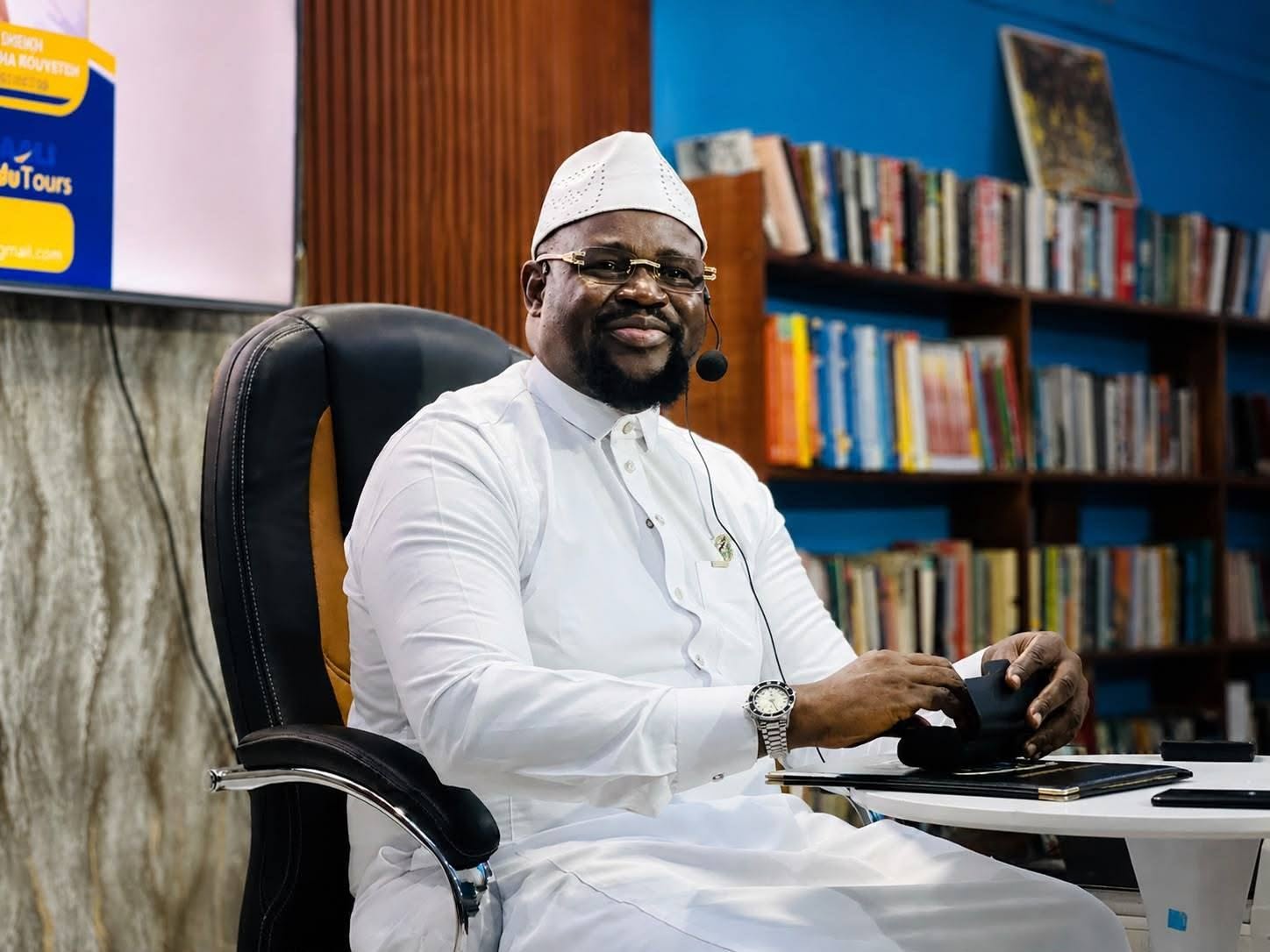
Kouyateh Charges Liberian Youth to Think Critically, Solve Creatively, Lead Strategically
By Matthew Eloyi
Ambassador Sheikh Al-moustapha Kouyateh has challenged Liberian students and young leaders to embrace critical thinking, creative problem-solving and strategic decision-making as essential tools for transforming the country and building a prosperous future.
Kouyateh, who is President and Servant-In-Charge of the African Peoples’ Movement (APM), made the call in a speech delivered at the Leadership & Public Speaking Academy on August 8, 2026.
Speaking to students, young leaders, women and persons with disabilities, the Pan-African statesman argued that nations do not rise by luck but through intelligent decisions, particularly when confronted with complex challenges and limited resources.
He said Liberia “does not only need ideas” but requires “decisions that produce results,” stressing that leadership must move beyond rhetoric to practical action.
According to him, critical thinking requires people to distinguish facts from opinions, evidence from rumours and long-term strategy from short-term emotions.
“Critical thinking is not arguing. Critical thinking is not insulting. Critical thinking is disciplined thinking,” he said, urging young Liberians to first understand the causes of problems before attempting to solve them.
Kouyateh warned that many people fail not because they lack ability but because they make decisions without sufficient clarity. He therefore encouraged students to question popular claims, examine evidence and assess whether proposed plans are realistic before supporting or implementing them.
Moving to creative problem-solving, the APM leader said Liberia must develop solutions that are suited to its realities rather than continuing to rely on approaches that have failed.
He described creativity as “engineering solutions,” including finding new ways to organise work, improve learning and training, connect skills to employment and build systems that allow everyone to participate.
He particularly highlighted the contributions of women and persons with disabilities to national development, arguing that their experiences can strengthen problem-solving and improve the quality of development interventions.
“When we create solutions that include you fully, we don’t reduce quality—we improve quality,” he said.
Kouyateh identified unemployment and weak job pathways, skills mismatch, limited access to tools and training, inadequate inclusion in community opportunities and the high cost of basic goods caused by import dependence among challenges that Liberia must urgently address.
He challenged young Liberians to ask what solutions could be developed to tackle these problems, beginning on a small scale, improving rapidly and eventually expanding successful initiatives.
On strategic decision-making, Kouyateh said leadership was not simply about determining what should be done but also deciding what should come first, what should follow, how initiatives would be funded, how progress would be measured and how programmes could be sustained.
He lamented that many initiatives fail because of inadequate systems, training pipelines, oversight, accountability, consistent funding and measurement.
“This is how activity becomes activity without progress,” he warned, emphasising the need for disciplined execution.
The diplomat subsequently introduced the African Peoples’ Movement, describing it as a non-racial Pan-African organisation established to strengthen African unity through responsible leadership and the transformation of the continent’s raw materials into finished products.
He said the movement advocates ownership and productive utilisation of African lands and resources, arguing that processing raw materials locally would increase economic value, create employment and expand government revenue through taxation.
Kouyateh also presented what he described as “Dangotization” as a practical economic pathway for transforming raw materials into finished or higher-value products, building local value chains and expanding productive capacity so that wealth remains within communities and benefits the people.
He said the concept should be approached through the three decision-making skills outlined in his speech.
Under critical thinking, he urged African countries to question their continued dependence on imports for products they could produce locally and identify where economic value is lost between extraction, processing and marketing.
For creative problem-solving, he advocated the development of local supply chains, industrial skills and partnerships involving government, private-sector players and communities.
Strategically, he said countries must determine which products to prioritise based on feasibility and demand, develop pilot projects and scale them into full industrial production while ensuring quality, market access, taxation and reinvestment.
Kouyateh further stressed that economic transformation could not be sustained without a strong human foundation anchored on reconciliation, empowerment, accountability and development.
He described reconciliation as fundamental to effective decision-making, arguing that societies trapped in bitterness, violence and broken trust struggle to focus on solving their problems.
He equally called for the empowerment of young people to learn and work, women to participate fully and lead, and persons with disabilities to enjoy dignity, access and meaningful inclusion.
“No development is sustainable without accountability—clear responsibilities, measurable results, and consequences for failure,” he said.
He added that the ultimate purpose of reconciliation, empowerment and accountability was development that produces tangible improvements in education, healthcare, employment, security, infrastructure and human dignity.
Kouyateh concluded by urging Liberia’s young people to take responsibility for the country’s future by applying better decision-making in their daily lives.
“Think critically. Solve creatively. Decide strategically,” he told the students and young leaders.
He expressed confidence that Liberia’s future would be built by a generation of young people capable of making informed decisions, developing practical solutions and executing strategies that deliver measurable results.
