

Nigeria’s LNG Moment: How Global Energy Turmoil Is Opening New Doors for Africa’s Gas Giant

Nigeria’s LNG Moment: How Global Energy Turmoil Is Opening New Doors for Africa’s Gas Giant
By Matthew Eloyi
Rising production, improved feedgas availability and renewed global demand are strengthening Nigeria’s position in the international gas market. But beneath the export gains lies a pressing question: can the country translate its growing energy relevance into reliable domestic supply, industrial expansion and economic prosperity?
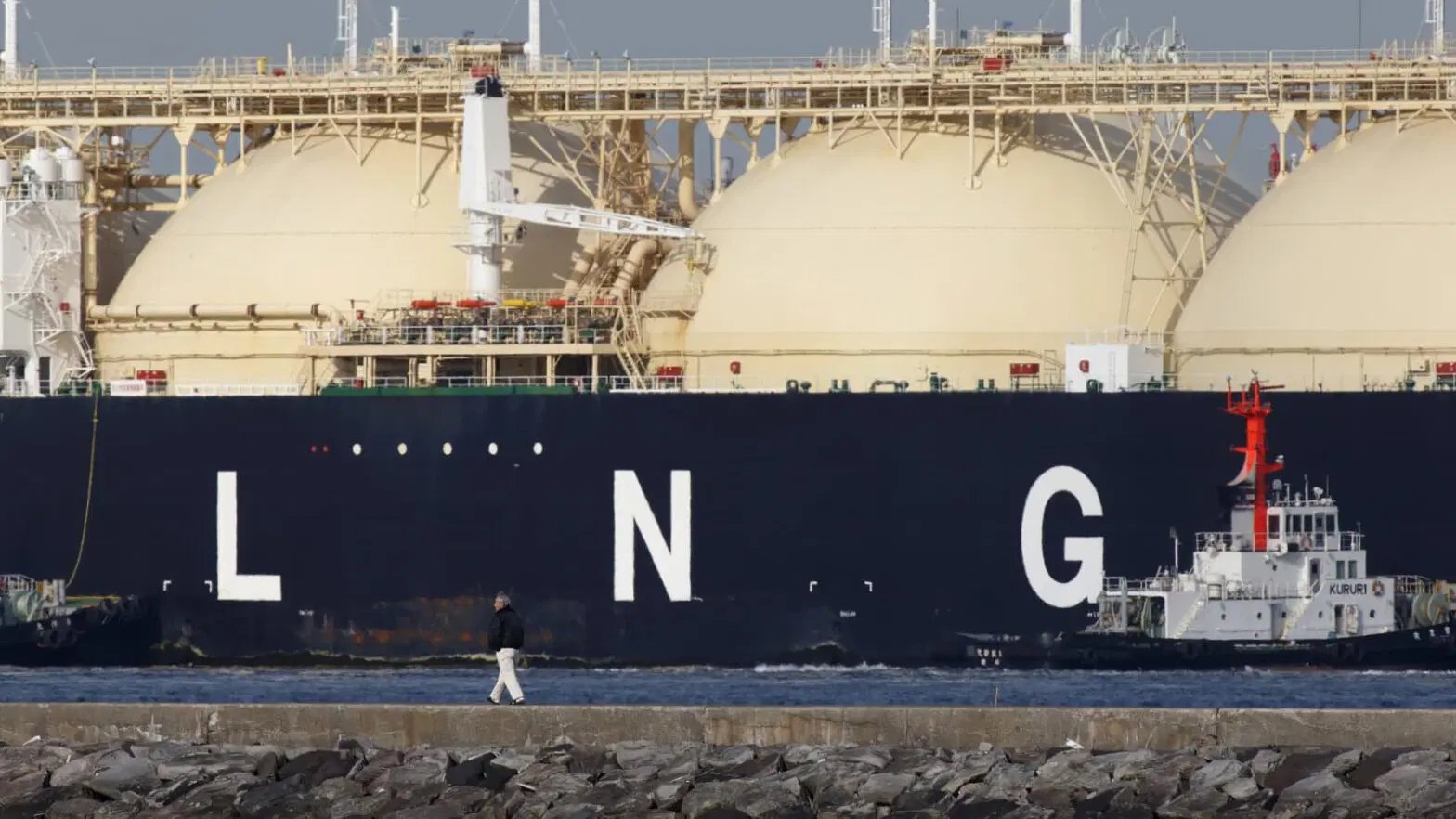
Nigeria is steadily strengthening its position in the global natural gas market, with the country’s liquefied natural gas (LNG) deliveries recording a remarkable 30 per cent increase between January and October 2026, reaching their highest level since 2020.
The development, highlighted in the International Energy Agency’s (IEA) Global Gas Security Review 2026, reflects a significant improvement in Nigeria’s gas supply capacity at a time when geopolitical tensions and disruptions to major international energy routes have reshaped global gas trade.
As the Middle East crisis escalated and LNG shipments through the strategically important Strait of Hormuz were disrupted, Nigeria emerged as one of the suppliers helping to meet additional demand in international markets. The country’s improved gas availability provided an opportunity to increase exports and reinforce its relevance in the increasingly competitive global energy landscape.
According to the IEA, the growth in Nigerian LNG deliveries was driven by improved feedgas availability and a greater prioritisation of gas supplies to the country’s liquefaction facilities.
The agency observed that deliveries rose by approximately 30 per cent year-on-year during the first ten months of 2026, reaching their highest level in six years.
Beyond the impressive export figures, the development represents an important indication of Nigeria’s capacity to benefit from changing dynamics in the global energy market. With countries increasingly concerned about energy security, supply diversification and the reliability of international gas routes, Nigeria’s vast natural gas resources offer considerable opportunities to become a more influential player in global energy supply.
A strategic advantage in a turbulent global market
The disruption of LNG shipments through the Strait of Hormuz has exposed the vulnerability of global energy supply chains and renewed attention on alternative sources of natural gas.
The IEA reported that the effective halt of LNG flows through the waterway reduced loadings from Qatar and the United Arab Emirates by more than 60 billion cubic metres between March and October 2026.
The resulting supply shock pushed gas prices in Asian and European markets to their highest levels since the 2022–2023 energy crisis.
In this environment, Nigeria’s increased LNG deliveries have assumed greater strategic significance. As an established LNG exporter with considerable untapped gas resources, the country is positioned to contribute to efforts by consuming nations to diversify their sources of supply.
The IEA’s assessment suggests that the Middle East crisis redirected some of Africa’s available LNG supplies towards international markets, with Nigeria benefiting from improved production conditions and increased export opportunities.
However, the opportunity extends beyond the immediate benefits of higher export volumes. It also reinforces the importance of developing Nigeria’s gas industry as a dependable source of energy for international markets while strengthening its domestic industrial base.
NLNG expansion and the promise of Train 7
A major factor underpinning Nigeria’s improving LNG performance is the increased availability of feedgas to Nigeria LNG Limited’s liquefaction facilities.
The IEA disclosed that improved feedgas supply lifted utilisation at the company’s six-train liquefaction complex above 80 per cent in 2026.
This improvement is particularly significant given the operational challenges that have historically constrained the country’s ability to maximise its LNG production capacity.
The report also highlighted progress on Train 7, which entered the pre-commissioning phase in 2026, with commercial start-up targeted for the end of 2027, subject to sufficient feedgas availability.
Once operational, the additional train is expected to increase Nigeria LNG’s nameplate production capacity from 22 million tonnes per annum (mtpa) to 30 mtpa.
The expansion represents a major opportunity to increase Nigeria’s contribution to global LNG supply, generate additional foreign exchange earnings and strengthen the country’s position in international gas markets.
It could also stimulate investment across the gas value chain, including upstream production, pipeline infrastructure, engineering, logistics and associated services.
Nevertheless, the IEA’s emphasis on sufficient feedgas availability underscores an important condition for the success of the expansion: Nigeria must ensure that additional liquefaction capacity is matched by reliable and sustainable gas production.
Without adequate upstream supply and dependable transportation infrastructure, the benefits of expanded processing capacity could remain below expectations.
The domestic gas paradox
While Nigeria’s export performance is improving, the country’s domestic gas market continues to face significant supply constraints.
The IEA identifies Nigeria as sub-Saharan Africa’s largest gas-consuming country, with domestic demand projected to grow by approximately two per cent year-on-year in 2026.
Power generation remains the largest driver of demand, followed by fertiliser and petrochemical production, industrial heating and the oil and gas sector.
The transportation sector is also gradually emerging as an additional source of demand, supported by the government’s vehicle-conversion programme and investments in compressed natural gas (CNG) refuelling infrastructure.
These developments demonstrate the growing importance of natural gas to Nigeria’s economic diversification, industrial development and energy transition ambitions.
However, the IEA report exposes a critical contradiction in the country’s gas economy.
Although domestic gas supplies increased during the first half of 2026, they met only about 65 per cent of producers’ domestic supply obligations.
The shortfall, according to the agency, reflects persistent infrastructure deficiencies, payment challenges and broader market constraints.
This raises important questions about the balance between Nigeria’s growing participation in international gas trade and the need to ensure adequate supplies for domestic consumers.
For a country struggling with electricity supply challenges and high industrial operating costs, reliable access to natural gas remains essential.
Gas-fired power plants depend on consistent supplies to generate electricity, while manufacturers require affordable and dependable energy to sustain production and remain competitive.
Similarly, the fertiliser and petrochemical industries depend on gas as a critical feedstock for expanding local production and reducing reliance on imported products.
Consequently, Nigeria’s emerging LNG success must be accompanied by deliberate efforts to address domestic supply limitations.
The challenge is not necessarily a choice between exports and domestic consumption. Rather, it is the development of an efficient gas industry capable of supplying both markets through increased production, improved infrastructure, commercially sustainable pricing and effective regulation.
Unlocking Africa’s gas potential
Nigeria’s experience also reflects a broader reality within Africa’s natural gas industry.
According to the IEA, African gas demand is predominantly met through domestic production, with Algeria and Nigeria largely self-sufficient in their gas requirements.
Egypt, by contrast, is increasingly dependent on imported pipeline gas and LNG as its domestic production declines.
Several smaller coastal markets also rely on imported gas, although inadequate regasification facilities and fragmented distribution networks continue to restrict access.
Interestingly, the IEA observed that a considerable proportion of Africa’s natural gas production is exported because infrastructure for international exports is often better developed than domestic transportation and distribution networks.
This structural imbalance presents one of the continent’s most significant energy development challenges.
While African countries possess substantial natural gas resources, inadequate pipelines, processing facilities and distribution systems prevent many domestic industries and households from benefiting fully from available supplies.
The Middle East crisis has further demonstrated the importance of strengthening regional energy infrastructure and expanding access to domestic gas resources.
For Nigeria, the opportunity lies in leveraging its established production and export infrastructure to develop a more integrated gas economy that supports electricity generation, industrialisation and regional energy cooperation.
Global gas markets under pressure
Nigeria’s improved LNG performance is taking place against a backdrop of considerable uncertainty in the international gas market.
The IEA warned that Europe is entering the 2026–2027 winter heating season with its lowest natural gas storage levels since 2013.
The development is expected to increase Europe’s dependence on international LNG supplies to meet peak seasonal demand, potentially extending tight market conditions well into 2027.
Low storage inventories could also leave European countries more vulnerable to colder-than-expected weather conditions and further supply disruptions.
At the global level, the agency projected that LNG supply would decline by approximately three per cent, equivalent to almost 20 billion cubic metres, in 2026.
Global gas demand is also expected to fall by around 1.5 per cent, or approximately 65 billion cubic metres.
The projected decline reflects reduced consumption in the Middle East, weaker industrial demand in Europe and a shift towards coal-fired electricity generation in parts of Asia.
These developments illustrate the increasingly interconnected nature of global gas markets and how geopolitical tensions in one region can affect energy availability and prices across continents.
For Nigeria, the situation presents both opportunities and responsibilities. Higher international demand could strengthen export earnings, but the country must also guard against allowing short-term market opportunities to overshadow the long-term development of its domestic energy infrastructure.
Turning gas resources into economic prosperity
Ultimately, Nigeria’s rising LNG deliveries represent more than an improvement in export statistics. They highlight the country’s strategic importance in a global energy market increasingly concerned about supply security and diversification.
The improvement in feedgas availability, increased utilisation of existing LNG facilities and progress towards Train 7 demonstrate the potential of the country’s natural gas industry to deliver greater economic value.
Yet, the real measure of success will extend beyond the volume of gas exported or the foreign exchange generated.
It will be reflected in more reliable electricity, stronger manufacturing capacity, increased fertiliser production, lower energy costs for businesses, improved employment opportunities and greater industrial competitiveness.
Nigeria has the resources and established market presence to become an even more influential force in the global gas industry. What remains essential is a sustained commitment to resolving infrastructure bottlenecks, improving payment systems, attracting investment and creating a commercially viable domestic gas market.
The current global energy disruption may have opened a valuable window of opportunity for Nigeria. Whether the country can transform that opportunity into lasting economic prosperity will depend on how effectively it balances its growing international ambitions with the energy needs of its own people and industries.
