

AFRICA MUST STOP COPYING OXFORD — AND MUST STOP APOLOGISING FOR ITS OWN INTELLIGENCE
A Response by Professor Ojo Emmanuel Ademola

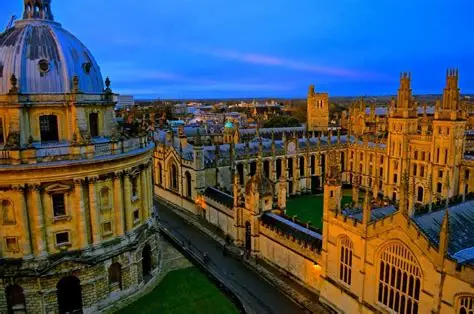
AFRICA MUST STOP COPYING OXFORD—AND MUST STOP APOLOGISING FOR ITS OWN INTELLIGENCE.
African higher education stands today at a decisive and uncomfortable crossroads. For decades, our universities have been shaped, judged, and often constrained by external traditions that were never designed for African realities. Yet it was in Accra, at a major convening on higher‑education transformation, that the Vice‑Chancellor of the University of Oxford delivered a message that cut through centuries of inherited assumptions: Africa must stop copying Oxford. The statement was not provocative because of its content; it was provocative because of its source. When the head of the world’s most iconic university tells Africa to stop imitating Oxford, the world must pause and listen.
READ ALSO: Buratai Celebrates Bauchi Governor Bala Mohammed at 68, Prays for Wisdom, Good Health
Professor Irene Tracey’s intervention was not merely refreshing; it was revelatory. It exposed a truth that African scholars have whispered for years but rarely heard acknowledged from the citadels of Western academia. Her call for African universities to build systems that reflect African realities is more than advice. It is a mirror held up to a continent that has, for too long, outsourced its intellectual imagination. Africa does not need permission to innovate. Yet Tracey’s remarks remind us that we have spent decades seeking precisely that.
INTRODUCTION: A CONTINENT AT THE EDGE OF ITS OWN POSSIBILITY
The African university has always been more than an institution. It is a battleground of identity, a theatre of aspiration, and a site where the continent negotiates its place in the global knowledge economy. But it is also a space where Africa has repeatedly been told—implicitly and explicitly—that excellence must be measured by proximity to Western norms. The architecture of our campuses, the structure of our degrees, the calendars of our academic years, the metrics of our research output, and even the language of our intellectual discourse have been shaped by external templates.
This is not merely historical inheritance; it is ongoing practice. African universities continue to rank themselves by how closely they resemble Oxford, Cambridge, Harvard, or MIT. Ministries of education still equate academic quality with Western publication metrics. Funding agencies reward African scholars only when they publish in journals that often have little relevance to African developmental priorities. Regulators insist on degree structures that mirror European models, even when those models do not serve African labour markets.
It is within this context that Professor Tracey’s message lands with such force. Her call is not a dismissal of Oxford’s legacy. It is an invitation for Africa to reclaim its own. It is a reminder that Africa’s future will not be secured by mimicry but by originality. And it is a challenge to African leaders, policymakers, and scholars to trust the continent’s own mind.
THE END OF ACADEMIC MIMICRY
For years, African universities have been trapped in what scholars describe as academic mimicry—the uncritical adoption of external models that were never designed for African societies. We inherited examination systems built for Victorian Britain, degree structures shaped by industrial‑era Europe, and campus cultures modelled on medieval Oxford quads. These structures were not malicious; they were simply misaligned. They were built for climates, economies, and social realities that bear little resemblance to Africa’s.
The consequences have been predictable. We have produced graduates trained for economies that do not exist, while the economies that do exist remain starved of the graduates they urgently need. We have created institutions that are internationally visible but domestically ineffective. We have cultivated scholars who are globally employable but locally irrelevant. And we have built universities that prepare students for a world they may never inhabit, while neglecting the world they actually live in.
Professor Tracey’s intervention is therefore not merely symbolic; it is diagnostic. She identifies the core dysfunction: Africa has been building universities for someone else’s world. Her message is not an indictment of African ambition. It is an indictment of African imitation.
AFRICA’S OPPORTUNITY: A BLANK SLATE THE WEST NO LONGER POSSESSES
The most important line in Professor Tracey’s address was not her call to stop copying Oxford. It was her assertion that Africa possesses an opportunity the West no longer has—the chance to rethink higher education from first principles. This is a profound insight. The West is constrained by centuries of tradition, entrenched systems, and institutional inertia. Africa, by contrast, has the freedom to innovate without being shackled by legacy structures.
Africa can design universities for a young, mobile population that values stackable learning pathways as much as traditional degrees. Africa can build systems that prioritise skills for immediate productivity rather than ten‑year theoretical pipelines. Africa can create learning environments where a student in Tamale, Turkana, or Ogbomosho can access world‑class education without needing to inhabit a residential hall modelled on a twelfth‑century British college.
This is not a call for improvisation. It is a call for intentional design. Africa has the opportunity to build universities that are porous, flexible, digitally enabled, and deeply connected to local economies. We can create institutions that serve agribusiness, fintech, creative industries, climate adaptation, and the informal sector—not merely the traditional professions inherited from colonial bureaucracies.
The question is not whether Africa can do this. The question is whether Africa will allow itself to do this.
THE IRONY WE MUST CONFRONT
There was undeniable irony in the Accra setting. The convening was co‑hosted by institutions that still measure their worth by proximity to Oxford and Cambridge league tables. Yet they were being told by Oxford’s own Vice‑Chancellor to stop imitating Oxford. But irony does not invalidate truth. It illuminates it.
African universities have long been conditioned to believe that legitimacy flows from external validation—Western journals, Western rankings, and Western partnerships. This conditioning has produced a generation of scholars who are globally employable but locally irrelevant and a generation of institutions that are internationally visible but domestically ineffective.
We cannot continue producing graduates who are unemployable at home but desperate to be employable abroad. That is not globalisation; it is intellectual exile. It is a form of academic displacement that drains African talent and weakens African economies.
The irony is painful, but it is also liberating. If Oxford itself is telling Africa to stop copying Oxford, then Africa must finally confront the uncomfortable truth: imitation has never been a path to excellence. It has only been a path to dependency.
THE REAL QUESTION: WILL AFRICA FINALLY TRUST ITS OWN MIND?
Professor Tracey’s remarks are courageous, but they also expose a deeper question: Will African governments, regulators, and funding agencies allow African universities to innovate beyond inherited structures? Will regulators approve degrees that combine industry placement and classroom learning in proportions that reflect African labour markets? Will ministries stop equating academic excellence with Western publication metrics? Will funding agencies reward African‑centred research rather than Western‑aligned replication?
These questions are not rhetorical. They are existential. They determine whether Africa will continue to build universities that serve external expectations or universities that serve African futures.
African higher education must undergo a philosophical shift. It must move from imitation to invention, from dependency to sovereignty, from external validation to internal confidence. It must recognise that African intelligence is not inferior, derivative, or supplementary. It is original, generative, and capable of shaping global knowledge.
OXFORD IS LEARNING FROM AFRICA—AND THE WORLD SHOULD TOO
Professor Tracey’s acknowledgement that Oxford is learning from Africa is not flattery; it is fact. Oxford’s partnerships in vaccine development, climate adaptation, and humanities archiving demonstrate that innovation flows both ways. Africa is not a passive recipient of knowledge. It is a generator of it. African researchers are contributing to global breakthroughs. African institutions are pioneering community‑centered models of learning. African scholars are producing insights that reshape global debates.
But the future of African higher education will not be Oxford in Africa. It will be Africa in Africa—and the world will come to study it. Africa must build universities that reflect African realities, African aspirations, and African wisdom. The continent must design institutions that are rooted in African soil but connected to global currents.
CONCLUSION: AFRICA MUST BECOME A CO‑AUTHOR OF THE FUTURE
The best way to honour Oxford is not to copy it. The best way to honour Africa is to stop apologising for its own intellectual sovereignty. African universities must rise with intention. They must govern AI and digital transformation with wisdom. They must design curricula with courage. They must build institutions that reflect African realities rather than Western nostalgia.
Africa must refuse the role of a passenger in the global knowledge economy. It must step forward as a co‑author of the future. Professor Tracey has opened the door. Africa must now walk through it—not as a follower, but as a creator.
Professor Ojo Emmanuel Ademola is the first African Professor of Cybersecurity and Information Technology Management, Global Education Advocate, Chartered Manager, UK Digital Journalist, Strategic Advisor & Prophetic Mobiliser for National Transformation, public intellectual, and African governance thinker and General Evangelist of CAC Nigeria and Overseas
