

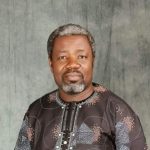

Okigbo: Anatomy of a Cross-Generational Legacy
By Prof. Okey Ikechukwu,
Preamble:
I am particularly delighted to be here today as a witness to the global recognition of the works of an outstanding poet and literary colossus, which is appropriately themed “The Importance of Christopher Okigbo’s Nomination into the UNESCO Memory of the World Register and Its Impact on Nigeria’s Cultural Heritage and Literary History.”
This nomination provides us with safeguards for the preservation of his works for future generations, enhances his national and international stature, and sparks cultural programming and scholarship in a way that will fuel new creative interests in his work, while also further anchoring Nigerian literary heritage in contemporary global consciousness.
READ ALSO: Christopher Okigbo: The Poet Who Lives On Through UNESCO and Global Recognition
In using these occasions to talk about the importance of this nomination for our country, for scholarship, and, I hope, about genuine human development, we are also to look at issues of authentic human development, and why the world of today, particularly our Nigeria of today, is facing a crisis of values, leadership, and governance challenges.
Essence of UNESCO Memory of the World (MoW) programme
UNESCO’s Memory of the World (MoW) Programme was established in 1992 to recognize, protect, and preserve documentary heritage of global importance with “outstanding universal value”. It is designed to safeguard such materials from neglect, decay, or destruction and enhance their accessibility over time. I5 promotes wider preservation of such materials through digitization, expert collaboration, and public awareness.
The materials of “universal value” under reference here include texts, manuscripts, photos, audiovisuals, and more. They all must have something to offer humanity, irrespective of culture, geography, and sundry paradigms of demographic disaggregation. Such material must have “developmental impact” on everything human.
The Question of Universal Value
Is there really anything of universal value in today’s world? Do we still have such a thing as universal truth in a world that emphasizes relative truths, personal perspectives, and interest-determined points of view? The story of The Three Blind Men and the Elephant would seem to be saying the answer to the question is a resounding NO!
My answer, however, is “yes, there are universal values and there is such a thing as not only true statements, but the truth of things”. I maintain that points of view, perspectives, and opinions come from limited knowledge and exposure to what is being investigated. The story of The Three Blind Men and the Elephant, rather than establishing the relativity of truth, only confirms it.
Thus, in speaking of the developmental impact of Okigbo’s works here, we are seeing development as a multidimensional concept with moral, aesthetic, political, cultural, and spiritual dimensions and connotations. It is within this “umbrella of values”, which promotes the principles of reciprocity, diligence, inclusivity, and sustainable social engagements, that we see all other human activities blossoming in a lasting manner.
Real development is, for me, the development of the qualities and principles that make us truly human. And these principles are far too reverified to be measured in terms of good roads, tall buildings, and the existence of particular types of physical infrastructure.
And it is within this context of meaning that UNESCO has accorded Okigbo’s Collection, comprising his manuscripts, photographs, travel documents, and transcripts, which was submitted by the Christopher Okigbo Foundation and officially inscribed in the UNESCO Memory of the World Register in 2007, the Global Recognition that brought us here today.
Significance for Nigeria
The significance of this nomination for Nigeria’s Heritage and Literary Legacy should first be viewed from the angle of Preservation and how this projects the visibility and accessibility of part of our national heritage on the global dashboard. More scholars can engage with seminal manuscripts that are central to Nigeria’s literary heritage, and thus help to etch our less tangible, but fundamental successes in the sands of time and in global memory.
National Pride is involved here because Okigbo’s inclusion in such a prestigious register reinforces his position not just as a national icon but as a figure of global literary importance. It provides a Catalyst for Cultural Engagement, as it inspires further cultural events and public discourse.
In addition to the foregoing, this listing by UNESCO reasserts the Literary Value of Okigbo, who is widely celebrated as Africa’s most original modernist poet in English. He blends Igbo spiritual orientation, Western myth, and modernist technique in his works. And his inclusion in MoW further enhances his standing as one of the major pioneers of postcolonial literary expression.
His listing will hopefully help in Inspiring Future Generations and motivating publishers, scholars, and artists to pay greater attention to his works and legacy.
But let us pause briefly here to acknowledge the Okigbo Foundation as an organization and, particularly Obiageli, his daughter, for helping Nigeria get to this point of UNESCO’s award, as a turning point for deeper promotion of the Okigbo literary heritage through wider cultural programs.
This recognition matters further still, because it speaks to the twin facts of a people’s Memory and Identity. Okigbo’s poetry reflects dimensions of what is generally termed Igbo spirituality, in addition to intimations of colonial and postcolonial struggles. Both national and subnational identities are captured in all of this, and they are preserved in voices that are central to a people’s cultural memory.
Okigbo made his literary art a Cultural Weapon in this regard; wherein his poems, especially “Labyrinths with Path of Thunder”, are layered and evocative adumbrations of myth, ritual, and introspection that awaken great artistic nuances and complexity.
That is why the recognition and listing is also a form of Cultural Continuity, and why safeguarding the works of figures like Okigbo anchors contemporary and future Nigerians to some aspects of their artistic and intellectual roots in a rapidly changing world. It embodies cultural preservation, national pride, scholarly inquiry, and creative inspiration. It cements his legacy within global archives, supports active cultural engagement in Nigeria, and ensures that his visionary literary voice continues echoing throughout history.
Peculiarities of Okigbo’s Works
Christopher Okigbo’s poetry presents a remarkable fusion of Igbo notions of the transcendental, or what is sometimes called Igbo spirituality, and modernist poetics. This is a hybrid that marks him out as one of the most original voices in African and global literature. His works bridge indigenous cosmology and Western literary forms, resulting in a complex and deeply symbolic body of poetry.
Rooted in Igbo cosmology, myth, and ritual, his poetry draws from ancestral traditions and indigenous religion to shape the poetic voice the reader encounters. He speaks of Chi as a sort of guardian spirit, in poms like Heavensgate, and also speaks of Idoto, the river goddess, as a central figure in Heavensgate; invoked in ritual language
Okigbo often returns to the village and the presumably sacred past for inspiration, as he puts forth materials from ancestral memory. You also find rituals and prophecy in his poems; as they echo as incantations, libations, and oracular speech.
He imbues with inherent vitality, given his characterization of trees, rivers, hills: e.g., Example: From Heavensgate: “Before you, mother Idoto, naked I stand…” This opening line presents Okigbo’s spiritual confession, standing naked before a river goddess—a sacred moment of poetic and religious initiation.
The Modernist Poetics in Okigbo’s Style Christopher Okigbo can be traced to the influence of Western modernist poets like T.S. Eliot, Ezra Pound, W.B. Yeats, and Gerard Manley Hopkins. Technique examples in Okigbo’s Work include nonlinear narratives or traditional plots, Mythic layering like Eliot in The Waste Land, as seen in Okigbo’s use of myths to speak to contemporary crises and issues.
Also, his Fusion of symbols and experiences to reconcile Igbo ritual with modernist form to create a distinct postcolonial poetic voice is unique. He reclaims indigenous myth, not by simply narrating it, but by embedding it within modernist structures—elliptical, fragmented, abstract.
Okigbo, Literary Education and Human Development
How does Okigbo’s works and similar literary endeavours feature in our world today? A world that projects only entrepreneurship and “active moneymaking skills” must see such things as a philosophy education, which promotes critical thinking, complex problem-solving, risk analysis, and succinct communication skills, as useless.
Yet it’s more common among tech founders and disruptive thinkers than among traditional corporate ladder-climbers. Tim Cook of Apple studied philosophy at Auburn University. Peter Thiel, Co-founder of PayPal, early investor in Facebook, very influential in tech and finance, studied philosophy at Stanford University and was an advocate for philosophy’s value in business.
Carly Fiorina, former CEO of Hewlett-Packard (HP), which was in the Fortune 100 during her tenure, studied Philosophy and Medieval History at Stanford University. So did Reed Hastings, co-founder and former CEO of Netflix, who studied philosophy at Bowdoin College and is often cited as having a philosophical approach to leadership and organizational culture.
Look at George Soros, Founder of Soros Fund Management, who was a major player in finance and an incredibly influential financier, who obtained a B.Sc. and Ph.D. in Philosophy from the London School of Economics under Karl Popper. He was known for applying philosophical concepts like reflexivity in markets
And Larry Sanger, Co-founder of Wikipedia, has a PhD. in philosophy. Alex Karp, CEO, of Palantir Technologies, holds a Bachelor’s degree in Philosophy from Haverford College. Reid Hoffman, Co‑founder and former CEO of LinkedIn, earned a Bachelor’s in Symbolic Systems at Stanford. This was an interdisciplinary field blending computer science, linguistics, philosophy, psychology, and statistics, from which he later moved on to a Master’s in Philosophy from Oxford.
All said, my point in this Keynote address is this: A nation develops because of its national resources, not its natural resources. National resources are nurtured by values, while national resources could be assets or liabilities, depending on the quality of “national resources.” The major ingredients for developing national resources are the values captured and encapsulated in literacies, culture, philosophy, and the humanities, with the physical and other sciences as service providers within that broad umbrella of human and humanizing values provided by art, literature, culture, etc.
Case closed.
A KEYNOTE ADDRESS BY PROF OKEY IECHUKWU, MNI, ON THE OCCASION OF THE UNESCO MEMORY OF THE WORLD PROGRAMME (MOW), 2025, AT THE UNESCO NIGERIA OFFICE, UN BUIDING, CONSTITUTION AVENUE ABUJA