


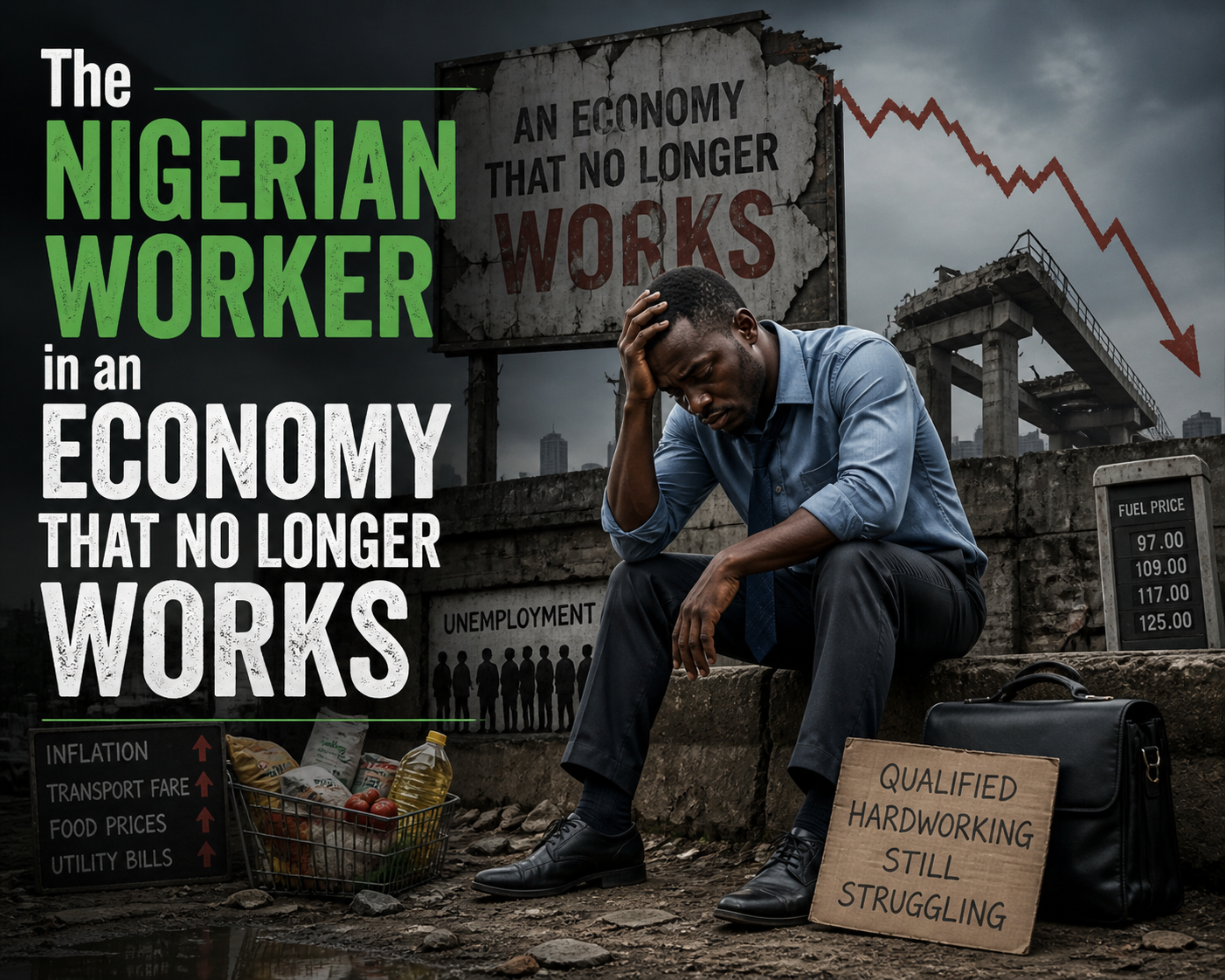
The Nigerian Worker in an Economy That No Longer Works
By Matthew Eloyi
Every year on May 1, Nigeria joins the rest of the world to celebrate workers, the engine room of any economy. There are speeches, parades, and promises. But beneath the fanfare lies a harsh and uncomfortable truth: the Nigerian worker has never been more vulnerable, more strained, and more disillusioned than today.
At the heart of the crisis is a simple but devastating reality: work no longer guarantees a decent life in Nigeria.
As of 2026, the national minimum wage stands at ₦70,000 per month. On paper, this appears to be progress from the ₦30,000 benchmark of previous years. In reality, however, it is a number hollowed out by inflation, rising fuel costs, and a relentless surge in the price of basic necessities. For many workers, this wage barely survives the first two weeks of the month before collapsing under the weight of transport fares, food prices, rent, and medical expenses. This is the paradox of the Nigerian worker: employed, yet impoverished.
The situation worsened following major economic reforms, including the removal of fuel subsidies and currency devaluation. While these policies may have macroeconomic justification, their human cost has been severe. Inflation remains stubbornly high, and rising fuel prices have cascaded into higher costs for transportation, food, and production. The result is a widening gap between wages and the cost of living; a gap that continues to suffocate workers.
It is therefore no surprise that organised labour is once again demanding a new minimum wage of ₦154,000, describing current earnings as a “life of servitude”. This demand is not driven by greed, but by survival. When a full-time worker cannot afford basic human needs, the social contract between the state and its citizens begins to erode.
But wages are only one part of a broader crisis. Across many states, even the existing minimum wage is inconsistently implemented. Some workers are still owed arrears, while others receive irregular salaries. In the informal sector where a significant portion of Nigerians earn a living, there is little to no protection, no benefits, and no job security. The Nigerian worker, in many cases, operates in a system that offers neither stability nor dignity.
There is also the growing issue of underemployment and job mismatch. Highly educated young Nigerians increasingly find themselves in low-paying or unstable jobs, while others are forced into multiple income streams just to stay afloat. Work, which should provide dignity, has become a daily struggle for survival.
Yet, perhaps the most troubling aspect of the current reality is not just economic; it is psychological. There is a quiet erosion of hope. The average Nigerian worker wakes up each day not with ambition, but with anxiety: How far will today’s earnings go? What new price increase awaits? What unexpected expense will disrupt an already fragile balance? This is not sustainable.
If Nigeria is serious about building a productive and inclusive economy, then the welfare of its workers must move from the margins to the centre of policy. This means more than periodic wage reviews. It requires a comprehensive approach: A living wage tied to inflation realities; Strict enforcement of labour laws across all states; Investment in job creation and skills development; Social protection systems that cushion economic shocks.
Economic growth figures, no matter how impressive, mean little if they do not translate into improved living standards for the people who drive that growth.
Workers’ Day should not be reduced to ritualistic celebrations and empty rhetoric. It should be a moment of national reflection; a time to confront the uncomfortable truth that Nigeria’s workforce is under immense pressure, and that urgent, deliberate action is required.
The Nigerian worker is not asking for luxury. He is not demanding excess. He is asking for fairness; for wages that can sustain life, for conditions that respect dignity, and for a system that rewards hard work.
Until that happens, Workers Day will remain less a celebration and more a reminder of promises yet to be fulfilled.
