


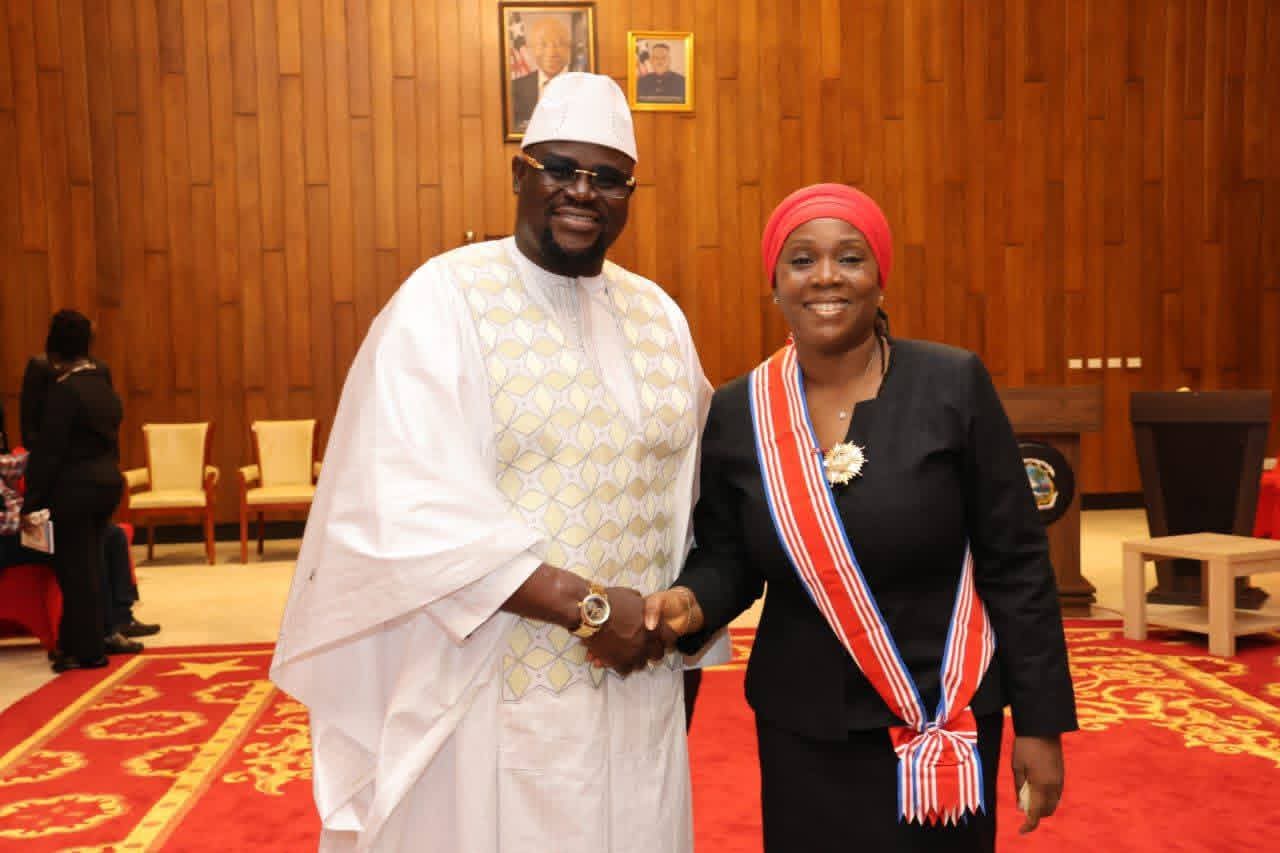
Sheikh Kouyateh Demands Security Safeguards as Liberia Prepares for 1,200 US Deportees
By Ahmad Umar
Ambassador Sheikh Al Moustapha Kouyateh has called for stronger security safeguards and greater transparency as Liberia reportedly prepares to receive about 1,200 deportees from the United States, warning that the arrangement could carry implications not only for Liberia but for the wider West African region.
Kouyateh’s concerns focus particularly on what could happen if the deportees, referred to as “Guests” by the Liberian government, are allowed to freely integrate into Liberian communities without comprehensive screening, monitoring and clearly defined security arrangements.
The ambassador also questioned the financial and logistical terms of the reported agreement, drawing comparisons with Eswatini, which reportedly received $5.1 million from the United States for accepting 30 deportees.
“If Eswatini received $5.1 million for receiving 30 deportees from the U.S. government, and kept them in high correctional area, how much did the Government of Liberia receive under similar arrangements for the 1,200 deportees referred to as ‘Guests’ by Minister Piah, and where would they be kept?” Kouyateh asked.
Beyond the question of financial compensation, Kouyateh’s remarks highlight concerns over how Liberia intends to manage and monitor such a large number of deportees once they arrive in the country.
The issue has taken on a wider regional security dimension because Liberia is situated within the Mano River region, sharing borders with Sierra Leone, Guinea and Côte d’Ivoire. The region continues to face challenges involving cross-border crime, trafficking, organised criminal networks and violent extremism.
Kouyateh’s concern is not that all deportees necessarily represent a security threat, but that the scale of the reported arrangement makes comprehensive screening and monitoring essential.
Establishing the identities, backgrounds, criminal records and legal status of those arriving would be critical to ensuring that individuals who may present genuine security concerns are properly identified and managed.
There are also questions about what could happen if the deportees are dispersed across communities and allowed unrestricted movement. Without effective monitoring mechanisms, authorities could find it difficult to track their movements or respond quickly to potential security concerns.
Given the porous nature of some borders within West Africa, any serious security challenge arising from the arrangement could potentially have consequences beyond Liberia. The movement of people between Liberia and neighbouring countries means that security concerns cannot necessarily be viewed solely as a domestic matter.
Kouyateh is therefore urging the Liberian authorities to establish clear safeguards before the deportees are integrated into society. These could include comprehensive background checks, appropriate accommodation arrangements, continuous monitoring where legally justified, coordination with national security agencies and engagement with relevant regional security institutions.
The ambassador has also called for clarity over where the deportees would be housed and under what conditions. His comparison with Eswatini raises additional questions about whether Liberia is receiving financial compensation and what obligations the Liberian government has accepted under the reported arrangement.
The exact financial and logistical terms of Liberia’s reported agreement remain unclear, and the government would need to provide further clarification on the matter.
At the heart of Kouyateh’s concerns is the need to balance Liberia’s international commitments with the safety of its citizens and the security interests of neighbouring countries.
As Liberia prepares for the reported arrival of the 1,200 US deportees, the central questions remain: Who are the deportees, what screening has been conducted, where will they be accommodated, how will their movements be managed, and what safeguards are being put in place to prevent potential risks from spreading beyond Liberia’s borders?
