


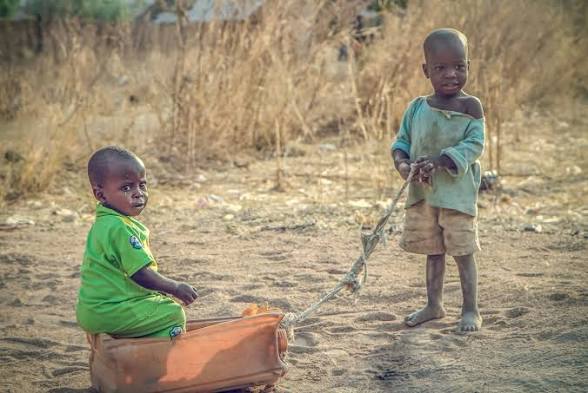
Stolen Futures: Inside the Dark Web of Child Trafficking in Plateau State
By Billa Pius
A Mother’s Vigil, A Child Gone Missing
At dawn in a quiet settlement on the outskirts of Jos, a mother waits by the roadside, clutching a faded photograph. It is the last image she has of her daughter taken three years ago before a “relative” promised to take the girl to the city for school and a better life. The child never returned.
Her story mirrors the silent pain of many families across Plateau State, where children are quietly disappearing lured by promises of education, employment, or care only to vanish into a hidden world of exploitation.
READ ALSO: Tinubu Nominates Taiwo Oyedele as Minister of State for Finance
Behind these disappearances lies a complex and deeply entrenched network of child trafficking, thriving on poverty, displacement, weak enforcement, and community silence.
A Growing but Underreported Crisis
Plateau State has increasingly emerged as both a source and transit point for child trafficking in North-Central Nigeria. Children, some barely of school age, are trafficked to urban centres and other states, where they are forced into domestic servitude, street hawking, begging rings, or hazardous labour.
Human rights advocates warn that the scale of the problem is far larger than official figures suggest, as many cases are never formally reported.
“Most parents do not even realise their children have been trafficked,” a child-protection officer in Jos said. “They believe the child is in school or learning a trade, until years pass with no contact.”
How Traffickers Operate
Traffickers rarely present themselves as strangers. More often, they operate as:
Relatives or family friends
Trusted neighbours
Fake recruiters or intermediaries
Individuals posing as benefactorsT
They target struggling households, particularly in rural or conflict-affected communities, offering to “help” by taking children away. Once removed from their communities, the children are isolated, exploited, and denied education and family life.
In many cases, victims are moved repeatedly across state lines, making tracking and rescue extremely difficult.
Poverty, Conflict, and Vulnerability
Economic hardship remains the strongest driver of child trafficking in Plateau State. Families affected by unemployment, food insecurity, or displacement resulting from communal violence are more vulnerable to traffickers’ deceptive promises.
Children living in informal settlements or displacement camps are particularly at risk, often lacking documentation, structured schooling, or effective protection systems.
“When survival becomes the priority, safeguards collapse,” a social worker explained. “That is where traffickers find opportunity.”
Prominent Voices Raise the Alarm
Concern over the worsening situation has drawn the attention of influential figures within and beyond Plateau State.
Former House Committee on Human Rights Chair, Beni Lar, has repeatedly called for stronger enforcement of child-protection laws, warning that weak punishment emboldens traffickers and their collaborators.
Similarly, Jos-born humanitarian and former anti-trafficking chief, Imaan Sulaiman-Ibrahim, has highlighted structural gaps that allow trafficking networks to flourish, stressing the need for coordinated national and sub-national action.
Within Plateau State, one of the most vocal advocates is Olivia Dazem, Chairperson of the Plateau State Gender and Equal Opportunities Commission. She has warned that despite awareness campaigns, child trafficking persists due to greed, ignorance, and poor community vigilance.
“Children are not commodities to be exchanged,” Dazem has said at stakeholder engagements. “They are the collective responsibility of society, and anyone who aids their exploitation will face the law.”
Under her leadership, the commission has worked with security agencies to rescue trafficked children and pursue suspects, while pushing for the enforcement of child-rights and anti-violence laws already domesticated in the state
Mothers Speak: A Call for Justice and Deterrence
Beyond officials and advocates, parents across Plateau State are raising their voices, demanding decisive action.
Mrs. Lengkat Tanimu, a mother of two girls in Jos, said the continued trafficking of children was frightening and unacceptable.
“As a mother, it is painful to imagine that a child can be taken away and her future destroyed,” she said. “Government must stop treating child trafficking lightly. Traffickers should be seriously punished so it will serve as a deterrent to others.”
She argued that weak penalties encourage repeat offences and undermine public confidence in the justice system.
“When offenders are arrested and nothing happens, it sends the wrong message,” Tanimu added. “If people see real punishment, parents will be more willing to report cases, and children will be safer.”
Her concerns reflect a growing public demand for visible justice and accountability.
Weak Enforcement, Few Convictions
Despite existing legal frameworks, enforcement remains a major challenge. Arrests are sporadic, prosecutions slow, and convictions rare.
Activists cite:
– Poor funding of enforcement agenciesi
– Lmited investigative capacityR
– Reluctance to report relativesu
– Ot-of-court settlements and intimidation
In several cases, families withdraw complaints under pressure or inducement, allowing traffickers to return to business.
The Human Cost
For trafficked children, the damage is often lifelong. Many suffer disrupted education, physical and emotional abuse, and deep psychological trauma. Even after rescue, reintegration is difficult.
A teenage boy rescued from forced labour outside Plateau told investigators he worked for years without pay. “They said if I tried to escape, I would be arrested,” he recalled.
Recommendations: Turning Outrage into Action
Ending child trafficking in Plateau State requires urgent, coordinated, and sustained action:
– Strengthen community surveillance through traditional and religious leaders
– Enforce existing laws with firm prosecution and convictions
– Expand grassroots awareness in rural and vulnerable communities
– Support at-risk families through economic empowerment and social protection
– Improve inter-agency collaboration among security agencies, NGOs, and transport unions
– Prioritise rehabilitation, education, and psychosocial support for rescued children
– Regulate child movement through strict transport verification
– Sustain media advocacy to demand accountability
Protecting children, advocates insist, is not optional it is a moral and legal duty.
A Future Worth Protecting
Child trafficking is not an abstract crime. It is happening in homes, motor parks, and communities across Plateau State.
Until poverty is addressed, laws enforced, and communities fully engaged, traffickers will continue to steal childhoods and futures.
For the mother still waiting by the roadside, hope remains fragile. But with sustained action and collective resolve, Plateau State can reclaim its children and restore futures that were nearly lost.