

The Diplomacy of Culture: Commemorating Ireland-Nigeria Diplomatic Relationship @65

The Diplomacy of Culture: Commemorating Ireland-Nigeria Diplomatic Relationship @65
By Jerry Adesewo
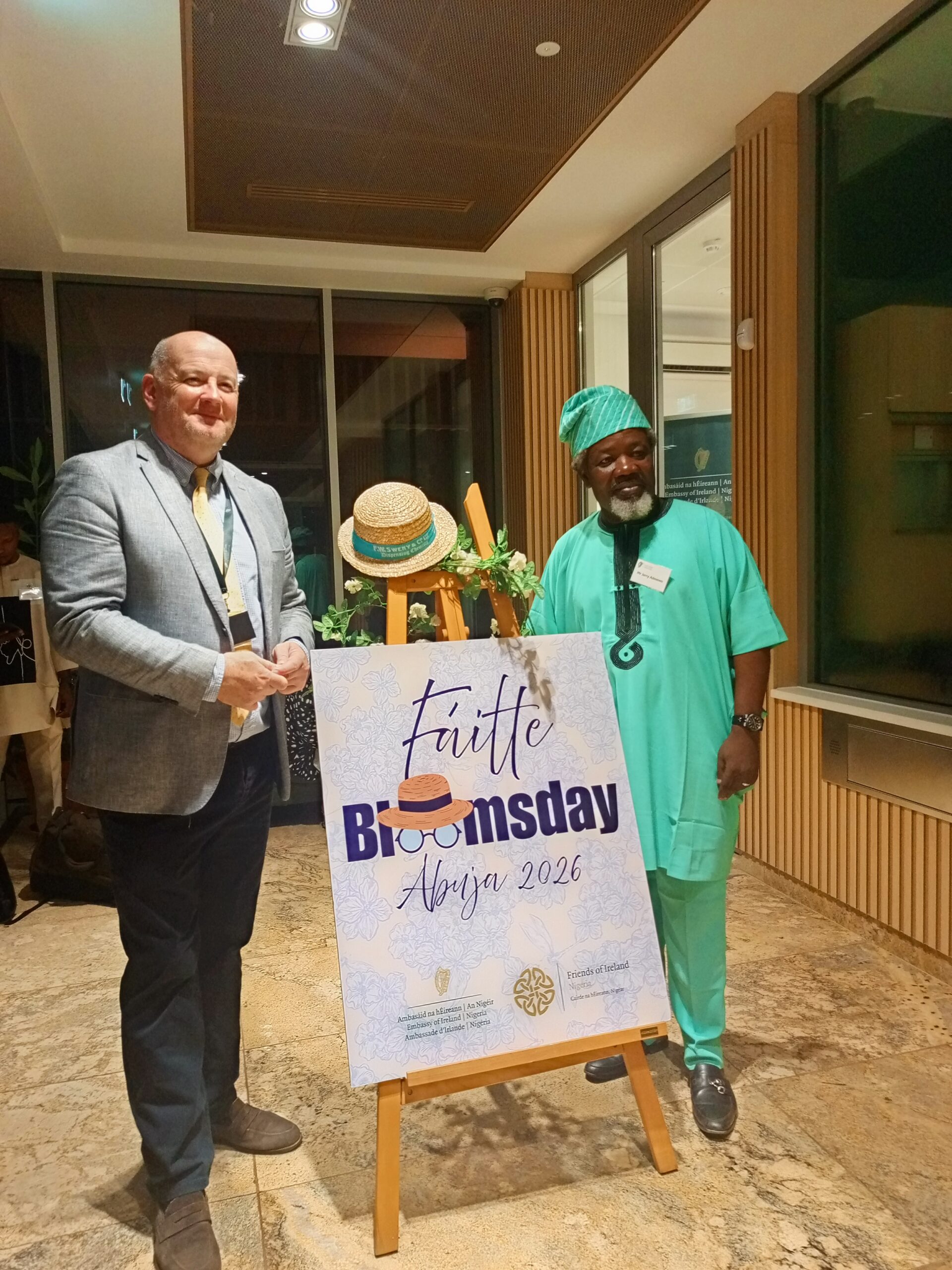
There are diplomatic speeches filled with policy, protocol and carefully chosen phrases. Then there are speeches that quietly reveal how nations truly build lasting friendships. Ambassador Peter Ryan’s remarks to young delegates gathered at the Irish Embassy in Abuja on Wednesday July 8, as Nigeria and Ireland marked 65 years of diplomatic relations, belonged to the latter.
It was not a speech about trade figures or defence cooperation. Neither was it an elaborate celebration of bilateral agreements. Instead, it was a reflection on something far more enduring: the role of culture, shared values and human relationships in diplomacy.
READ ALSO: A Fee Hike That Never Made Sense: Lessons from FG’s WASSCE, NECO U-Turn
In an era when diplomacy is increasingly measured by economic interests and geopolitical competition, the Irish envoy reminded his audience that nations are ultimately connected by people.
Standing inside the embassy hall named after Sir Roger Casement, Ryan used the occasion not merely to celebrate Ireland’s assumption of the Presidency of the Council of the European Union, but to reflect on the quiet power of cultural diplomacy. His audience consisted largely of young delegates, many of whom represent the generation that will inherit the future of international relations. His message to them was unmistakable: diplomacy is not only negotiated in conference rooms; it is nurtured through relationships built over years of trust, consistency and mutual respect.
The most compelling aspect of his address was the deliberate effort to elevate Nigerian voices. As he prepared to conclude his diplomatic assignment in Nigeria, Ryan disclosed that one of the gifts he intended to leave for his successor was a collection of well oiled friendship between Ireland and Nigerians. It was more than a symbolic gesture. It reflected a philosophy that every nation deserves to tell its own story.
He recalled how Irish poet William Butler Yeats penned the famous line, “Things fall apart; the centre cannot hold,” words later immortalised globally through Chinua Achebe’s landmark novel. In that simple reference lay a profound lesson about cultural exchange. Great ideas do not recognise national boundaries. They travel, evolve and find new meaning in other societies. Ireland contributed the line; Nigeria gave it a new life.
For Ryan, this exchange represents the very essence of diplomacy.
“We want Irish voices speaking about Ireland,” he observed. “The most interesting and valuable voices about Nigeria are Nigerian voices.”
It is a reminder worth embracing in an age when narratives about Africa are still too often written elsewhere.
The ambassador also challenged conventional assumptions about leadership through Ireland’s current stewardship of the European Union. Holding the rotating presidency, he explained, requires a nation to temporarily set aside narrow national interests in favour of the collective good of all twenty-seven member states. It is an exercise in shared responsibility rather than national prestige.
The guiding proverb adopted by Ireland for its presidency—”There is no strength without unity”—became the central theme of his address. Ryan was quick to note that every major Nigerian culture expresses the same philosophy in different words. Whether in Yoruba, Igbo or Hausa traditions, communities have long understood that collective progress always surpasses individual ambition.
That observation deserves careful reflection in Nigeria today.
Few countries possess a richer tradition of communal living than Nigeria. Yet contemporary public life increasingly celebrates individual success over collective advancement. Ryan’s message subtly invited his audience to rediscover values deeply embedded within their own cultures.
He illustrated the point through Ireland’s own national journey. When Ireland voted to join what later became the European Union in 1973, many feared that the country’s small economy would be overwhelmed. At the time, Ireland was among the poorest members of the European community. Rather than retreat into isolation, the Irish chose partnership. More than fifty years later, the country stands among Europe’s most successful democracies and economies.
For the ambassador, the lesson was simple: meaningful progress often begins with the courage to collaborate.
It is a lesson with obvious relevance for Africa’s regional institutions and for Nigeria itself.
Ryan’s reflections extended beyond politics into everyday human experience. He spoke warmly about the simple magic of neighbours meeting over lunch, exchanging ideas in corridors and solving problems through conversation rather than confrontation. These informal interactions, he suggested, often produce more enduring solutions than formal negotiations.
That same philosophy underpins the diplomatic conference itself. Participants were encouraged not merely to present prepared speeches but to listen, question and learn from one another.
In many respects, that may be the defining strength of cultural diplomacy. Unlike traditional diplomacy, which often focuses on governments, cultural diplomacy invests in people. It recognises that relationships built through literature, music, education, leadership exchanges and shared experiences frequently outlast political administrations.
Ryan’s admiration for Councillor Yemi Adenuga further reinforced that point. He described the Nigerian-born Irish politician not simply as a public office hbeyondolder but as someone mentoring young leaders across Ireland and . Her life, he suggested, embodies the “Irish-Nigerian magic” that emerges when cultures meet not in competition but in collaboration.
As Nigeria and Ireland commemorate sixty-five years of diplomatic relations, perhaps the greatest achievement is not found in treaties or trade statistics. It is found in friendships that have endured across generations, in students who have studied in each other’s countries, in writers who have shaped each other’s imaginations, and in leaders who now carry the identities of both nations with equal pride.
In a world increasingly divided by conflict, nationalism and suspicion of difference, Ambassador Ryan offered a timely reminder that diplomacy begins with listening, grows through trust and flourishes when cultures respect one another’s stories.
His message to the young delegates gathered in Abuja was ultimately a message to all of us.
The future of international relations will not be built solely by governments. It will be built by people who understand that there is, indeed, no strength without unity.