

WHEN GOVERNMENTS FAIL, SHOULD MALNOURISHED CHILDREN PAY THE PRICE?
As Nigeria struggles with persistently high child stunting, a policy debate raises a difficult question: how can government reward performance and enforce accountability without denying vulnerable children the nutrition support they urgently need?

WHEN GOVERNMENTS FAIL, SHOULD MALNOURISHED CHILDREN PAY THE PRICE?
By Jerry Adesewo
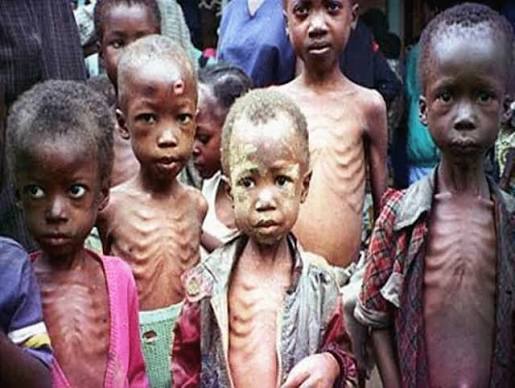
A child does not choose the state in which they are born. They do not determine whether their government releases funds on time, whether officials implement nutrition programmes or whether a primary healthcare centre has essential supplies. Yet, when these systems fail, it is often the child who bears the consequences.
This is the uncomfortable dilemma at the heart of Nigeria’s child nutrition crisis: should governments that fail to deliver be penalised through reduced funding, even when the children who depend on that funding have done nothing wrong?
This question gained renewed urgency at a policy webinar convened by the Athena Centre for Policy and Leadership on October 14, 2026. Titled ‘From Measurement to Consequence: Fixing Nigeria’s Nutrition Accountability Gap,’ the discussion brought together officials and policy experts from the Office of the Vice President, the National Primary Health Care Development Agency (NPHCDA), and the House of Representatives Committee on Nutrition and Food Security.
READ ALSO: Nigeria’s Headline Inflation Drops to 14.63% in September 2026 — NBS
The central concern was not whether Nigeria had recognised the problem, but whether its policies, funding arrangements, and monitoring systems could compel governments to translate commitments into measurable improvements in children’s lives.
Under-five stunting stands at 40 percent, against a national target of 18 percent whose deadline has expired. By April 2026, only nine of Nigeria’s 36 states had formally established State Councils on Nutrition. Even then, establishing a council does not necessarily mean it is functional, adequately funded, or producing results.
These figures expose a troubling gap between policy ambition and implementation. They also raise a question about how accountability should work in a country where children’s nutritional needs may be greatest in places where public institutions are least prepared to respond.
The Child Caught Between Policy and Performance
Presenting the policy paper, Dr Danjuma Iyaji, Director of the Athena Centre’s Olikoye Ransome-Kuti Institute for Health and Social Equity, argued that Nigeria had developed the structures for measuring nutrition outcomes without establishing equally effective consequences for poor implementation.
The Centre proposed four reforms: linking supplementary funding tranches to verified readiness while protecting need-based support; conducting annual state performance assessments; establishing an escalation framework for non-performance; and encouraging annual legislative hearings by State Houses of Assembly.
The underlying argument is that public resources should not flow indefinitely without evidence of commitment, preparedness, and results.
There is considerable force in this proposition. When governments know their performance will be assessed and persistent failure will attract scrutiny, they have stronger incentives to prioritise implementation. Functional nutrition councils, approved and costed plans, published expenditure, and reliable reporting could help turn public commitments into measurable action.
But a policy designed to discipline governments must confront a difficult possibility: its penalties could deepen the problem it seeks to solve.
A state with weak administrative capacity may struggle to meet funding conditions because its planning systems are inadequate, its officials lack technical support, or its budgetary processes are ineffective. If supplementary funding is withheld without addressing these weaknesses, the government may face pressure to improve, but children could lose access to essential services in the meantime.
The distinction is crucial. Governments can be held accountable for poor performance without making children’s access to nutrition support conditional on administrative competence.
Rewarding Delivery Without Withholding Essential Support
This tension emerged clearly during the webinar.
Abel Okechukwu, Research Lead for Nutrition and Food Security at the House of Representatives Committee on Nutrition and Food Security, described conditional financing as workable and urgently needed. However, he proposed a two-part arrangement intended to preserve essential services while rewarding performance.
Under his proposal, 70 per cent of funding would be protected as a lifeline for interventions such as micronutrients and school feeding, while 30 per cent would serve as a performance incentive. The incentive would be tied to conditions including functional State Councils on Nutrition, approved costed plans, and published expenditure.
This 70:30 arrangement was a proposal raised during the discussion, not an existing national funding rule. Its significance lies in the principle behind it: accountability should influence how governments receive and use resources without automatically depriving children of essential support.
“Conditional financing should not punish the child,” Okechukwu said.
That statement captures the ethical challenge facing policymakers. The government is responsible for implementing policy, but the child is the ultimate beneficiary. A funding mechanism that treats both as though they should bear the same consequences risks confusing institutional accountability with social protection.
A protected-lifeline approach offers one possible solution. Essential nutrition interventions could continue while governments face progressively stronger requirements to demonstrate readiness, disclose expenditure, and correct implementation failures.
Whether such conditions can be incorporated into existing financing arrangements remains unresolved. Uju Rochas-Anwukah, Senior Special Assistant to the President on Nutrition/Public Health, noted that the terms of the Child Nutrition Fund rest with UNICEF and its partners, rather than her office.
The proposed reforms will therefore require engagement with the institutions that control the relevant funding mechanisms, not merely a declaration of policy intent.
When State Figures Hide Local Failure
The debate also revealed why state-level indicators may be insufficient to determine where intervention is needed.
Dr Adebiyi Victoria Olatunde, Director of Nutrition at the NPHCDA, argued that accountability must reach primary healthcare facilities, where therapeutic foods and micronutrients need to be available when children require them.
She warned that aggregate state figures can obscure severe gaps in particular communities.
“At times we have data for a state, and the issue may be in only two particular wards,” she said.
This has important implications for performance-based funding. A state-wide assessment may suggest reasonable progress while children in particular wards continue to experience shortages or poor service delivery. Conversely, a state with weak overall indicators may have local programmes that are functioning but lack resources to expand their impact.
A fair assessment must examine not only whether a state has established the required structures but also whether those structures deliver services where needs are greatest.
Olatunde proposed collecting data from the bottom up, extending assessments to ward and facility levels. She also advocated a root-cause review before escalation against a poorly performing state.
Such reviews could distinguish between failures of political commitment, delayed fund releases, procurement problems, weak staffing, and inadequate planning. These problems require different responses. Punishment alone cannot resolve them all.
The Responsibility of Political Leadership
Nutrition is often discussed as a technical matter involving health professionals, dietary interventions, and monitoring. But the webinar highlighted the political choices that determine whether interventions reach their intended beneficiaries.
Rochas-Anwukah identified three points where implementation can break down: the failure to translate commitments into funding releases, the failure to translate releases into delivery, and insufficient understanding of nutrition priorities among subnational leaders.
“A stunted child is a lost asset that no bridge can build,” she said.
Her statement places nutrition within a broader development debate. Governments routinely announce investments in roads, bridges, and other infrastructure, but the long-term value of those investments also depends on the health and development of the people they are meant to serve. Nutrition is not a peripheral welfare concern to be addressed after other priorities have been funded; it is part of the foundation of human development.
Okechukwu called for more substantive legislative hearings, supported by standard reporting templates and reports submitted at least 21 days in advance. He said the committee would pursue more aggressive joint oversight in 2026 and 2027 and suggested an Appropriation Act clause linking federal grants to evidence of state oversight.
Rochas-Anwukah also called for passage of the draft National Food and Nutrition Bill, arguing that a statutory framework could help sustain accountability beyond individual administrations.
These proposals remain to be tested. Their success will depend on whether oversight leads to corrective action rather than becoming another bureaucratic exercise.
Helping Weaker States Become Ready
If funding is to reward readiness and performance, policymakers must decide what happens to states that are not yet equipped to meet the conditions.
The webinar acknowledged this concern. Rochas-Anwukah proposed a route through which weaker states could improve their readiness without leaving children in high-need communities behind. The discussion subsequently refined Athena Centre’s proposals to include protecting a share of funding, assessing performance below state level, and beginning escalation with a review of the causes of failure.
This recognises that institutional weakness is not always evidence of deliberate neglect. Some governments may need technical assistance to establish functional councils, prepare costed plans, improve procurement, or produce reliable expenditure reports.
Providing such assistance does not mean abandoning accountability. It makes accountability more effective by establishing clear expectations, support for compliance and consequences for persistent failure after the reasons have been examined.
A credible system could preserve essential nutrition funding, provide time-bound technical support to weaker states, publish performance assessments and escalate scrutiny where governments repeatedly fail to correct identified problems. Any penalties must be carefully designed so that pressure falls on responsible institutions without interrupting essential services.
The webinar identified further engagement with the Child Nutrition Fund’s partners, the Nigeria Governors’ Forum and State Houses of Assembly as next steps. Athena Centre said it would reassess its four proposed reform conditions in July 2027.
Accountability Must Be Measured in Children’s Lives
Nigeria’s nutrition challenge will not be resolved by creating more committees or producing more reports alone. These instruments matter only when they lead to better decisions, reliable financing and services that reach children who need them.
The real test is not whether a state can demonstrate that it has established a council or submitted a report. It is whether a child can obtain the nutrition support required for healthy development, whether a primary healthcare facility has essential supplies and whether public funds have produced the outcomes for which they were allocated.
The policy debate has placed an important question before government and its partners: how can Nigeria make weak implementation carry consequences without turning vulnerable children into collateral damage?
The answer requires more than choosing between unconditional funding and punitive cuts. It demands a system that protects essential services, rewards demonstrated delivery, helps weaker states build capacity and subjects persistent failures to transparent scrutiny.
Governments must answer for their decisions. Public funds must be accounted for, and legislatures must exercise meaningful oversight. But children whose futures depend on these systems should not be made to pay for their failure.
The ultimate measure of a nutrition accountability system is not how effectively it punishes poor performance, but how reliably it protects children while compelling those responsible to do better.