


Who Is the Joke On: Joshua or Jake?
By Jerry Adesewo
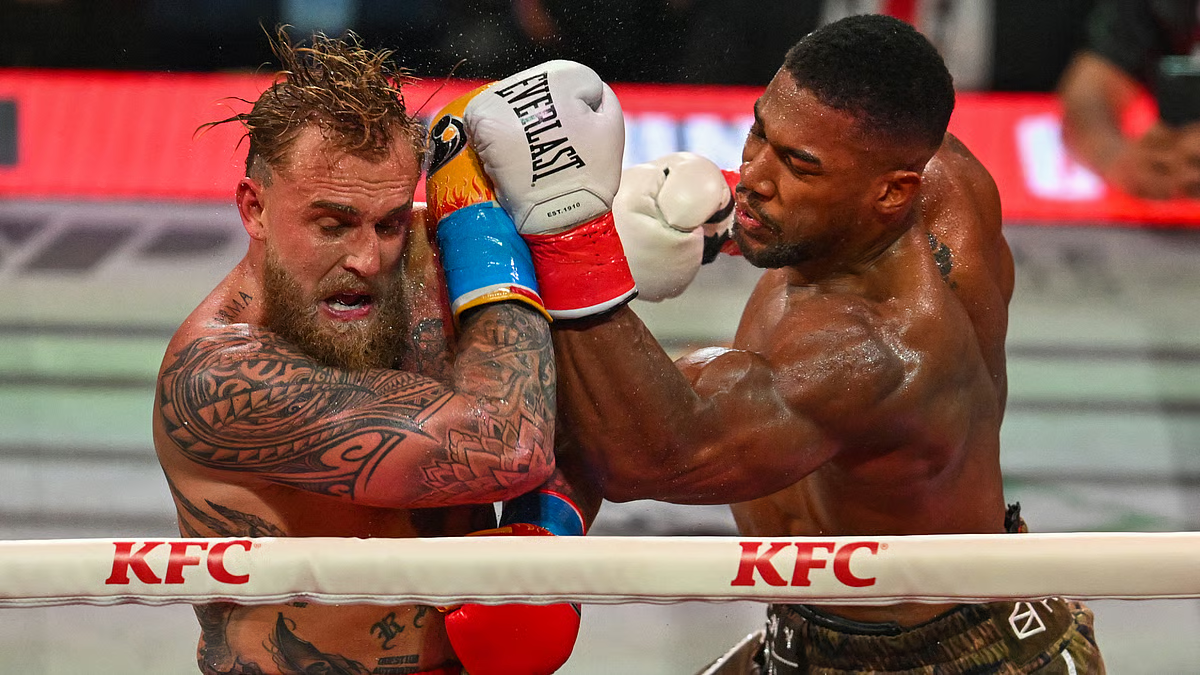
So the fight happened. The gloves were laced, the cameras rolled, the internet held its collective breath—and Anthony Joshua did what Anthony Joshua is expected to do. He won. Cleanly. Decisively. Boxing survived the night.
Yet, as the noise settled and the memes began their slow retreat into group chats, it became clear that this bout would never be judged by the referee alone. It had another audience—larger, younger, louder—and for once, that may not be a bad thing.
READ ALSO: Anthony Joshua Knocks Out Jake Paul in Controversial Netflix Bout in Miami
Because if satire must be honest, then it must also admit this: the fight worked.
Yes, Joshua defeated Jake Paul. Order was restored. But beyond the scorecards, something else happened. The arena was filled with celebrities, influencers, musicians, athletes, and—most importantly—thousands of young people who had never stayed awake for a twelve-round fight in their lives. Boxing, for one night, became cool again.
And that matters.
For years, boxing has struggled with its own relevance. Fragmented titles, complex politics, and prolonged negotiations have drawn younger audiences to faster, louder, and more accessible sports. Enter Jake Paul, the unlikely Trojan horse who smuggled a new generation into an old arena.
Those young fans did not come for footwork or jabs. They came for spectacle. But once they arrived, they stayed long enough to see discipline, experience, and craft dismantle hype. They saw the difference between influencer ambition and professional pedigree—and they learned it in real time.
Joshua, in that sense, became more than a winner. He became a reference point. The adult in the room. The proof that boxing still has standards.
And while critics scoff at celebrity ringside seats, those faces mattered. They pulled cameras. They pulled clicks. They pulled conversations. Boxing benefited from the glow. A sport that has often looked inward suddenly found itself trending outward.
Jake Paul played his role perfectly. He did what boxing promoters have failed to do for years—he marketed the sport to people who didn’t know they needed it. He brought the noise. Joshua brought the substance. Together, they created an event that felt larger than the bout itself.
And therein lies the unexpected balance.
Joshua won credibility. Jake brought curiosity. Boxing gained attention. For once, it didn’t feel like a zero-sum game.
The danger, of course, remains. Boxing must not become a playground where legacy fighters are reduced to supporting acts in influencer narratives. But if managed wisely, this crossover moment could become a gateway rather than a detour—a way to introduce young audiences to real fights, real champions, and real consequences.
So who is the joke on?
Perhaps no one.
Joshua reminded the world that skill still matters. Jake Paul reminded boxing that visibility does, too. And the sport—often accused of resisting change—found itself briefly rejuvenated by the very culture it once dismissed.
In the end, Joshua raised his hand. Jake took the loss. But boxing walked away with something rarer than a belt or a paycheck:
A new audience is listening.
And in a sport that survives on attention as much as talent, that may be the real victory.