


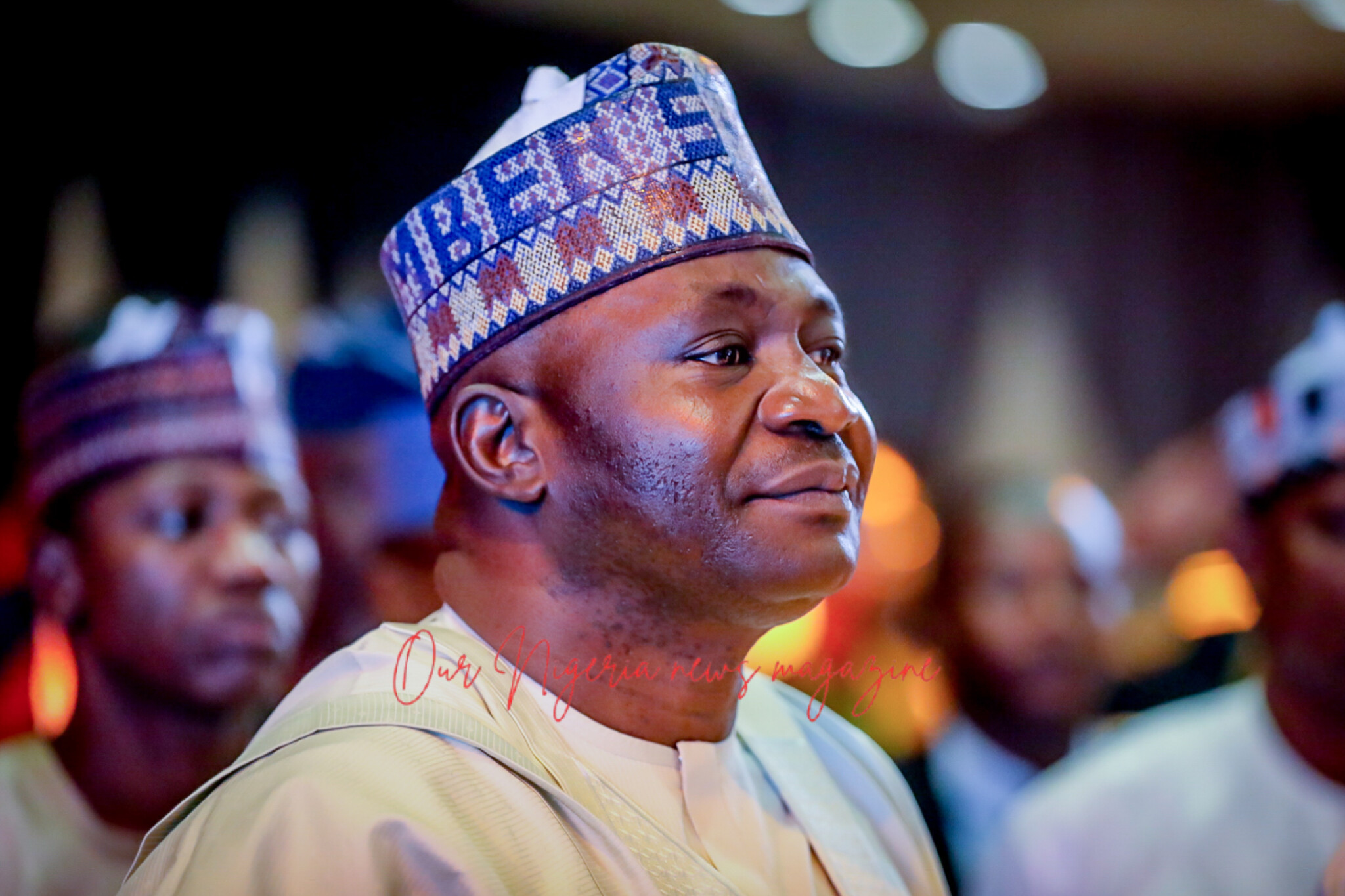
CG Musa Sworn in as Minister of Defence: President Tinubu’s Defence Masterstroke
By Jerry Adesewo
The moment President Bola Ahmed Tinubu appointed Gen. Christopher Gwabin Musa (Rtd.) as Minister of Defence. I recognised it was not just another administrative shuffle, but a strategic restoration of authority to a man who has long understood the war but was never given the tools to end it. Musa’s tenure as Chief of Defence Staff already revealed a leader who fused operational intelligence with calm, non-performative courage. There was no theatrics around him, no media obsession, no superficial chest-thumping. Instead, there was measured clarity, a steady grasp of what command truly means, and an unpretentious willingness to confront insecurity at its hardest fronts.
I observed Musa closely when he served as Chief of Defence Staff, and I realised that his limitations were not due to competence but to structure. As CDS, he was the nation’s highest uniformed officer, yet he operated within a command architecture controlled by political approvals, budgetary bottlenecks, procurement interests, and clearance delays designed by non-security actors who often understood influence more than defence. He could command troops, but he could not command procurement. He could recommend reforms, but he could not enforce them. He could design a strategy, but he could not guarantee that decisions would be taken on merit rather than on political convenience. His brilliance was trapped within a system managed by the very hands he could not overrule. That is why I never joined the crowd that measured his performance by battlefield outcomes alone. You cannot demand victory from a general who is denied access to the armoury of decision-making.
Now, in his new role as Minister of Defence, the conversation changes fundamentally. For the first time, Musa is positioned not beneath policy, but above it. He is no longer the adviser waiting for signatures; he is the signatory. He is no longer the man executing decisions filtered through multiple layers of political interpretation; he is now the one empowered to interpret, approve, and enforce. As Minister, he can set the doctrine rather than inherit one. He can choose his team rather than navigate one fractured by allegiances he did not cultivate. He has direct access to the President without intermediaries who dilute urgency or reshape strategic instructions through personal interests. He is now located at the precise intersection where national security, political will, and operational authority converge.
This is why I call Tinubu’s move a masterstroke. The kind of masterstroke expected from a Commander-in-Chief of the Armed Forces of the Federal Republic of Nigeria, who desired to make an impact. Nigeria has spent decades punishing service chiefs for failures largely authored in the civilian corridors of power, where budgets were delayed, contracts were inflated, equipment was sabotaged, and intelligence was compromised. We built a culture of rotating generals through a broken infrastructure rather than repairing the infrastructure itself. Now, for once, the architect of command has been handed the blueprint.
I am aware of what this transition demands. Nigeria’s insecurity is not merely a battlefield challenge; it is a systemic tumour embedded in procurement habits, political interference, rival intelligence culture, divided command, and institutional fatigue. Musa understands this architecture not from textbooks, but from lived command. As CDS, he was forced to operate within it. As Minister, he now has the mandate to dismantle, rebuild, and refine it.
I temper my optimism with realism because I know Nigeria’s history with bright minds. This country applauds competence publicly, then strangles it through bureaucracy, silent sabotage, and transactional interference. If the same system that constrained him at Defence Headquarters follows him into the ministry, then the nation will again watch brilliance suffocate under the weight of old habits. But if the political climate aligns with his clarity, if procurement is cleaned, if intelligence flows without obstruction, if those who feed on crisis are finally removed from the table, then Musa will not just lead operations — he will lead transformation.
And that, ultimately, is what is at stake. I have watched him command from inside the structure; now I watch to see if he will be allowed to redesign the structure itself. His failure, if it occurs, will not be because he does not understand the war. It will be because the political class did not allow him to win it. But if he succeeds, then for the first time in years, Nigerians will see a security architecture shaped by a leader who has known the battlefield, absorbed its lessons, and now holds the authority to write its doctrine.
Nigeria is tired of condolences and commemorations. I am tired of them, too. This appointment must not become another celebrated beginning that decays into familiar disappointment. Musa has crossed the line from command to control, from uniformed authority to policy supremacy. In that shift lies the potential for a true national security reset.
If the nation gives him space to act, resources to deploy, and the political trust to clean what needs to be cleaned, then this will not just be a ministerial appointment. It will be the turning point we have been waiting for. And history, with its unforgiving memory, will record whether we backed him or broke him.