

Osun 2026: Can Nigeria Still Deliver a Free and Fair Election?

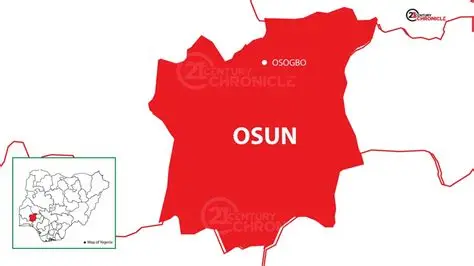
Osun 2026: Can Nigeria Still Deliver a Free and Fair Election?
By Jerry Adesewo, Abuja
Some elections arrive with the usual excitement of campaigns, manifestos, and political rallies. Then some elections arrive carrying so much political baggage that the first question is no longer simply, “Who will win?” But can the people vote freely enough for their choice to matter?
The August 15 Osun governorship election increasingly looks like the latter. On paper, it is a straightforward democratic exercise. The Independent National Electoral Commission will conduct the election. The people of Osun will choose their governor. Political parties will mobilise their supporters, security agencies will protect voters and officials, and a winner will eventually emerge.
READ ALSO: Osun Poll: NSCDC Deploys 10,210 Personnel, Tactical Units to Forestall Violence
But the events surrounding the election have created an atmosphere in which confidence itself has become an electoral issue. The warning signs are clear, and have been accumulating.
Reports have documented growing political violence and intimidation ahead of the poll. A recent election-security assessment described Osun as facing increasing risks from political violence and organised crime, while urging security agencies to ensure that deployments do not themselves become instruments of voter intimidation.
That is the first contradiction Nigerians must confront. An election requires security. But too much security, deployed without visible neutrality, can become another source of fear.
When the police command becomes part of the political conversation. Perhaps nothing illustrates the sensitivity of the Osun election more than the controversy surrounding the state’s police leadership.
When the police command becomes part of the political conversation
The replacement of the Commissioner of Police, CP Ibrahim Gotan, with CP Erale Samuel Etaifo assigned to the state has generated political questions about the independence and neutrality of election security. Critics have naturally asked why the leadership of the police command should become a matter of political contestation so close to an election.
The concern is not necessarily that a change of commissioner automatically compromises an election. Police commissioners can be transferred or reassigned for legitimate administrative reasons. The problem is perception. In an election as closely contested as Osun, perception matters.
If one side believes that a security commander has been removed because he was insufficiently sympathetic to its interests, while the other believes that the change was necessary to guarantee neutrality, the institution begins the election carrying political baggage. That is precisely what election security should avoid.
The police have now announced a major security operation, with reports putting the deployment at about 15,000 personnel across the state. The number sounds not just impressive, but intimidating. But democracy is not secured by numbers alone. It is secured by the conduct of those numbers. A single security officer who intimidates a voter can do more damage to public confidence than a thousand officers standing peacefully around polling centres can repair.
Then came the money question.
Just days before the election, another controversy erupted: the reported freezing of an Osun State Government account by the Economic and Financial Crimes Commission. The account, reportedly used for workers’ salaries, was placed on a “Post No Debit” restriction. The action immediately became politically explosive because of its proximity to the election.
There is an important distinction here.
An anti-corruption agency must be allowed to investigate financial wrongdoing. Public funds cannot be immune from scrutiny simply because an election is approaching. But equally, law-enforcement institutions must understand that timing can create political consequences even when the underlying action may have a legitimate legal basis.
That is why the reported lifting of the restriction is important—not merely as an administrative development, but as a reminder of how sensitive institutional actions become during an electoral period.
The question Nigerians should ask is not whether Osun should be investigated. Of course, it should, where there is evidence of wrongdoing. The question is whether such investigations are being conducted in a manner that is transparent, legally sound and demonstrably independent of electoral calculations.
The strange comfort of 10,000 security personnel.
Another striking feature of the preparations is the scale of the security deployment. The Nigeria Security and Civil Defence Corps has previously demonstrated deployments of around 10,000 personnel for major elections, including the Ekiti governorship poll. For Osun, this kind of massive deployment may be necessary given the security concerns surrounding the election.
But again, Nigerians should not confuse a heavily secured election with a free election. A free election is one in which voters can walk into a polling unit without fear. A fair election is one in which the voter can choose without being threatened, bribed, harassed or manipulated.
A credible election is one in which electoral officials, political parties, security personnel and institutions understand that their job is not to produce a particular winner but to protect the process. The presence of thousands of officers is therefore only useful if their orders are clear: protect voters, protect electoral materials, maintain peace and remain politically neutral.
Anything beyond that is dangerous.
Osun has been here before
Osun’s political history makes the anxiety understandable.
The 2022 governorship election was fiercely contested and ultimately won by Ademola Adeleke. While the election was generally regarded as comparatively well organised, reports of vote buying and other irregularities showed that even a relatively peaceful election can be compromised through means that do not involve gunfire.
That lesson should not be forgotten. Electoral violence is not the only threat to democracy. Vote buying is violence against democratic choice. Intimidation is violence against democratic choice. Manipulation of institutions is violence against democratic choice. Using government machinery to disadvantage opponents is violence against democratic choice. And deploying security agencies in a partisan manner is perhaps one of the most dangerous forms because the ordinary voter has very little capacity to resist it.
Can the election still be free and fair? Yes. But that answer cannot be based on optimism alone. There are still institutional safeguards available. INEC has repeatedly said it is preparing for the Osun election and has publicly expressed the ambition of delivering an election better than the Ekiti exercise.
That is welcome. But INEC cannot do it alone. The political parties must accept that losing an election is preferable to destroying the electoral system. Security agencies must understand that their loyalty is to the Constitution and the Nigerian people—not to whoever happens to occupy Government House or control the federal machinery.
The EFCC and other law-enforcement bodies must demonstrate that investigations are driven by evidence and law, not electoral calendars. And the electorate must be allowed to vote without fear.
Most importantly, the eventual winner must be able to say that the mandate came from the people rather than from the machinery surrounding the election.
The real election begins before the ballot is cast
This is perhaps the greatest lesson from the Osun experience. An election is not merely the few hours during which citizens stand behind a ballot box. The election begins months earlier—with candidate selection, campaign financing, political violence, media coverage, institutional decisions, security appointments and the behaviour of political actors.
By election day, much of the election may already have been shaped. That is why the controversies surrounding Osun cannot simply be dismissed as political noise. They are part of the credibility test. And this is where President Bola Ahmed Tinubu’s administration also has an opportunity.
The Federal Government does not need to determine who wins Osun. It needs to demonstrate that whoever wins will have won despite the government—not because of it.
That distinction is fundamental. If the incumbent wins, the opposition should be able to accept the result because the process was credible. If the opposition wins, the government should be able to accept the result because the institutions performed their constitutional duties.
That is democracy.
Osun deserves better
Osun is not merely another electoral laboratory. It is home to millions of Nigerians who deserve to choose their governor without fear.
The state deserves an election in which security personnel are seen as protectors rather than political actors; in which anti-corruption agencies investigate without suspicion of political timing; in which INEC is allowed to work without interference; and in which political parties compete with ideas rather than intimidation.
The coming days will therefore tell us much more than who will occupy Osun Government House. They will tell us whether Nigeria has learnt anything from the painful history of electoral politics.
The question before the authorities is simple: Can they create an environment in which the people of Osun are free to vote, and then allow their votes to speak? That is the standard. Not how many policemen were deployed. Not how many security agencies were mobilised. Not how many political rallies were held. Not how loudly the parties celebrated.
The ultimate measure is whether, when the ballots are counted, Nigerians can look at the result and believe that the people—not the machinery of power—decided it.