

From Okonkwo to Icon: The Extraordinary Journey of Pete Edochie
From his unforgettable portrayal of Okonkwo in Things Fall Apart to becoming one of Africa’s most revered actors, Pete Edochie lived a remarkable life in which talent, discipline, culture and an unmistakable screen presence combined to create an enduring legacy.

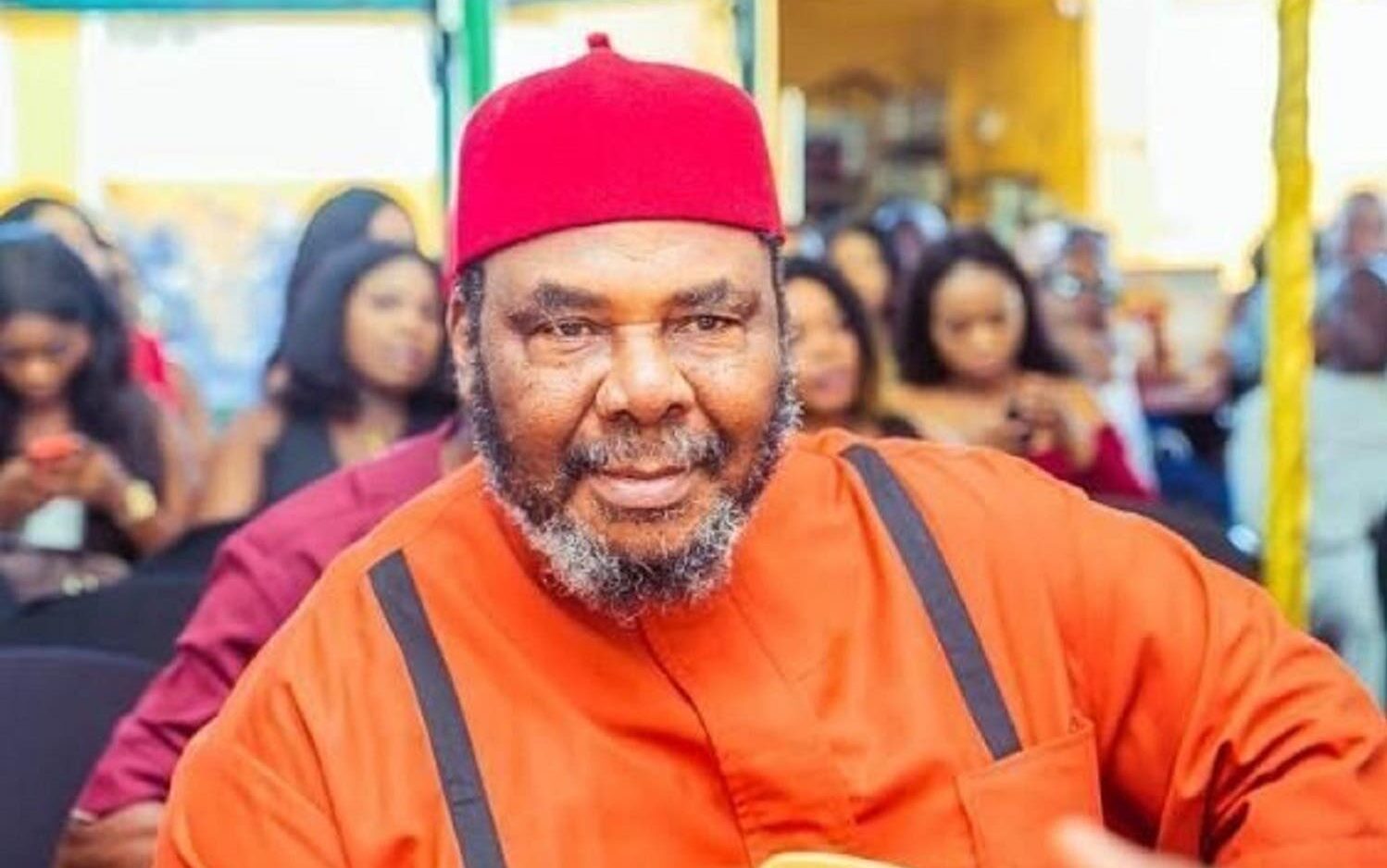
His death on Wednesday, November 25, 2026, at the age of 79, marks the end of an extraordinary chapter in the history of Nigerian broadcasting and filmmaking. Yet, for an actor whose most celebrated character, Okonkwo, symbolised strength, pride, ambition and the complexities of African masculinity, death may have silenced the man, but it cannot erase the performances that made him immortal.
Edochie was born on March 7, 1947, in Zaria, Kaduna State, into an Igbo family originally from Nteje in present-day Anambra State. His early years in Northern Nigeria exposed him to a multicultural environment that would later find expression in his professional life and interactions.
He attended St. Patrick’s and St. James Primary School in Zaria before proceeding to St. John’s College, Kaduna. His childhood was marked by an early fascination with entertainment, particularly music and radio broadcasting.
Interestingly, he was an admirer of American music legend Elvis Presley. His fascination with the singer was so pronounced that he reportedly imitated his hairstyle and dance moves, earning him the childhood nickname “Elvis Presley”.
Long before he became one of Nollywood’s most recognisable faces, Edochie had developed an interest in the performing arts. His exposure to literature and drama during his secondary school years helped nurture his appreciation for storytelling and character interpretation.
However, his first professional calling was not acting but broadcasting.
From the radio microphone to the television screen
In February 1967, at the age of 19, Edochie began his broadcasting career with the Eastern Nigeria Broadcasting Corporation as a junior programmes assistant.
It was a career that would shape his communication skills, deepen his understanding of human expression and eventually provide the foundation for his success in acting.
He distinguished himself in broadcasting and steadily rose through the ranks, taking on responsibilities that included programme production and management. His professional journey also took him through the turbulent period of the Nigerian Civil War, during which he and his future wife, Josephine, worked with the Voice of Biafra.
Edochie’s commitment to professional development took him to the United Kingdom, where he received training at the British Broadcasting Corporation (BBC) in 1980.
He subsequently became a prominent figure in the broadcasting industry in the former Eastern Region, rising to the position of Director of Programmes and Deputy Managing Director of the Anambra Broadcasting Service.
He also played a pioneering role in the development of FM broadcasting in the region, becoming the first director of ABS 3 FM Stereo in Enugu in 1987. He named the station Sunrise ’96, reflecting its location in the eastern part of Nigeria.
By the time acting came calling in a more significant way, Edochie was already an accomplished broadcaster and administrator. His experience behind the microphone had equipped him with the voice control, diction, confidence and communication skills that would later become defining features of his acting career.
The character that changed everything
In the 1980s, the Nigerian Television Authority embarked on a television adaptation of Achebe’s internationally acclaimed novel. Edochie was selected to play Okonkwo, the central character whose life captures the tensions between tradition, personal ambition, social expectations and colonial intrusion.
The production, which brought Achebe’s literary world to television audiences, became a landmark in Nigerian broadcasting.
Interestingly, Edochie reportedly had not read the novel before he was considered for the role. A former colleague, G.C. Ugwu, recommended him for the character, and he subsequently auditioned at the University of Nigeria’s Enugu campus.
His interpretation of Okonkwo was extraordinary.
With his imposing stature, deep voice, measured delivery and ability to communicate authority through subtle gestures, Edochie gave the character a powerful screen identity. He embodied Okonkwo’s strength and determination, while also revealing the fear, vulnerability and contradictions beneath the character’s seemingly unbreakable exterior.
His performance resonated far beyond Nigeria. It introduced international audiences to a compelling representation of Igbo society and African cultural traditions.
The BBC reportedly sent a delegation to Nigeria to interview him following the impact of his portrayal.
For millions of viewers, Pete Edochie became Okonkwo, and Okonkwo became Pete Edochie. It was a rare artistic achievement that established him as one of the most memorable actors in African television history.
But while the role brought him widespread recognition, it was only the beginning of a career that would span several decades.
A career beyond Okonkwo
As Nollywood developed from a relatively modest film industry into one of the world’s largest film-producing industries, he remained one of its most respected and recognisable figures.
He appeared in numerous productions, including Ikuku, Igodo, Rituals, Billionaire’s Club and Lionheart, the 2018 film directed by Genevieve Nnaji.
In Lionheart, he played Chief Ernest Obiagu, a wealthy businessman and family patriarch. The production, which also featured Genevieve Nnaji and Nkem Owoh, further demonstrated his ability to connect with contemporary audiences while retaining the traditional authority that had become his trademark.
His filmography was characterised by a succession of memorable portrayals of traditional rulers, wealthy businessmen, community leaders, fathers and family patriarchs.
Yet, reducing his acting career to the roles of kings and traditional fathers would be an incomplete assessment of his contribution. What distinguished Edochie was his ability to give his characters a sense of history, identity and cultural authenticity.
He understood the nuances of traditional African society and could communicate the complexities of power, family relationships, respect, responsibility and communal values through his performances.
His deep, resonant voice became one of the most recognisable features of Nigerian cinema. His deliberate manner of speaking, expressive facial gestures and measured delivery gave his characters an authority that few actors could easily replicate.
He also became renowned for his use of Igbo proverbs, traditional expressions and philosophical statements, which frequently gave his performances an additional cultural dimension.
Interestingly, Edochie once clarified that many of the popular proverbs circulated on social media and attributed to him were not actually his. This was characteristic of an actor who understood the difference between his screen personality and his personal identity.
His approach to interpreting traditional rulers was equally distinctive. He believed that characters representing kingship and traditional authority had to be portrayed with dignity and decorum. To him, a traditional ruler could not behave in ways that undermined the institution he represented.
That understanding of character and cultural responsibility helped establish his reputation as an actor who took his craft seriously.
The man behind the imposing screen personality
Beyond the screen, Edochie was a family man, a broadcaster, a practising Catholic and a personality who placed considerable emphasis on discipline, respect and personal responsibility.
He married Josephine on March 19, 1969, at St. Finbarr’s Catholic Church in Umuahia. Their marriage, which lasted more than five decades, was blessed with six children — five sons and a daughter.
Two of his sons, Linc and Yul Edochie, followed in his footsteps into the entertainment industry, making acting a notable part of the family’s identity.
Yul, in particular, became a prominent Nollywood actor, although his career and personal life sometimes attracted controversies that placed the family in the public spotlight.
Despite his imposing screen personality, Pete Edochie was also known for his humour, strong opinions and willingness to speak candidly about issues affecting the entertainment industry and society.
He was particularly vocal about the need for discipline, professionalism and improved standards in filmmaking.
His colleagues and younger actors frequently regarded him as a father figure whose experience and understanding of the profession made him a valuable source of guidance.
The Actors Guild of Nigeria, in its tribute following his death, described him as a father figure to practitioners in the industry.
Its National President, Abubakar Yakubu, said: “Pete Edochie was a man of the people, a detribalised Nigerian who spoke different languages. He lived a noble life, a dedicated Christian and a disciplinarian.”
The Guild also acknowledged that the actor’s experience extended beyond Nollywood to broadcasting, underscoring the breadth of his professional accomplishments.
Recognition and honours
Edochie’s contribution to Nigerian entertainment earned him several national and international recognitions.
In 2003, former President Olusegun Obasanjo conferred on him the national honour of Member of the Order of the Niger (MON), one of Nigeria’s recognised national distinctions.
In 2014, he received the Industry Merit Award at the Africa Magic Viewers’ Choice Awards (AMVCA), in recognition of his outstanding contribution to the film industry.
He also received a Lifetime Achievement Award from the Africa Movie Academy Awards in 2019 and the African Film Legend Award in 2020.
These honours reflected the industry’s appreciation of a man whose career helped shape the identity and development of Nigerian cinema.
His influence also extended beyond awards and public recognition. Through his performances, he helped introduce generations of viewers to the richness of Igbo culture, traditional institutions, indigenous wisdom and African storytelling.
For many Nigerians growing up in the 1980s and 1990s, watching Pete Edochie was an introduction to a distinctive form of acting in which dialogue, gestures, silence and expressions combined to communicate powerful emotions.
He became a reference point for aspiring actors who wanted to understand how to command attention without necessarily raising their voices or relying on exaggerated gestures.
An enduring influence on Nollywood
The significance of Pete Edochie’s career becomes even more apparent when considered against the evolution of Nollywood.
He belonged to a generation of performers who helped establish the credibility of Nigerian film and television at a time when the industry was still finding its identity.
While Nollywood has evolved considerably, embracing new technologies, production techniques, international collaborations and changing audience preferences, Edochie’s generation laid much of the foundation upon which the industry now stands.
He represented a period when actors were expected to demonstrate mastery of language, character interpretation, cultural understanding and professional discipline.
His career also demonstrated that indigenous stories could achieve international appeal when presented with authenticity and artistic excellence.
Through Things Fall Apart, he became associated with a literary work that has introduced African history and culture to readers across the world. His subsequent film roles reinforced that connection between entertainment and cultural representation.
In this sense, he was more than a Nollywood star. He was an ambassador of Nigerian culture whose work travelled beyond geographical and linguistic boundaries.
His ability to interpret characters rooted in African traditions without making them appear inaccessible to modern audiences was one of his greatest strengths.
That is perhaps why his performances remained relevant across generations, even as the industry produced new stars and experimented with different storytelling approaches.
His final chapter
Even in the twilight of his career, Edochie remained a respected voice in the entertainment industry. He continued to grant interviews, offer opinions on developments in Nollywood and encourage investment in the creative sector.
In October 2026, during a visit to Ghana, he reportedly appealed to individuals and institutions with financial capacity to invest more in filmmaking, expressing concern about the declining volume of film production.
His death was announced by his eldest son, Chief Leo Pete Edochie, in a statement issued on behalf of the family on Wednesday, November 25, 2026.
According to the family, the veteran actor died at 12:30 a.m. in Enugu following a prolonged battle with prostate cancer. He was 79.
The announcement triggered an outpouring of tributes from political leaders, entertainment practitioners, colleagues and admirers across Africa.
President Bola Tinubu described him as an exceptional actor and one of the pioneers of Nigeria’s vibrant film industry.
The Actors Guild of Nigeria also mourned him, describing his death as a significant loss to an industry that continued to need his experience and wisdom.
For President Tinubu, Edochie’s place among those who shaped the film industry, Nigerian social norms and popular culture remained indisputable.
These tributes reflect the extent to which the actor’s influence transcended entertainment.
The legend that refuses to die
There are actors whose fame is tied to particular films, and there are those whose contributions become part of a nation’s cultural memory. Pete Edochie belonged firmly to the latter category.
His greatest achievement may not have been the number of films in which he appeared, the awards he received or the fame he attained. Rather, it was his ability to create a lasting connection between entertainment and cultural identity.
He gave a face and voice to characters that represented the complexities of traditional African society. He demonstrated that indigenous stories could command respect on the international stage and that African actors could interpret their cultural heritage with depth, sophistication and universal appeal.
His portrayal of Okonkwo will undoubtedly remain his most enduring screen achievement. But his broader contribution lies in the generations of actors he inspired, the cultural conversations his performances generated and the standard of professionalism he represented.
In an industry where celebrity often comes and goes with changing trends, Edochie built a legacy that transcended fashion and fleeting popularity.
He was an actor who understood the power of silence, the weight of words and the importance of cultural identity. He could command a room with his voice, deliver a proverb that lingered in the minds of viewers and interpret a character in ways that made audiences reflect long after the credits rolled.
His life also offers an important lesson about professional reinvention. From a young broadcasting assistant in 1967 to a senior broadcasting administrator, and eventually one of Africa’s most celebrated actors, Edochie demonstrated that talent, dedication and a willingness to embrace new opportunities could create an extraordinary professional journey.
Today, the man whose voice once commanded attention across television screens has taken his final bow.
But somewhere, an old television recording of Things Fall Apart will play again. A new generation will encounter Okonkwo, hear that unmistakable voice and discover the brilliance of the man behind the character.
And that is the privilege of an enduring artist: to continue speaking to generations he will never meet.
Pete Edochie lived well, played his part and left an indelible mark on Nigerian entertainment.
The lion may have roared his last, but his legacy will continue to speak.
Ebube Dike, rest well.
