


A Promise Under Pressure: Why the World Cannot Afford to Abandon Refugees
By Matthew Eloyi
Every generation is judged not only by the wars it fights or the wealth it creates but also by how it treats the most vulnerable. Few groups embody vulnerability more than refugees: men, women and children forced to abandon their homes in search of safety. Seventy-five years after the world adopted the 1951 Refugee Convention, that moral test remains as relevant as ever.
Today, the global refugee crisis has reached unprecedented proportions. Armed conflicts, political persecution, ethnic violence and humanitarian emergencies continue to drive millions across borders in search of protection. Yet, as the number of displaced people grows, so too do anti-refugee sentiments, restrictive immigration policies and shrinking humanitarian resources, raising difficult questions about whether the international community is still living up to the promise it made decades ago.
It was against this backdrop that the United Nations High Commissioner for Refugees (UNHCR) commemorated the 75th anniversary of the Refugee Convention, using the milestone not simply to celebrate a historic treaty but to renew a global appeal for compassion and shared responsibility.
Forged in the aftermath of the Second World War, the convention established one of the most important principles of international law, that every individual, regardless of nationality or background, has the right to seek and enjoy protection from persecution. For generations, it has served as the legal and moral foundation for refugee protection across the globe.
The UN High Commissioner for Refugees, Barham Salih, believes the convention’s enduring value cannot be overstated. According to him, “The convention had saved millions of lives over the decades.”
For Salih, the anniversary is more than a commemoration of history. It is a reminder that the commitment made by the international community in 1951 must continue to guide responses to today’s humanitarian crises.
He said: “It goes to the core of our shared humanity; 75 years ago, the world made a promise to protect people forced to flee. Our responsibility now is to keep that promise alive, for all generations to come.”
To reinforce that message, the UNHCR launched “The Promise,” a global statement of solidarity inviting people from all walks of life to publicly reaffirm their support for refugees. The initiative has attracted an influential group of early signatories, including Nobel laureates, faith leaders, business executives, refugee advocates, artists and athletes.
Among them are Malala Yousafzai, Angelina Jolie and football star Antonio Rüdiger, demonstrating that refugee protection has become a cause championed far beyond diplomatic circles.
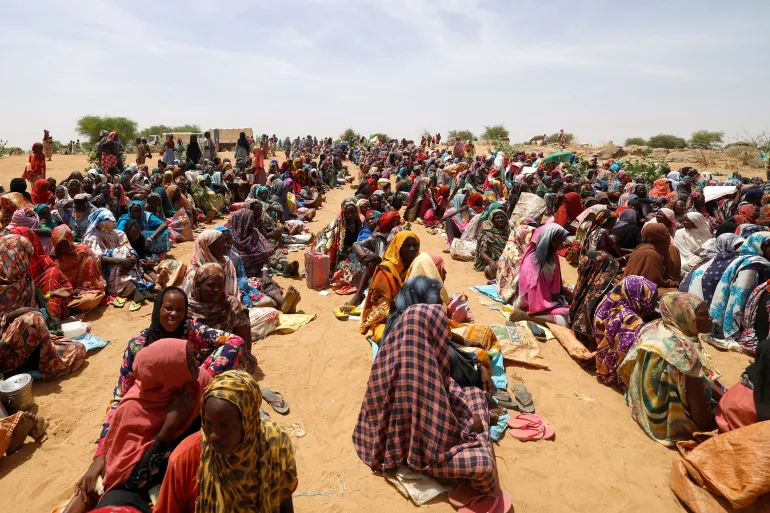
The campaign comes at a time when humanitarian agencies face mounting challenges. According to the UNHCR, more than 41 million refugees remain forcibly displaced worldwide, many spending years, or even decades, in camps or temporary settlements while durable solutions remain elusive.
For millions of displaced families, survival is only the first hurdle. Access to education, healthcare, employment and legal protection often remains limited, leaving many trapped in cycles of uncertainty despite having escaped conflict.
Salih argued that protecting refugees must go beyond offering immediate shelter.
“The convention is also about finding solutions, and that means all of us acting together at the early stages of displacement, so refugees are not left to languish.”
He added: “We must support host countries and communities, expand opportunities for refugees, and create the conditions for voluntary return and other lasting solutions.”
His remarks underscore an increasingly important reality: refugee protection cannot rest solely on countries that receive displaced populations. It requires sustained international cooperation, equitable burden-sharing and long-term investments that benefit both refugees and the communities that host them.
As the Refugee Convention reaches its 75th anniversary, the world finds itself confronting a paradox. The legal framework for protecting refugees has never been stronger, yet the humanitarian challenges have rarely been greater. Conflicts continue to erupt, displacement continues to rise and the need for solidarity has become more pressing than ever.
Ultimately, the anniversary is not merely about reflecting on the past. It is about deciding whether the promise made 75 years ago will remain a living commitment or become a fading ideal. For millions of refugees still searching for safety, the answer will shape not only their future but also the moral character of the international community.
