


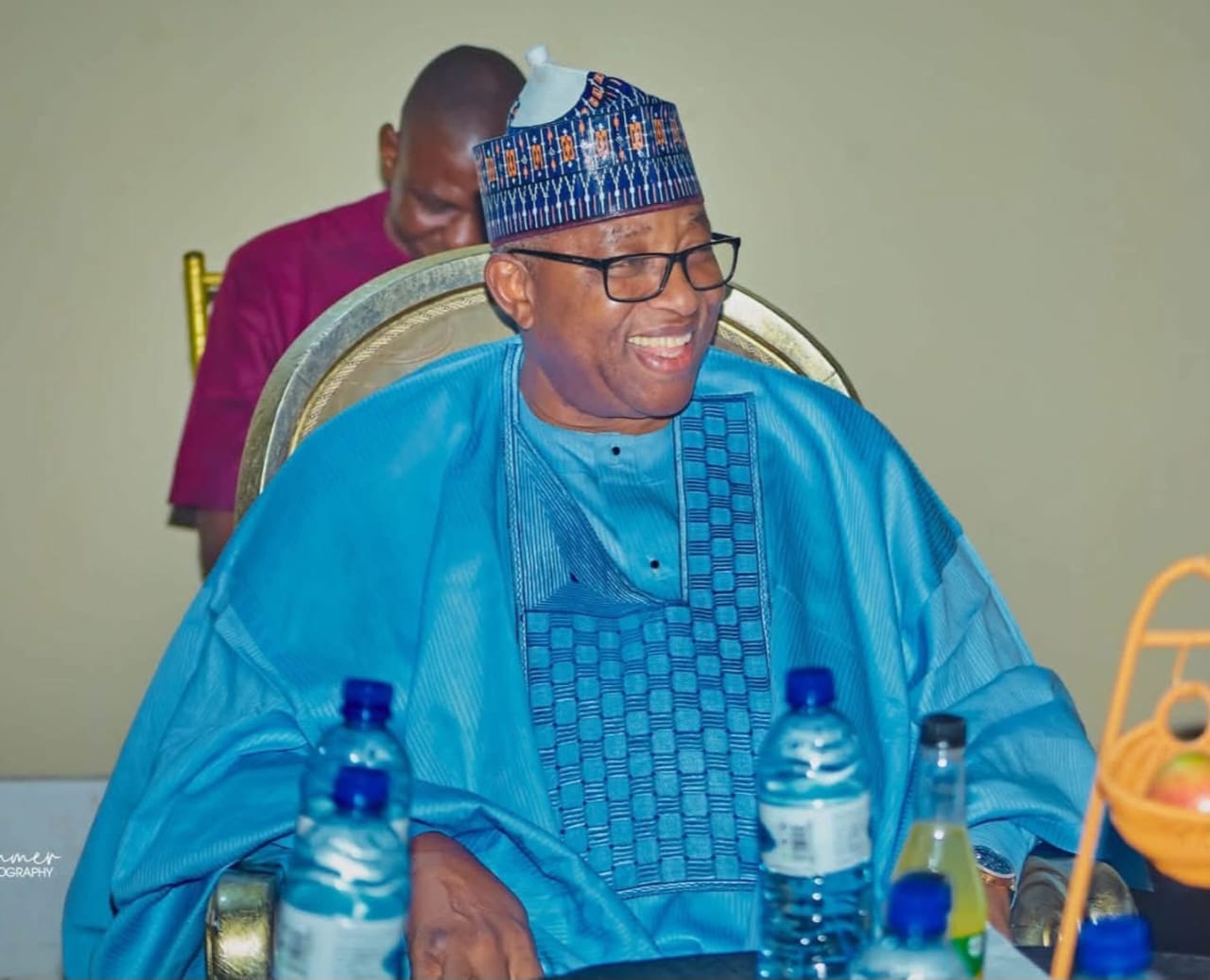
Bauchi 2027: Ending MA Abubakar’s Wait
By Dahiru Hassan Kera
Politics, we are often reminded, wears many robes. At one moment, it struts in the garments of idealism; at another, it cloaks itself in the murky fabric of chicanery disguised as loyalty. In Nigeria, political loyalty is too frequently measured not by conviction or shared vision, but by the depth of pockets and the immediacy of vested interests. Party comradeship becomes a theatre of intrigue; a quiet spy game where those one trusts most sometimes become the architects of undoing. Yet, beyond all the drama of ambition and betrayal lies a harder question politics must answer: after victory, who governs, and how?
It is within this context that the political journey of Mohammed Abdullahi Abubakar must be understood. His story is not merely that of a former governor waiting for another shot at power; it is the story of a political party grappling with institutional memory and a state confronting the difficult tension between electoral arithmetic and governance performance. For while elections matter, government exists for delivery. And in a democracy increasingly defined by transactional politics, competence in office must count for something.
To fully understand MA Abubakar’s political journey, one must rewind to the watershed election of 2015. In that historic cycle, Barrister Mohammed Abdullahi Abubakar emerged from a fiercely contested primary to fly the flag of the APC in Bauchi State. What followed was not a fluke, nor can anyone honestly dismiss it as a lucky escape. It was emphatic.
He polled 654,934 votes to defeat nine contenders, including the PDP’s Mohammed Jatau, who secured 282,650 votes. The margin shattered every illusion of incumbency as political invincibility and firmly planted Bauchi in the APC column. On the presidential ballot that same year, Muhammadu Buhari secured 931,598 votes in Bauchi, while incumbent Goodluck Jonathan managed just 86,085 votes. The message was unmistakable: Bauchi was APC country, and MA Abubakar was no electoral liability.
But elections, however important, are only one side of governance. Indeed, the real test often begins when campaign slogans surrender to administrative reality and MA Abubakar waalked right unto waiting battles left behind by his predecessor, but as one ready for the job, he took them in his strides.
The first was a lingering labour faceoff. Before he was sworn in on May 29, 2015, Bauchi State was already engulfed in an industrial crisis, as the Nigeria Labour Congress, Bauchi State Council, had embarked on strike. But, in a move that many pretend to forget, MA Abubakar, still governor-elect at the time, stepped in to broker peace and negotiate a truce with labour, ensuring the strike was suspended before his formal assumption of office. It was perhaps the earliest signal that governance, not theatrics, would define his approach.
And what an inheritance it was. Abubakar assumed office burdened by a cumulative debt profile exceeding N100 billion, comprising domestic liabilities, contractual obligations, gratuity arrears, salary backlogs and foreign loans running into millions of dollars. Civil servants were owed months of salaries. Ministries had become bloated bureaucratic structures draining public resources while governance effectiveness suffered. Rather than surrender to fiscal panic, he moved swiftly to cut the cost of governance, reducing ministries from 28 to 16, blocking leakages in government expenditure and repositioning the state civil service for efficiency.
To his critics, such measures appeared austere because they had cut off the proboscis with which these few individuals were sucking the life out of the state. To supporters, however, the reforms reflected discipline in an environment addicted to patronage.
Four months of unpaid salaries inherited by his administration were settled, while gratuity obligations received attention. Even more telling was his unwillingness to weaponise public finances for political friendships, a decision that would later become both his greatest strength and deepest political vulnerability.
Among the wolves of Bauchi politics, MA Abubakar’s greatest offence was simple: he refused to surrender the treasury to patronage networks. Yes, he was often described as firm, unyielding and unwilling to indulge the culture of endless political appeasement that sustains elite friendships in Nigerian politics. In an environment where loyalty is often rented rather than earned, restraint was interpreted as hostility and prudence mistaken for arrogance. Yet, even amid recession and shrinking national revenues, his administration still pursued visible governance.
Road infrastructure expanded across urban centres and strategic economic corridors. Projects such as the Misau-Udubo-Gamawa road, Hanafari-Jurara–G/Babani-S/Kafi–Dogon Daji road, and Itas-Atafawa-Magarya road were undertaken despite the economic headwinds of recession. Urban roads across the state’s major towns equally received attention at a time many governments elsewhere had retreated into excuses.
Healthcare also experienced deliberate intervention. His administration constructed and equipped primary healthcare centres across nineteen local governments, complete with staff quarters and sanitation facilities, while maternities were built to tackle maternal and infant mortality. Funding models prioritising accountability and transparency improved service delivery, salary backlogs of health workers were addressed, and partnerships with the Bill and Melinda Gates Foundation and Dangote Foundation supported immunisation efforts and emergency interventions against polio.
Government hospitals witnessed a revival of patient feeding schemes and improved operational support, including fuel supply to standby generators, while the accreditation process of critical nursing and health institutions gained momentum. In collaboration with international partners, thousands benefitted from free eye-care interventions, still remembered in many communities as one of the largest of its kind in the state’s history.
Agriculture, however, became perhaps the clearest expression of MA Abubakar’s governance philosophy. At a time Bauchi entered the planting season without procured fertilisers, his administration intervened rapidly, procuring thousands of metric tonnes and selling them at heavily subsidised rates regarded among the cheapest nationwide at the time. Dormant tractor hiring units were reactivated, extension services strengthened, and partnerships forged to improve food security and farmer productivity.
His administration keyed into the Central Bank’s Anchor Borrowers Programme, registering thousands of farmers while investing in training and logistics for agricultural extension. Sesame production gained new momentum through partnerships that helped Bauchi emerge as a leading producer nationally. Fisheries, livestock disease control, agrochemical interventions, irrigation support and rural farming logistics all received attention. Even under environmental programmes like the Great Green Wall initiative, tree planting, date palm distribution and youth skills development found expression.
From the foregoing, it becomes difficult to honestly sustain the argument that MA Abubakar’s relevance rests only on nostalgia or electoral mathematics. Governance, however imperfect, formed a substantial part of his record. Yet, as is often the case in Nigeria, the fiercest political wars are rarely fought across party lines. They are fought within.
The APC’s painful loss in Bauchi in 2019 was less an opposition masterclass and more an implosion. It was APC versus APC. The opposition merely harvested the fruits of internal discord.
A sober post-mortem reveals uncomfortable truths. Beneficiaries of appointments, political patronage and influence worked at cross-purposes as inordinate ambition eclipsed collective purpose. Some of the men who rode to prominence on the APC platform openly distanced themselves from Abubakar’s government, while others quietly sustained internal sabotage. Among such figures was former Speaker Yakubu Dogara, whose political movements and alliances deepened opposition resistance to the administration.
And yet, even amid internal fractures, the paradox remained undeniable. Bauchi delivered some of the highest presidential votes for Muhammadu Buhari in 2019, the highest in the North-East and among the strongest nationally outside Kano, Katsina and Kaduna. Despite losing his own reelection bid, it was acknowledged that only MA Abubakar’s organisational structure could have delivered such numbers. So committed was he to party success that it became almost clear that he sacrificed attention to his own political survival in the pursuit of broader APC victory.
Under his watch, the APC equally secured all three senatorial seats and nine of eleven House of Representatives seats at a point, demonstrating not merely popularity but political structure.
Yet perhaps the most telling chapter of his political journey unfolded after defeat. Where others abandoned ship, MA Abubakar stayed. He neither bolted from the APC nor flirted publicly with political migration despite many believing the party had failed him. Loyalty, especially when rewarded with betrayal, is rare in Nigerian politics. Yet, he remained steadfast.
That steadfastness now forms the moral spine of conversations around 2027. For the APC in Bauchi, the question ahead is larger than sentiment, it is philosophical. Should sabotage be rewarded while loyalty becomes expendable? Should governance records matter, or should politics remain hostage to transactional calculations and newspaper influence disconnected from polling-unit arithmetic?
The recent APC setback in the Katagum zone should perhaps offer sobering lessons. Political relevance on paper does not always translate to grassroots mobilisation. Influence in Abuja does not necessarily command votes in Bauchi. This is precisely why MA Abubakar’s wait continues to matter.
He represents not simply a former governor seeking redemption, but a tested political actor carrying both the scars of betrayal and the experience of governance. He understands victory, defeat, structure, administration and sacrifice. More importantly, he understands Bauchi.
His return, when it comes, would signal more than a candidacy. It would represent an argument that governance still matters, that fiscal discipline need not be punished forever, and that loyalty to party and public service ought to count for something.
Politics may indeed wear many robes. But every once in a while, it must choose substance over intrigue, memory over convenience, and governance over mere conquest. For Bauchi APC, 2027 may well be that moment to right the wrongs of the past. If it’s any consolation, MA Abubakar may be the only individual capable of unraveling the outgoing leadership of Bala Mohammed who is digging in for a final battle.
Kera, a Journalist, writes from Abuja.
