


Who Speaks for the Boy Child? Confronting Nigeria’s Growing Masculinity Crisis
By Matthew Eloyi
As Nigeria joins the rest of the world to mark the International Day of the Boy Child, the moment presents an opportunity for deep reflection on the place of the Nigerian boy in a rapidly changing society. For years, national and global conversations have rightly focused on empowering the girl child, addressing gender inequality, expanding access to education for girls, and protecting women from discrimination and violence. These efforts have yielded positive results and deserve continued support.
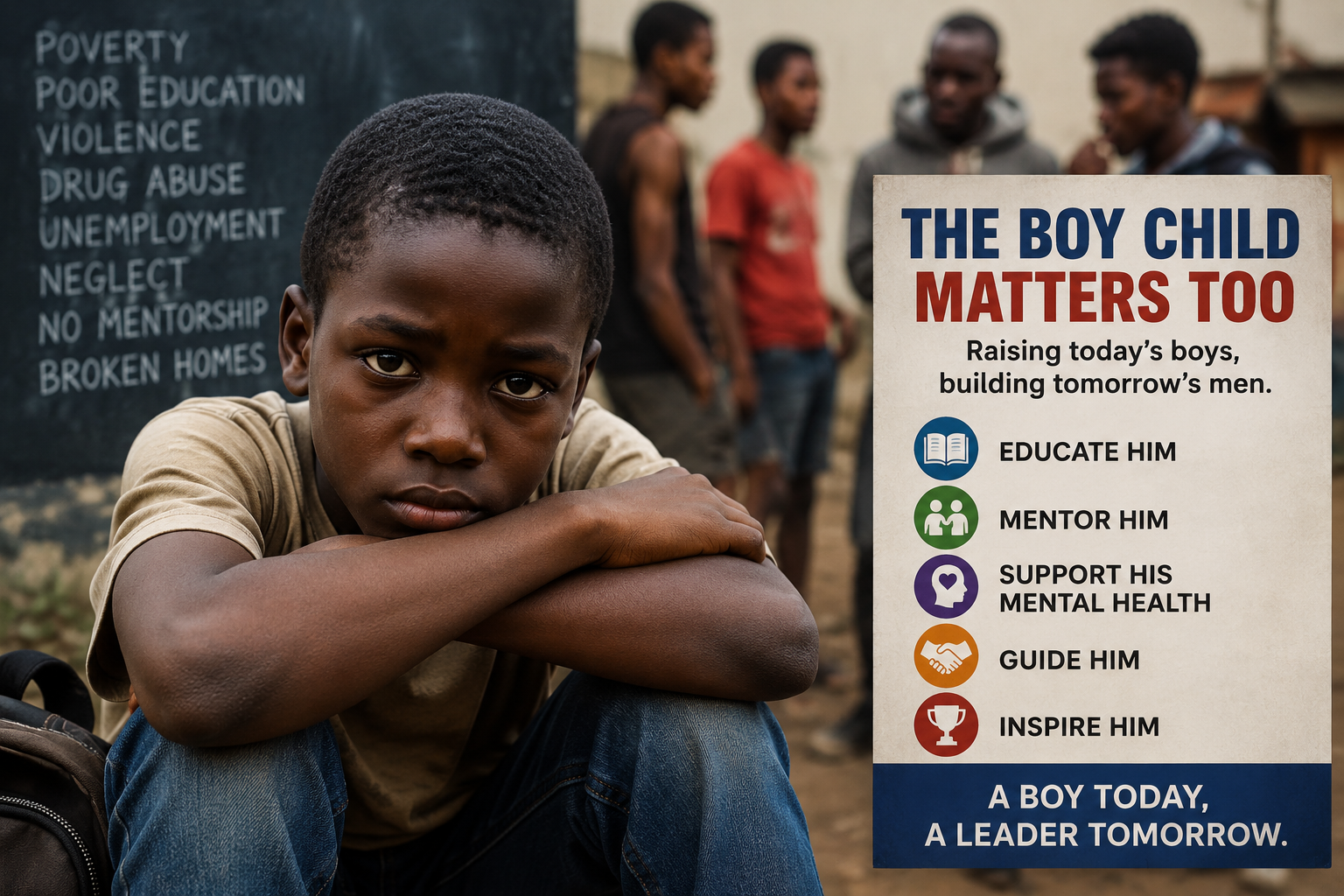
However, while society has devoted increasing attention to the challenges confronting girls, the struggles of the boy child have quietly deepened, often unnoticed, unspoken and unattended. Across communities in Nigeria today, millions of boys are growing up without guidance, without emotional support, without opportunities, and increasingly without hope.
From the streets of Abuja to the rural villages of Benue, from the creeks of the Niger Delta to the conflict-ridden communities of the North-East, many boys are battling poverty, broken homes, drug abuse, violence, cultism, unemployment and social neglect. Too many are dropping out of school, falling into crime, becoming victims of recruitment by criminal gangs or extremist groups, or losing their sense of identity in a society that constantly demands toughness while denying them emotional expression.
Sadly, society often assumes that because a boy is male, he is naturally privileged and emotionally resilient. This dangerous assumption has caused many to overlook the silent suffering of boys who are expected to “man up” even when they are hurting.
In many Nigerian homes, young boys are raised with harsh notions of masculinity. They are told not to cry, not to complain, not to show weakness. Vulnerability is mocked. Emotional pain is suppressed. By adulthood, many men have become prisoners of bottled emotions, unable to communicate pain, frustration or fear. The consequences are visible everywhere: rising violence, domestic abuse, substance addiction, depression and growing mental health challenges among young men.
The neglect of the boy child is also evident in the education sector. In some communities, particularly in conflict-affected and economically disadvantaged areas, boys are increasingly abandoning classrooms for menial jobs, street trading, commercial motorcycle riding, illegal mining and other survival activities. While campaigns have successfully pushed for girls’ education, there is now an emerging concern over the growing number of boys who are also being left behind educationally.
This reality demands balance, not competition. Supporting the boy child does not mean abandoning the girl child. The progress made in promoting girls’ rights must continue. But true societal development requires raising responsible, educated and emotionally stable boys alongside empowered girls. A society cannot thrive when one gender is strengthened while the other is neglected.
The family remains the first place where this change must begin. Fathers, in particular, have a critical role to play in shaping boys into responsible men. Unfortunately, many Nigerian homes are experiencing a crisis of fatherhood. Economic hardship, migration, broken marriages and social pressures have contributed to the growing absence of fathers in the lives of many children. Consequently, many boys are growing up without mentorship, discipline, affection or positive male role models.
When boys are left to learn manhood from the streets, social media or criminal circles, society eventually bears the consequences.
Schools must also do more than provide academic instruction. Guidance counselling, mentorship programmes, sports, leadership development and mental health support should become integral parts of the educational system. Boys need safe spaces where they can discuss their fears, aspirations and struggles without ridicule.
Religious institutions, traditional leaders and community organisations also have responsibilities. Sermons, cultural teachings and community programmes should intentionally address issues affecting boys and young men. Moral instruction must go beyond condemning bad behaviour to actively teaching responsibility, respect, empathy and self-control.
The media, too, must reconsider how masculinity is portrayed. Young boys are constantly exposed to harmful messages that equate manhood with aggression, wealth without hard work, dominance over women, or emotional detachment. Popular culture often glorifies crime, misogyny and recklessness while presenting decency and discipline as weakness. These narratives are shaping a dangerous generation.
Government policies must equally pay closer attention to the condition of boys and young men. Youth unemployment remains one of the greatest threats facing Nigeria today. Millions of young men wander the streets without jobs, skills or opportunities, making them vulnerable to exploitation by politicians, criminal syndicates and extremist groups. Investing in technical education, entrepreneurship, sports development and vocational training can help redirect the energy of many young boys toward productive ventures.
The security dimension cannot be ignored either. In regions plagued by insurgency, banditry and communal violence, many boys have become both victims and perpetrators of conflict. Some are orphaned. Others are recruited into armed groups. Many have known nothing but violence from childhood. Rebuilding Nigeria’s future therefore requires intentional efforts to rescue vulnerable boys from cycles of poverty and extremism.
There is also an urgent need to address mental health among boys and young men. Depression, anxiety and suicide are increasingly becoming silent realities, yet conversations around male mental health remain heavily stigmatized. Many boys suffer in silence because society has conditioned them to believe that seeking help is a sign of weakness. This mindset must change.
On this Day of the Boy Child, Nigeria must move beyond symbolic celebrations and confront the realities facing its young males. The future stability of families, communities and the nation itself depends largely on the kind of boys being raised today.
A neglected boy can become an angry man. An angry man can become a threat to society. But a guided, educated and emotionally healthy boy can become a responsible father, leader, innovator and nation-builder.
The conversation about the boy child is therefore not about gender rivalry. It is about national survival, social balance and responsible parenting.
Nigeria must raise boys who respect women, value education, reject violence, embrace responsibility and contribute positively to society. But such boys will not emerge by accident. They must be nurtured deliberately through love, discipline, mentorship and opportunity.
As the nation marks this important day, one message must ring clearly across homes, schools, churches, mosques and corridors of power: the Nigerian boy child matters too.
