

Beyond State Police: How Bukar Usman’s Long Campaign for Local Policing is Shaping Nigeria’s Security Debate

Beyond State Police: How Bukar Usman’s Long Campaign for Local Policing is Shaping Nigeria’s Security Debate
By Jerry Adesewo
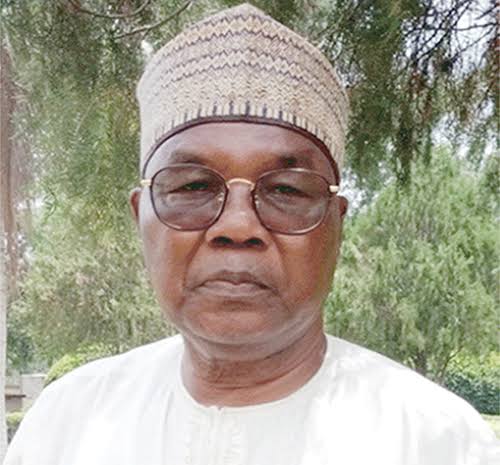
When stakeholders gathered at the ThisDay Dome in Abuja on July 9, 2026, for the ARISE News/THISDAY Town Hall on Building a National Consensus for State Police and National Security, the discussion reflected a debate that has dominated Nigeria’s security discourse in recent years. Among the panelists was historian, retired Permanent Secretary and security administrator, Dr. Bukar Usman, whose intervention stood out not because it embraced the growing clamour for state police, but because it sought to redirect the conversation towards what he has consistently described as the more effective solution: local police.
READ ALSO: Trump Commends Tinubu’s Leadership, Reaffirms US Support for Nigeria’s Fight Against Terrorism
For many participants, the roundtable was another contribution to the ongoing constitutional conversation on decentralising Nigeria’s policing system. For Usman, however, it represented the latest chapter in a campaign he began over a decade ago.
A Consistent Voice Since 2012
Unlike many recent advocates of state policing, Usman’s position predates the current wave of insecurity and constitutional reform debates. His first published article advocating local police appeared in 2012, long before the issue gained national prominence. The article was republished in 2018 and again in 2025, while the argument was further developed in his books My Literary Journey (2013; reprinted 2020) and Restructuring Nigeria: An Overview (2019). In 2026, he consolidated decades of thought into a full-length publication, A Case for Local Police, prompted by renewed national interest in police reform.
His recent appearance at the THISDAY roundtable therefore was less a change of position than a reaffirmation of an argument he has maintained consistently for fourteen years.
Not State Police, But Local Police
The most distinctive aspect of Usman’s intervention is his insistence that Nigeria should avoid reducing the debate to “state police.”
“I have been an advocate for local police, not necessarily state police,” he reiterated during the town hall, emphasizing that policing should be rooted in communities rather than merely transferred from the federal government to state governments.
For Usman, effective policing depends primarily on local knowledge. Security personnel, he argues, perform best when they understand the people, geography, culture and peculiarities of the communities they serve.
Drawing from his childhood memories in Biu, Borno State, where he witnessed the effectiveness of the Native Authority Police, he recalled how community-based policing maintained order through intimate knowledge of local environments. That experience, reinforced by decades of public service in security administration, forms the foundation of his advocacy today.
Implementation, Not Constitutional Deficiency
Another recurring theme in Usman’s position is that Nigeria’s security challenges cannot be blamed solely on constitutional arrangements.
At the Abuja roundtable, he argued that the country’s legal framework already establishes security structures from the national down to the local government level. The real questions, he said, are whether these statutory bodies are properly constituted, whether they meet regularly, submit reports and act promptly on intelligence gathered at the grassroots.
This perspective distinguishes his argument from many advocates who see constitutional amendment alone as the solution.
He also pointed out that governors already possess constitutional authority to issue lawful directives to Commissioners of Police under relevant constitutional provisions, subject to safeguards against unlawful orders. Consequently, he believes the issue is often less about absence of powers than about how existing institutions function in practice.
Local Knowledge as Security Intelligence
One of Usman’s strongest arguments is the centrality of community intelligence.
He argues that criminals often thrive because they understand local terrain better than security personnel deployed from distant locations.
His oft-repeated analogy captures this concern vividly: deploying someone unfamiliar with a riverine community to conduct security operations there is akin to dropping a non-swimmer into deep water. Likewise, communities become “ungoverned spaces” when those entrusted with protecting them lack sufficient local knowledge.
His memorable expression—”Distant hose cannot put out local fire”—summarises this philosophy.
According to him, community-based policing not only improves intelligence gathering but also enables early detection of emerging threats before they escalate into national security crises.
Addressing Fears of Abuse
Opposition to state police has traditionally centred on fears that governors might misuse police formations against political opponents.
Usman does not dismiss these concerns but argues they should not become grounds for rejecting decentralised policing altogether.
His proposed safeguards include constitutional and legal standards governing the establishment of local or state police, federal supervisory mechanisms, periodic oversight reports to the National Assembly, and the constitutional power of the Federal Government to declare a state of emergency where abuse threatens peace and stability.
Ultimately, he believes abuse stems more from human conduct than institutional design.
“If you use or misuse a political instrument,” he remarked at the town hall, “it is you and your conscience.”
A View Informed by Experienc
Usman’s views carry weight partly because they are informed by extensive experience in public administration and national security.
Throughout his civil service career, he served in several strategic security-related capacities, including Secretary of the Committee on Public Safety and National Security, membership of the National Intelligence Agency personnel structure, participation in internal security reforms, Commonwealth security conferences, and membership of the Presidential Panel on National Security, among other assignments.
This background explains why his intervention combines historical reflection with institutional analysis rather than political advocacy alone.
Minority Opinion to National Conversation
Perhaps the most remarkable aspect of Usman’s advocacy is how the national conversation has gradually moved towards the position he articulated years earlier.
When he first proposed local policing in 2012, the idea attracted limited national attention. Today, as insecurity continues to challenge Nigeria’s centralised policing structure, governments, legislatures and policy experts are actively debating variants of decentralised policing.
Reviews of his latest publication argue that the resurgence of the debate represents a form of vindication for ideas that were once largely overlooked. While the country now focuses primarily on state police, Usman continues to insist that genuine security reform must ultimately reach the community level.
Looking Ahead
As Nigeria inches closer to possible constitutional reforms on policing, Bukar Usman’s intervention at the THISDAY roundtable serves as a reminder that the debate extends beyond simply creating state police.
His consistent argument over the past fourteen years has been that effective security begins with local communities—where intelligence is generated, trust is built and crimes are often prevented before they escalate.
Whether policymakers eventually adopt state police, local police or a hybrid model, Usman’s enduring contribution lies in shifting attention from institutional labels to operational effectiveness. In doing so, he has positioned community knowledge, constitutional accountability and grassroots security as central pillars of Nigeria’s continuing search for a more responsive policing system.