


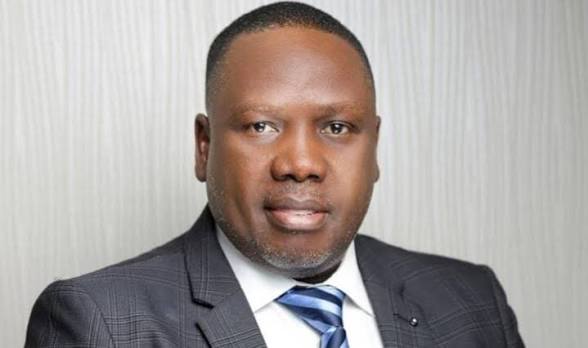
Bwalagate: Media Battle Exposes Nigeria’s Deeper Political Communication Crisis
By Jerry Adesewo
The controversy surrounding the recent international television interview granted by presidential spokesperson Daniel Bwala has spiralled into a wider political and media debate, with the government’s defence, opposition rebuttals, and commentary by public intellectuals exposing deeper questions about credibility, political loyalty, and Nigeria’s global image.
READ ALSO: Daniel Bwala and the Science of Political Amnesia: All Hail the Jagaban!
What began as an appearance by Bwala on Head to Head hosted by journalist Mehdi Hasan has now evolved into what observers have labelled “Bwalagate” — a public exchange that has drawn reactions from government supporters, opposition figures, and analysts across Nigeria’s political spectrum.
Bwala Defends Interview, Says He Will Face Any Interviewer
In a press statement issued after the interview went viral, Bwala defended his appearance and insisted that engaging hostile questioning is part of his duty as Special Adviser to President Bola Ahmed Tinubu on Media and Policy Communication.
According to him, defending the administration in difficult media environments is a responsibility he willingly accepts.
Bwala argued that critics were overstating the impact of the exchange, describing his role as one that requires confronting difficult questions rather than avoiding them.
He said the programme had initially indicated that the focus would be on issues such as security, the economy, and corruption, but instead devoted significant attention to his past criticisms of President Tinubu before he joined the administration.
Bwala dismissed the line of questioning as a form of “opposition research-style journalism” and claimed some of the materials cited during the interview were inaccurate or misleading.
Addressing criticism over his previous statements about Tinubu, he described them as part of normal political contestation while he was in opposition.
“Those things were said when I was in the opposition saddle with zeal,” he said, adding that political transitions often bring former critics into governing coalitions.
Opposition Fires Back
The defence, however, triggered an immediate response from Phrank Shaibu, a senior aide to former Vice President Atiku Abubakar.
In a sharply worded rebuttal titled “Weep Not for Bwala, Weep for Nigeria,” Shaibu accused the presidential spokesman of attempting to rewrite political history.
He argued that the interview exposed contradictions between Bwala’s earlier criticisms of the Tinubu administration and his current role defending it.
According to Shaibu, the televised exchange revealed deeper inconsistencies in the government’s messaging and highlighted the difficulty of defending policies that critics say are failing Nigerians.
The opposition aide further claimed that Bwala struggled to reconcile past statements with his current political alignment when confronted with them during the interview.
For Shaibu, the episode symbolised a broader problem in Nigeria’s politics — the fluidity of loyalty and the tendency of political actors to shift positions once they join government.
Moghalu: “A Sad Day for Nigeria”
Perhaps the most striking reaction came from former deputy governor of the Central Bank of Nigeria, Kingsley Moghalu.
Commenting publicly on the controversy, Moghalu described the interview as damaging not only for Bwala but also for Nigeria’s global image.
According to him, the programme’s international audience meant the exchange reflected on the credibility of Nigeria’s leadership and political culture.
He argued that the incident highlighted what he described as a deeper governance problem: the prioritisation of political loyalty over competence in appointing government spokespersons.
Moghalu also criticised the practice of appointing former political opponents as spokespersons without addressing the contradictions such appointments may create.
For him, the issue went beyond the interview itself and pointed to a wider pattern within Nigerian politics.
The Real Issue: Credibility in Political Messaging
Beyond the personal exchanges, analysts say the controversy raises a broader question about the credibility of political communication in Nigeria.
In many democracies, government spokespersons are expected to provide clarity on policy and defend government decisions before domestic and international audiences.
However, when spokespersons have a public record of previously attacking the same administration they now represent, the challenge becomes not only defending policies but also reconciling past positions.
The interview with Mehdi Hasan highlighted precisely that tension.
During the programme, Bwala was confronted with earlier statements he made criticising Tinubu before joining the government.
The exchange created a moment that critics say symbolises the fluidity of Nigerian political alliances.
The Global Optics Problem
Another dimension of the controversy lies in its international visibility.
Head to Head, known for its confrontational debate format, attracts a global audience and often features high-profile political figures.
For critics such as Moghalu, the issue is not merely domestic political disagreement but the broader perception of Nigeria abroad.
He warned that when internal contradictions play out on international platforms, they can reinforce narratives of instability and weak governance.
Supporters of the government, however, argue that appearing on global platforms — even hostile ones — demonstrates openness and willingness to engage critics.
Loyalty vs Competence Debate
The controversy has also reignited debate over the criteria used in appointing political spokespersons.
Some analysts argue that loyalty is an essential attribute for any government communicator, as spokespersons must defend administration policies even in difficult environments.
Others say competence, credibility, and consistent ideological positioning are equally important, especially when addressing international audiences.
When loyalty alone becomes the primary qualification, critics warn, the result can be communication strategies that struggle under scrutiny.
A Broader Political Culture
The debate around “Bwalagate” also touches on a deeper feature of Nigerian politics — the culture of political realignment.
Defections and shifts in allegiance are common across Nigeria’s political landscape.
Politicians frequently move between parties and ideological positions, often citing national interest or political strategy.
While such transitions are not unusual in democratic politics, critics argue that when ideological consistency disappears entirely, public trust suffers.
What Happens Next?
For now, the immediate controversy appears unlikely to disappear quickly.
The government’s communication team continues to defend Bwala’s performance, while opposition figures are using the episode to question the administration’s credibility.
The incident also highlights the risks inherent in modern political communication, where a single televised interview can trigger a national debate amplified by social media.
A Test for Government Messaging
Ultimately, the controversy surrounding Bwala’s interview may prove less important than what it reveals about Nigeria’s political communication culture.
In a media environment where every statement can be replayed, analysed, and compared with past positions, credibility has become an increasingly valuable currency.
For the Tinubu administration, the challenge is not simply defending policies but ensuring that those speaking on its behalf can do so with authority and consistency.
For critics, the episode reinforces concerns about political opportunism and the fragility of ideological commitment.
And for many observers, “Bwalagate” is less about one interview and more about a persistent question in Nigerian politics:
Can a political system built on shifting alliances still produce credible public communication?