

Displaced and Divided: New Data Paints Stark Picture of Nigeria’s Human and Economic Realities

Displaced and Divided: New Data Paints Stark Picture of Nigeria’s Human and Economic Realities
By Matthew Eloyi
In a sweeping portrait of Nigeria’s social and economic landscape, the latest bulletin from the National Bureau of Statistics (NBS) reveals a nation grappling with displacement, shifting population dynamics, health challenges, and evolving economic patterns.
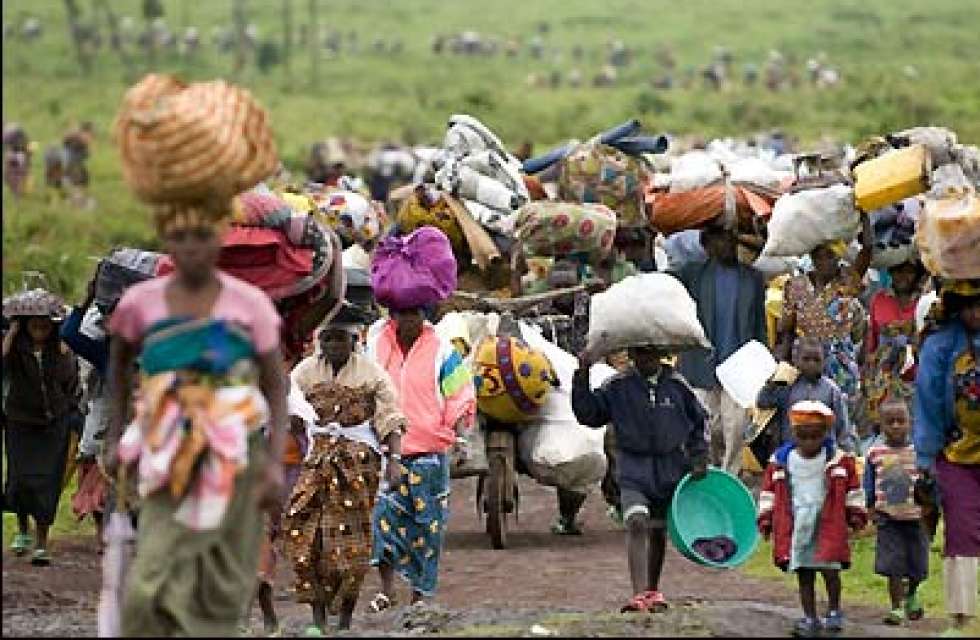
At the heart of the report lies a sobering statistic: more than 3.3 million Nigerians were internally displaced across 14 states in 2023. The figures, drawn from the NBS’s Demographic Bulletin 2023, underscore the scale of humanitarian pressures facing Africa’s most populous country.
Nowhere is the crisis more pronounced than in Borno State, which alone accounts for over half of the displaced population (1.7 million people). The state’s long-running insecurity continues to uproot families and strain already limited resources. Following distantly are Benue State with nearly 395,000 displaced persons, and Katsina State with over 244,000.
In contrast, states such as Gombe State, Nasarawa State, and Kano State reported significantly lower shares of internally displaced persons, though analysts caution that even smaller percentages represent real human suffering.
Beyond displacement, the report provides a snapshot of Nigeria’s rapidly growing population. Data from the National Population Commission projects the country’s population at over 221 million in 2023, with a slight male majority. Kano State leads as the most populous state, followed by Lagos State and Katsina. At the other end of the scale, Nasarawa State and Bayelsa State remain the least populated.
READ ALSO: Nigeria’s Path to Progress: Confronting Realities Beyond Historical Narratives
Health indicators in the bulletin reveal mixed progress. Maternal health continues to dominate public health spending, accounting for more than half of both capital and recurrent expenditures in 2022. Encouragingly, access to antenatal care improved significantly over the past decade, rising from 50 percent in 2011 to 67 percent in 2018, though it dipped slightly to 63 percent in 2021.
One bright spot emerges in Anambra State, which recorded the lowest proportion of women unable to access birth-spacing services (just 3.8 percent), suggesting relatively better access to family planning resources.
Economic flows also feature prominently in the report. According to data from the Central Bank of Nigeria, the United Kingdom remained Nigeria’s largest source of inward remittances in 2023, contributing $12.38 billion, slightly below the previous year’s figure. Meanwhile, the United States of America recorded the highest outward remittance flow in 2022.
The bulletin does not shy away from darker social realities. A total of 968 human trafficking cases were documented in 2023, spanning both domestic and international incidents. The most common involved foreign travel linked to prostitution, followed by sexual exploitation and the buying and selling of persons.
On the employment front, there are signs of cautious optimism. Data from the National Electronic Labour Exchange (NELEX) show a steady rise in private-sector job advertisements (from 90 in 2021 to 150 in 2023) alongside an increase in employer participation. However, the absence of federal government job postings during the period highlights ongoing concerns about public-sector employment opportunities.
Taken together, the NBS report offers more than just numbers; it tells the story of a country navigating complex challenges while making incremental progress in key areas. Yet, as millions remain displaced and critical services strain under pressure, the data also serves as a call to action for policymakers, development partners, and citizens alike.

[…] READ ALSO: Displaced and Divided: New Data Paints Stark Picture of Nigeria’s Human and Economic Realities […]