


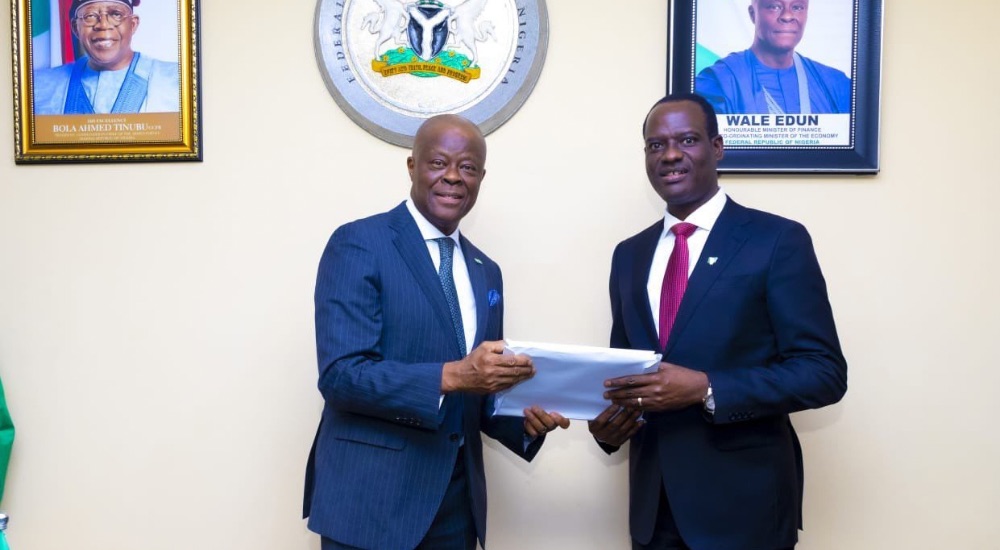
Edun’s Legacy and Oyedele’s Challenge: Analyzing Nigeria’s Economic Transition
By Matthew Eloyi
The transition from former Minister of Finance and Coordinating Minister of the Economy, Wale Edun, to his successor, Taiwo Oyedele, presents a critical inflection point for Nigeria’s economic management. Beyond a routine cabinet reshuffle, the change signals a shift from stabilisation-focused policies to the more complex task of translating reforms into broad-based economic gains.
Edun’s tenure can be characterised by a clear emphasis on macroeconomic stabilisation. Key policy directions included fiscal discipline, improved revenue mobilisation, and closer coordination between fiscal and monetary authorities. These measures contributed to a more structured economic framework and helped lay the groundwork for long-term growth.
However, the outcomes of these policies reveal a mixed picture. While macroeconomic indicators showed signs of improvement, inflationary pressures remained elevated, and the impact on household welfare was limited.
“Stabilisation policies were evident, but transmission to household welfare was weak,” he said.
This disconnect highlights a recurring challenge in Nigeria’s economic policy landscape: the gap between macro-level reforms and micro-level outcomes. It underscores the difficulty of ensuring that stabilisation efforts translate into tangible benefits for citizens, particularly in an environment marked by structural inefficiencies and external vulnerabilities.
From a structural standpoint, reforms initiated during Edun’s tenure appear to have created a foundation for continuity. Analysts point to modest improvements in the business environment and strengthened debt management strategies as indicators of progress. However, these gains remain fragile and require sustained policy consistency to be effective.
Debt sustainability, in particular, remains a critical concern. Although strategies were implemented to improve debt management, rising debt servicing costs continue to constrain fiscal space. This limits the government’s ability to invest in infrastructure, social programmes, and other growth-enhancing sectors.
READ ALSO: Borrowing the Future: How Bola Ahmed Tinubu Is Deepening Nigeria’s Debt Trap
For Oyedele, the policy priorities are both immediate and structural. In the short term, stabilising the exchange rate and controlling inflation will be essential to restoring confidence and easing economic pressures. Over the medium to long term, expanding non-oil revenue sources and implementing comprehensive tax reforms will be critical to improving fiscal resilience.
Tax reform emerges as a central theme in this transition. Simplifying tax administration, improving compliance, and widening the revenue base are necessary steps to reduce reliance on oil revenues and enhance government capacity for public investment.
Equally important is the role of small and medium enterprises (SMEs) in driving inclusive growth. While there have been incremental improvements in the business environment, targeted interventions will be required to unlock the full potential of SMEs as engines of job creation and economic diversification.
Another key dimension is policy coherence and transparency. Inconsistencies in policy direction have historically undermined investor confidence in Nigeria. Maintaining clarity and continuity in economic policies will be essential for sustaining recent gains and attracting both domestic and foreign investment.
The broader challenge lies in aligning macroeconomic stability with inclusive growth. This requires not only sound economic management but also deliberate efforts to ensure that reforms are socially responsive. Strengthening social protection programmes and improving the transmission of policy benefits to households will be critical in this regard.
In conclusion, the transition from Edun to Oyedele represents a shift from stabilisation to consolidation and expansion. While the foundation laid in recent years provides a platform for progress, the effectiveness of the next phase will depend on the ability to address structural constraints, sustain policy momentum, and deliver measurable improvements in living standards.
