


COVID-19 Resurfaces in Cross River, Testing Vigilance Years After Last Case
By Matthew Eloyi
For a state that had not recorded a confirmed case of COVID-19 since 2022, the latest announcement by the Cross River State Government signals a moment of renewed vigilance rather than panic.
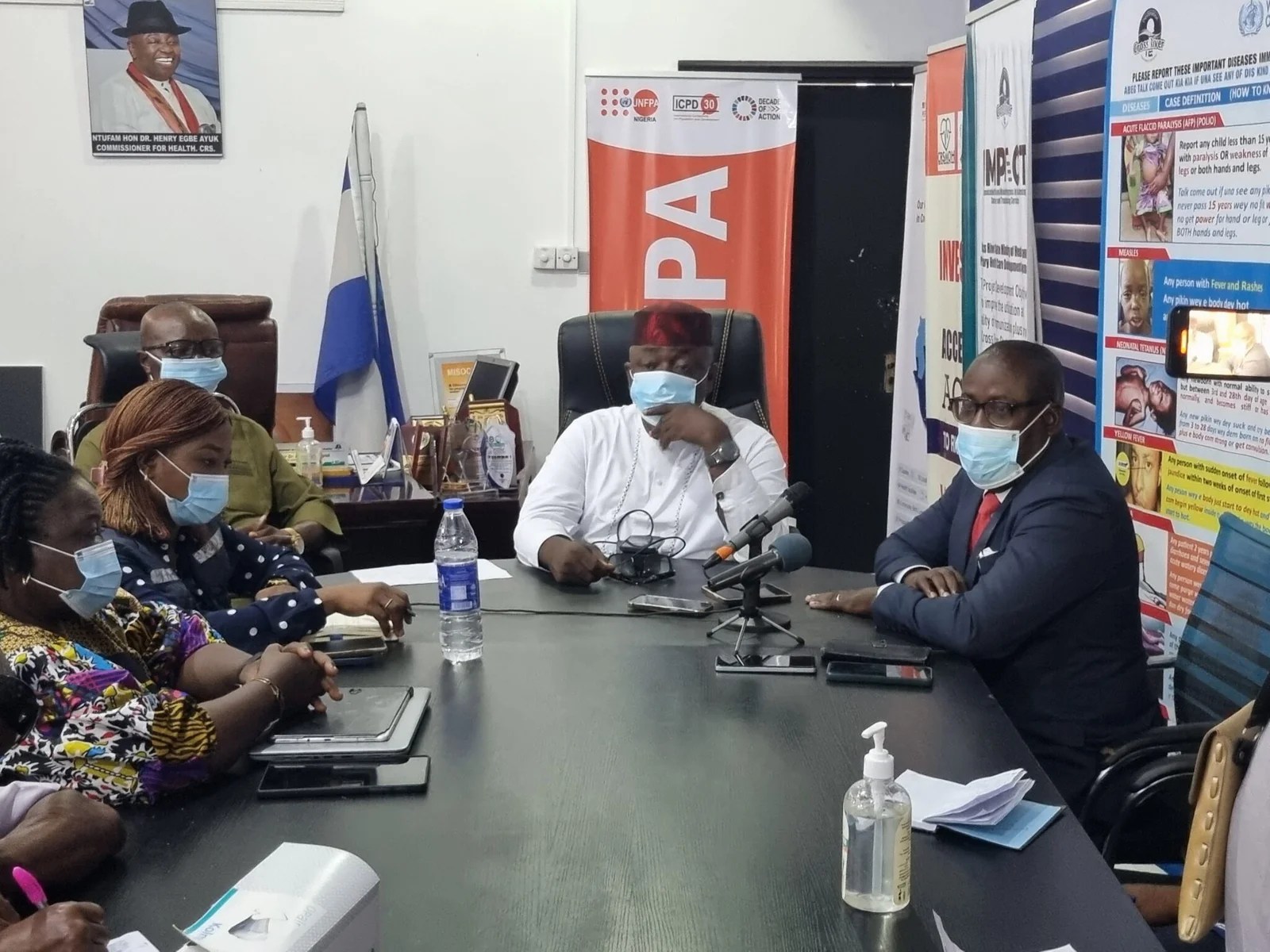
At a press conference in Calabar, the State Commissioner for Health, Henry Ayuk, confirmed that a new case had been detected, an imported concern that has quickly evolved into a test of the state’s preparedness.
The patient, a 53-year-old Chinese national working with Lafarge in Akamkpa Local Government Area, had arrived in Nigeria on March 17 before developing symptoms weeks later. What initially appeared routine soon escalated, with his condition worsening at a state medical facility and prompting his transfer to the University of Calabar Teaching Hospital (UCTH), where COVID-19 protocols were strictly observed and the infection confirmed.
“We are, however, happy to report that he is doing well,” the commissioner said.
Beyond the confirmation of a single case lies a broader narrative, one of a health system keen to demonstrate that the lessons of the pandemic years have not been forgotten. Ayuk stressed that the state’s healthcare framework has since been repositioned to detect and manage outbreaks swiftly, a claim now being tested in real time.
“But we are determined that for every ailment, every disease or outbreak, if it is identified here in the state, there should be no alarm.
“The state will do well in terms of surveillance or containment of an outbreak. Whatever it is, we will do our best to contain it. So, there is no alarm.
“When this case was reported in about three or four days ago, we decided to be careful to confirm and ensure that the processes involved with identifying and confirming every case of COVID-19, are duly followed.
Read Also: Dollars for Silence: The Disturbing Trend of Buying Off Nigeria’s Voices
“The protocols have been followed and confirmed that a 53-year-old Chinese who work in Akamkpa Local Government Area of the state has COVID-19,” he said.
For public health officials, however, the focus has already shifted from confirmation to containment. The State Epidemiologist, Inyang Ekpenyong, revealed that emergency response mechanisms were immediately activated, with contact tracing efforts underway to track potential exposures.
Her assessment also raises a critical question: where exactly was the virus contracted? Given that symptoms emerged well beyond the typical incubation period after the patient’s arrival, there are concerns that the infection may have occurred within Nigeria.
“The incubation period for this virus is usually between two to 14 days, but the Chinese flew into Nigeria from China on March 17 and started developing the symptoms on April 10.
“This is well beyond the 14 days incubation period. Like I said, we are doing the line listing of those he may have come in contact with, as part of our containment efforts.
“We have also activated the emergency response center and deployed rapid response teams to Akamkpa, where the victim works.
“There is no way we can stop this disease, but we can stop the disease outbreak.
“It will be wrong not to contain or manage it by ensuring that people do not die,” she stated.
That distinction between the inevitability of disease and the preventability of outbreaks captures the delicate balance authorities are trying to maintain: vigilance without alarm, preparedness without panic.
Adding a global perspective, Yewande Olatunde of the World Health Organisation reminded residents that COVID-19 has not disappeared, even if public attention has waned.
“We we must explore all preventive measures to protect ourselves.” she stressed.
For residents of Cross River, the development is a quiet but firm reminder that the pandemic’s legacy still lingers. For authorities, it is an opportunity to prove that beyond declarations and assurances, the systems built in crisis can endure and respond when it matters most.
