


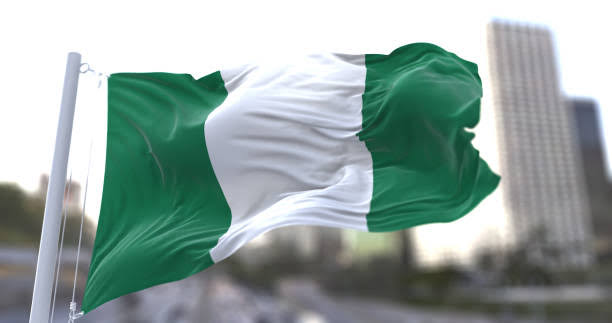
Democracy Day and the Unfinished Promise of Nigeria
By Matthew Eloyi
Every June 12 (since 2019), Nigeria pauses to celebrate Democracy Day. Former President Muhammadu Buhari made the historic declaration on June 6, 2018, to honour the 1993 presidential election widely believed to be won by the late Moshood Kashimawo Olawale (MKO) Abiola. Before this, Democracy Day was celebrated annually on May 29, which marked the return of civilian rule in 1999.
The date is more than a public holiday. It is a memorial to sacrifice, resistance, and the stubborn belief that the Nigerian people deserve the right to choose their leaders. It commemorates the June 12, 1993 presidential election, widely regarded as the freest and fairest in the country’s history, and honors the struggle that followed its annulment. Chief Moshood Kashimawo Olawale (MKO) Abiola became the symbol of that struggle, while countless activists, journalists, labour leaders, and ordinary citizens paid the price for demanding democratic rule.
Yet Democracy Day is also a day for uncomfortable questions. Twenty-seven years after the return to civilian rule in 1999, what exactly has democracy delivered? Has Nigeria fulfilled the promise of June 12, or has democracy become little more than a recurring electoral ritual disconnected from the everyday realities of citizens?
The answer is neither entirely hopeful nor entirely disappointing. Nigeria’s democratic journey is a story of significant achievement, persistent failure, and unfinished business.
To begin with, Nigeria deserves credit for sustaining its longest period of uninterrupted civilian governance. For a country once notorious for military coups, political instability, and authoritarian rule, twenty-seven consecutive years of democracy is no small accomplishment. Governments have changed through elections rather than military intervention. Presidents have completed their terms and transferred power to successors. Civil society remains vibrant, the media continues to scrutinise those in power, and citizens enjoy freedoms that were unimaginable under military rule.
However, democracy cannot be measured solely by the absence of military rule. True democracy is not merely about voting; it is about governance, accountability, justice, opportunity, and public trust. By those standards, Nigeria’s democratic record remains deeply troubling.
For millions of Nigerians, democracy has not translated into economic security. The country remains Africa’s largest economy by some measures, yet poverty, unemployment, and inequality continue to define daily life for vast segments of the population. Inflation has eroded purchasing power, while economic reforms, though defended by government as necessary, have imposed severe hardship on many households. Even the federal government has publicly acknowledged inflation and insecurity as major challenges confronting Nigerians.
The paradox is striking: a nation rich in human and natural resources continues to struggle to provide reliable electricity, quality healthcare, accessible education, and modern infrastructure for its citizens.
Equally concerning is the crisis of public trust. Elections are supposed to strengthen legitimacy, yet electoral outcomes are frequently contested in courts and in public opinion. Many Nigerians increasingly view political competition as a battle among elites rather than a genuine contest of ideas and policies. Political defections have become commonplace, often driven less by ideology than by calculations of power and survival. This weakens opposition parties, undermines accountability, and fuels concerns about democratic consolidation.
The legislature, expected to serve as a check on executive power, is often criticised for failing to exercise sufficient oversight. Meanwhile, corruption remains a recurring feature of governance despite decades of anti-corruption campaigns. Public confidence suffers whenever citizens perceive that institutions are more responsive to political interests than to the rule of law.
Then there is the issue that perhaps worries Nigerians most: security.
Democracy promises protection of life and property. Yet insecurity continues to threaten communities across the country. Terrorism, banditry, kidnapping, communal violence, separatist tensions, and organised criminal activity have stretched security institutions to their limits. In response, lawmakers have recently advanced constitutional reforms that could allow states to establish their own police forces, reflecting a growing recognition that Nigeria’s centralised security architecture may no longer be sufficient for the country’s complex realities.
The debate over state policing illustrates a broader challenge confronting Nigerian democracy. Many institutions were designed for a different era and may require substantial reform to meet contemporary demands. The question is no longer whether reforms are necessary; it is whether political leaders possess the courage and consensus required to implement them effectively.
Perhaps the greatest disappointment of Nigeria’s democracy is its failure to fully empower citizens between elections. Too often, governance becomes something that happens to people rather than with them. Public participation remains limited, local government structures are weak, and many citizens feel disconnected from decision-making processes that directly affect their lives.
This is where the spirit of June 12 offers an important lesson.
The heroes of the democracy struggle were not fighting merely for the right to cast ballots every four years. They were fighting for a political system that respected the dignity of citizens, protected freedoms, promoted justice, and ensured that government remained accountable to the people. Democracy was envisioned as a means to national development, not an end in itself.
On this Democracy Day, therefore, Nigerians should resist both cynicism and complacency.
Cynicism is dangerous because it ignores the progress the country has made since military rule. Complacency is equally dangerous because it accepts mediocrity as inevitable. The proper democratic attitude lies somewhere between the two: acknowledging achievements while demanding better performance from institutions and leaders.
Nigeria does not suffer from a lack of democratic aspirations. The country suffers from a gap between democratic ideals and democratic outcomes. The challenge of the next decade is to close that gap.
That means strengthening institutions rather than personalities. It means improving electoral credibility, deepening judicial independence, combating corruption more effectively, creating economic opportunities, reforming security structures, and ensuring that government works for citizens rather than political elites.
June 12 should not merely be a celebration of a historic election. It should be a reminder that democracy is a continuous project, one that requires vigilance, participation, and accountability.
The struggle that began with June 12, 1993, is not over. The military has left the stage, but the deeper battle remains: transforming political freedom into economic prosperity, social justice, security, and human dignity for all Nigerians.
That is the unfinished promise of Nigerian democracy. And that is the real meaning of Democracy Day.
