


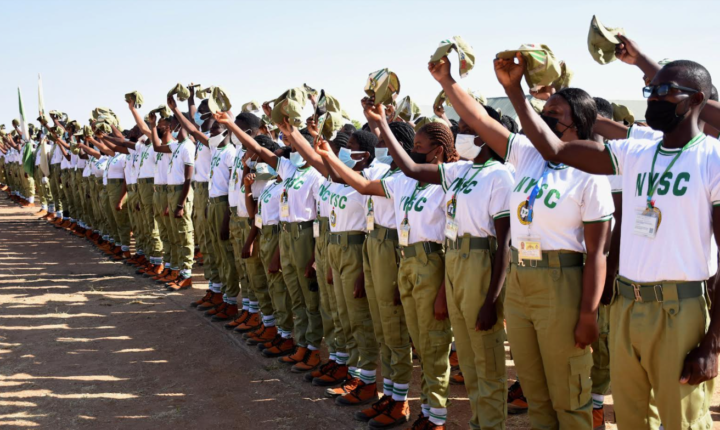
If We Must Reinvent NYSC, We Might as Well End It
By Matthew Eloyi
Few national institutions have enjoyed the emotional attachment that the National Youth Service Corps (NYSC) has commanded since its establishment in 1973. Conceived in the aftermath of the Nigerian Civil War by the administration of Yakubu Gowon, the scheme was designed to heal a fractured nation by fostering unity, promoting cross-cultural understanding and encouraging young graduates to serve outside their states of origin.
More than five decades later, however, the Nigeria of 2026 is vastly different from the Nigeria of 1973. The country has changed. The economy has changed. Security realities have changed. The aspirations of young Nigerians have changed. Yet, despite these transformations, the NYSC has remained largely the same.
Last week, the Federal Executive Council approved the most comprehensive reform of the scheme in its 53-year history. The proposed changes include replacing military leadership with civilian management, introducing 11 specialised career streams, redesigning orientation camps, extending skills training, changing the uniform, digitising operations, replacing the traditional passing-out parade with a graduation ceremony and making several structural amendments to the NYSC Act. The government argues that the reforms will transform the scheme into a skills-driven institution aligned with Nigeria’s ambition of building a trillion-dollar economy.
There is nothing wrong with reform. Institutions must evolve. But there is an uncomfortable question Nigerians must honestly ask: If the NYSC is going to become something fundamentally different from what it was created to be, why not simply scrap it and build an entirely new national graduate development programme?
That question deserves serious consideration. The original objective of NYSC was never to become a vocational training centre. It was never established to produce entrepreneurs, issue professional certifications or organise career streams. Its central mission was national integration. Ironically, many of the newly proposed reforms suggest an admission that the scheme has gradually drifted away from that founding purpose.
If the focus is now employability, digital skills, entrepreneurship and productivity, then government should establish a dedicated National Graduate Development Programme under the Ministries of Education, Labour or Youth Development rather than stretching the NYSC beyond recognition.
There is also the issue of symbolism. Removing military leadership may appear insignificant to some observers, but it alters one of the defining identities of the scheme. The semi-military structure has always reinforced discipline, order and national service. Once that disappears, alongside redesigned uniforms and graduation ceremonies, what remains that truly distinguishes the NYSC from any other youth empowerment initiative?
The reforms risk creating an institution that is neither the old NYSC nor an entirely new programme. Even more worrying is the possibility that government may be addressing the wrong problems. The greatest criticisms of NYSC over the years have never centred on uniforms or parades. Young graduates have consistently complained about insecurity during deployment, inadequate welfare, poor accommodation in orientation camps, delayed allowances in previous years, exploitative primary places of assignment and postings to areas where their skills are underutilised.
Parents have worried about kidnappings and attacks on corps members travelling across dangerous highways. Communities have questioned why graduates should continue to be posted into conflict-prone regions where even government officials hesitate to visit. Many employers simply see corps members as cheap labour. These are the issues that required urgent solutions.
Changing uniforms will not solve insecurity. Creating specialised streams will not eliminate kidnappings. Replacing military leadership with civilians will not automatically improve welfare. Renaming passing-out parades as graduation ceremonies will not make employers recruit more graduates. Indeed, some of the announced reforms appear cosmetic rather than transformational.
Supporters argue that the new skills-focused approach will ensure graduates leave NYSC better equipped for employment and entrepreneurship. That is an attractive proposition. But should that responsibility belong to NYSC?
Nigeria already has universities, polytechnics, technical colleges, vocational centres, industrial training programmes and entrepreneurship agencies. If graduates still require extensive employability training after completing higher education, perhaps the conversation should begin with reforming tertiary education itself instead of redesigning NYSC.
Another concern is policy duplication. Government continues to create overlapping youth programmes with similar objectives: digital skills initiatives, entrepreneurship funds, vocational training schemes, innovation hubs and startup support programmes. Transforming NYSC into yet another skills programme risks duplicating existing interventions while consuming enormous public resources.
What exactly would be unique about the reformed NYSC? Some lawmakers have already urged the Federal Government to suspend implementation until wider consultations are held, arguing that reforms should not undermine the institution’s original philosophy of national integration. That caution deserves attention.
Nigeria must also confront another uncomfortable reality. The ideal of national integration itself has weakened, not necessarily because of NYSC, but because broader governance challenges have deepened ethnic distrust, insecurity and regional divisions. Can one year of service genuinely unite young Nigerians when politics, insecurity, unemployment and economic hardship continue to reinforce divisions every day?
That is not an argument against national unity. Rather, it is an argument that genuine unity requires broader political, economic and social reforms than NYSC alone can provide. If government still believes national service remains essential, then preserve the institution in its original spirit while fixing its operational shortcomings. Improve security. Upgrade orientation camps. Guarantee decent welfare. Deploy graduates based on merit and national needs. Strengthen accountability. Modernise administration through technology. Those reforms would reinforce, not replace, the founding philosophy.
However, if government genuinely believes Nigeria now needs a graduate employability programme rather than a national integration scheme, it should have the courage to say so. In that case, the honest course would be to respectfully retire the NYSC after more than five decades of service and establish an entirely new institution with a fresh mandate, fresh legislation and clear objectives suited for today’s realities.
Trying to transform NYSC into something it was never designed to become risks pleasing nobody. The old vision becomes diluted. The new vision remains uncertain. Sometimes, preserving an institution means preserving its identity. And if that identity can no longer be sustained, perhaps history should be allowed to close one chapter so that a better one can begin.
If NYSC cannot remain true to what it was created to be, then perhaps it is time to thank it for its service and let it bow out with dignity rather than be gradually transformed into an institution Nigerians no longer recognise.
