

The Naira Paradox: Navigating the New Frontier of Nigeria’s Fuel Economy

The Naira Paradox: Navigating the New Frontier of Nigeria’s Fuel Economy
By Ameh Abraham
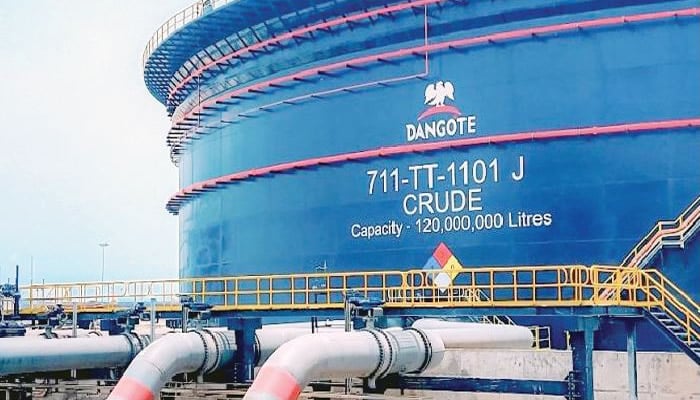
The recent decision by the Dangote Petroleum Refinery to reintroduce dollar-denominated petroleum product sales has sent shockwaves through Nigeria’s downstream sector. For a nation already grappling with the structural tremors of inflation and a fragile currency, this policy shift is more than just a boardroom dispute; it is a profound macroeconomic dilemma that exposes the fundamental tensions within Nigeria’s energy market.
At the heart of the matter lies a critical question: Can Nigeria realistically expect to exit its crushing dependence on the US dollar while simultaneously subjecting its domestic energy market to dollar-based pricing?The Flashpoint: A Clash of Commercial and Economic Realities
The current friction stems from the abandonment of the “naira-for-crude” programme, which had been in operation since October 2024. Under that arrangement, domestic refiners were permitted to purchase crude oil in naira, stabilizing the input cost and insulating the local market from extreme exchange rate volatility. However, the transition back to dollar-denominated crude procurement for the refinery has forced a hard reset.
Dangote Refinery, facing the commercial reality of buying crude in dollars, has set ex-depot prices at $0.779 per litre for petrol, $1.087 per litre for diesel, and $0.942 per litre for aviation fuel. At a volatile exchange rate hovering around N1,376.54 to the dollar, these prices translate to roughly N1,072 per litre. Independent petroleum marketers, represented by the Petroleum Products Retail Outlets Owners Association of Nigeria (PETROAN), have rejected this move outright. Their argument is simple yet potent: Nigeria does not print dollars, and as non-importers, they lack the capacity to source the greenback necessary for these transactions.A History of Subsidy and Opacity
To understand why this feels like an “old story,” one must look at the history of the Nigerian petroleum sector, often described as the “elephant in the room” of the nation’s political economy. For decades, the industry has been plagued by a bouquet of half-truths and what many observers term the “biggest scam in Nigerian history, the fuel subsidy regime.
Between 1999 and 2023, the sheer scale of the fuel importation bill rising from N813 billion in the 1999-2006 period to a staggering N11 trillion between 2015 and 2023 tells a story of systemic haemorrhage. Previous administrations, notably under the Buhari regime, acknowledged the controversies, with former Minister of State for Petroleum Resources, Timipre Sylva, once noting that if one were looking for a “criminal enterprise,” one needed to look no further than the fuel subsidy.
The constant dispute between the Nigerian Upstream Petroleum Regulatory Commission (NUPRC) and the NNPC regarding actual production figures—with NNPC often citing higher output than the regulator—further highlights the opaque nature of the sector. This lack of credible data, as lamented by the GCEO of the NNPC, Mele Kyari, regarding daily consumption, has left the nation vulnerable to manipulation and “corruption pandemics” at all levels.Who Benefits, Who Loses?
The repercussions of this dollarized pricing are deeply uneven.
The Losers: Ultimately, the Nigerian consumer and the domestic marketer. As depot prices rise—seen in the N113-to-N150 per litre hikes across various locations—this cost is inevitably passed down to the man on the street. Transportation, goods, and services costs will spike, further fuelling the inflation that already ravages the middle class and the poor.
The Winners: In the short term, this policy protects the commercial viability of the refinery by mitigating foreign exchange risks. However, it does so at the cost of national macroeconomic stability, as the demand for FX to fund these domestic transactions remains high.
While some fear that this policy will exacerbate the “dollarization” of the economy, others argue that the real issue is not the currency of transaction but the lack of local productive capacity. Unlike nations such as Saudi Arabia, Brazil, or India, where state-owned or dominant oil entities operate with a degree of professional, business-like focus, the Nigerian experience has been fraught with structural inefficiencies.What This Reveals About Nigeria’s Institutions
This controversy serves as a mirror reflecting the fragility of Nigeria’s institutions. It reveals an NNPC that has historically operated with limited accountability and a penchant for “garnished lies”. The fact that the federal government still owes the state-run entity trillions in subsidy payments—even after alleged removal—speaks to a governance structure that struggles with transparency.
The “institution” of the NNPC, often contrasted unfavourably with global giants like Aramco or Sonangol, is struggling to transition from a gatekeeper of state resources to a transparent corporate entity. The reliance on domestic debt to manage fiscal deficits, coupled with the aggressive liquidity mop-ups by the Central Bank of Nigeria (CBN), suggests that the government is stretched thin, juggling bond offers to sustain fiscal operations while trying to manage a volatile currency.The Path Forward: From Dollar Dependence to Structural Transformation
If Nigeria is to truly exit the cycle of crisis, it must look beyond currency denominations. The current reliance on importing refined products—accounting for over 50 per cent of the country’s total import bill in recent years—is a monumental concentration risk.
To break this cycle, the following institutional reforms are essential:
Transparency and Intelligence: The government must deploy sophisticated intelligence to combat the systemic oil theft that continues to plague the sector. As seen in the contrast between NUPRC and NNPC reports, the lack of a “single source of truth” for production data is a massive fiscal hole.
Productive Diversification: No nation can achieve sustained economic growth without stimulating domestic production. The current strategy of incentivizing local content—seen in recent tax waivers for pharmaceutical manufacturers and efforts to boost local manufacturing capacity—must be doubled down upon in the energy sector.
Refining Infrastructure: The fix is not just in policy, but in the iron and steel of the refineries. Genuine subsidies should be provided by fixing the nation’s refineries so that the cost of production is inherently lower, rather than shielding an inefficient importation-based model.
The Dangote Refinery dollarization issue is, in essence, the “Titanic iceberg” moment for Nigeria’s economic management. The status quo of a state-run, import-dependent energy sector is unsustainable. Until the Nigerian government prioritizes transparency, drastically improves local refining capacity, and dismantles the corruption that has plagued the sector for decades, the economy will remain in a state of perpetual oscillation—constantly searching for dollars that it has yet to figure out how to produce for itself.
The bar of expectation from Nigerians is set at a crescendo. The question is no longer just about the price of petrol in naira or dollars; it is about whether the institutions of the state can finally be held accountable for the health of the nation’s future
