

EFCC, ICPC, CCB, BPP Strengthen Alliance to Combat Procurement Fraud, Corruption
EFCC, ICPC, CCB, BPP Strengthen Alliance to Combat Procurement Fraud, Corruption

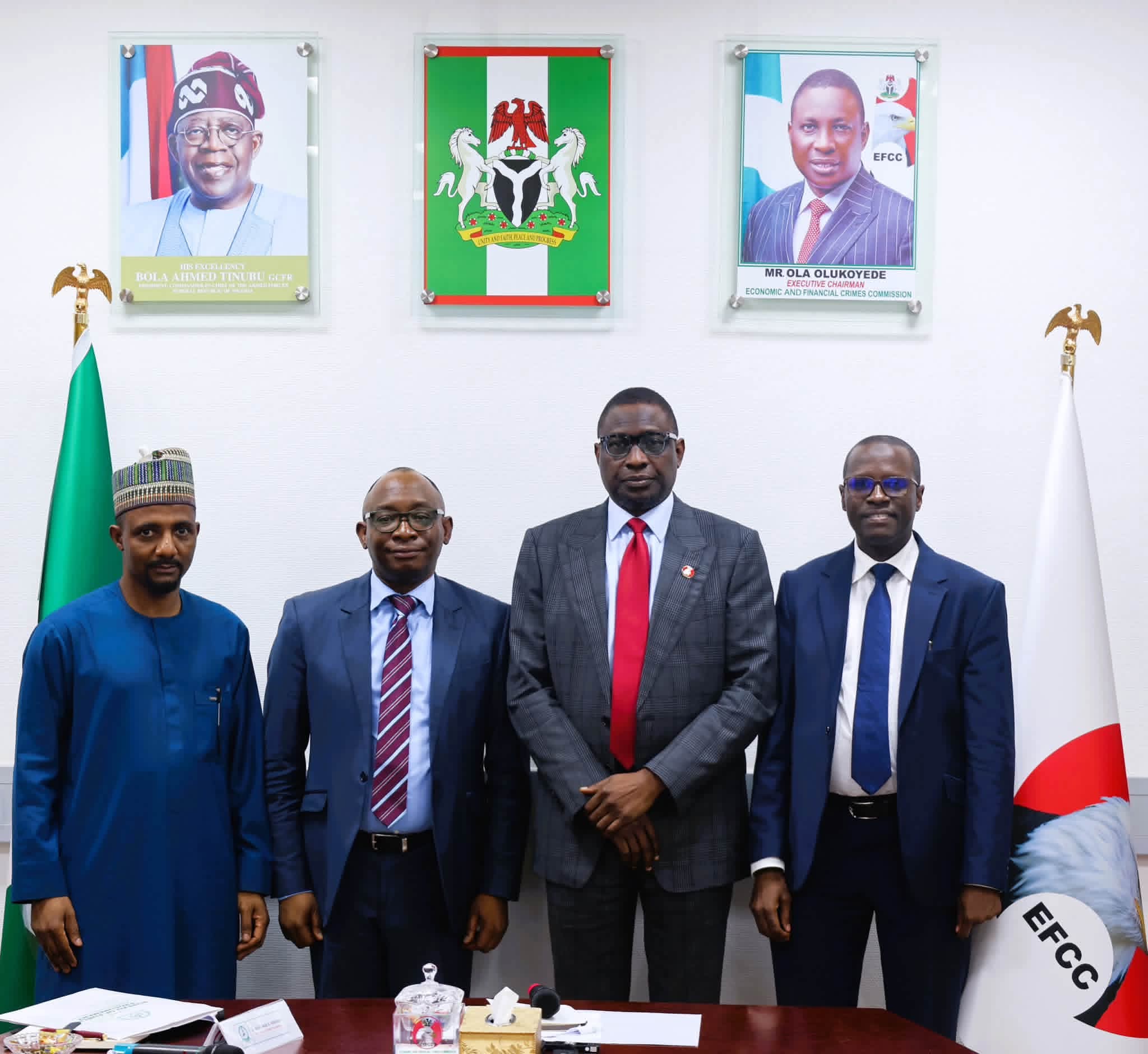
EFCC, ICPC, CCB, BPP Strengthen Alliance to Combat Procurement Fraud, Corruption
The Economic and Financial Crimes Commission (EFCC) has intensified efforts to strengthen Nigeria’s anti-corruption framework by convening a high-level strategic meeting of key anti-graft institutions to improve collaboration, intelligence sharing and the fight against public sector corruption.
The meeting, held on Wednesday at the EFCC headquarters in Abuja, brought together the Executive Chairman of the EFCC, Ola Olukoyede; Chairman of the Independent Corrupt Practices and Other Related Offences Commission (ICPC), Dr. Musa Adamu Aliyu, SAN; Chairman of the Code of Conduct Bureau (CCB), Dr. Abdullahi Usman Bello; and the Director-General of the Bureau of Public Procurement (BPP), Dr. Adebowale Adedokun.
The roundtable focused on developing a stronger institutional framework for cooperation among the agencies in tackling corruption, economic and financial crimes, with particular emphasis on procurement and contract fraud.
Speaking during the meeting, Olukoyede described procurement and contract fraud as one of the biggest drivers of corruption in Nigeria’s public sector, noting that it accounts for more than 80 per cent of public sector corruption.
According to him, addressing procurement-related corruption would significantly improve governance, public service delivery and the country’s economy.
“More than 80 per cent of public sector corruption is caused by contract and procurement fraud. If we can reduce this to the barest minimum, we would have gone a long way in achieving our mandate. The impact will be felt across the economy, healthcare, education and other critical sectors,” he said.
Olukoyede stressed the importance of closer collaboration between law enforcement agencies and the Bureau of Public Procurement, describing the BPP as the regulatory institution with the technical expertise required to prevent procurement abuses before they occur.
He noted that anti-corruption efforts should focus not only on prosecution but also on prevention, risk management and strengthening procurement processes.
“The BPP is the regulator, while we are the enforcement agencies. If we work together to establish a sustainable institutional partnership, it will significantly reduce contract and procurement fraud. It is not just about waiting for public funds to be stolen; it is about preventing the crime from happening in the first place,” he stated.
The EFCC Chairman also observed that several provisions of the Public Procurement Act have not been fully implemented, adding that the BPP would provide technical guidance to help anti-corruption agencies better understand procurement regulations.
He advocated stronger information sharing, joint investigations, coordinated monitoring of procurement activities and regular capacity-building programmes among the agencies.
Olukoyede further proposed the development of a Standard Operating Procedure (SOP) to clearly define the responsibilities of each institution, improve coordination and ensure confidentiality in intelligence management.
He disclosed that the agencies intend to institutionalise quarterly meetings to review progress and strengthen collaboration.
Also speaking, ICPC Chairman, Dr. Musa Adamu Aliyu, SAN, welcomed the initiative, describing it as a significant step towards eliminating duplication of efforts among anti-corruption agencies.
He noted that closer collaboration between the EFCC, ICPC, CCB and the Nigerian Financial Intelligence Unit (NFIU) would improve efficiency and inspire greater public confidence in Nigeria’s anti-corruption campaign.
“If the EFCC, ICPC, CCB and NFIU work together, Nigerians will have greater confidence that the agencies are united in fighting corruption. It will also help us eliminate duplication because many petitions are submitted to multiple agencies simultaneously,” he said.
Aliyu explained that whenever petitions outside the ICPC’s statutory mandate are received, they are referred to the appropriate agency, stressing that improved use of technology would further enhance coordination.
The Chairman of the Code of Conduct Bureau, Dr. Abdullahi Usman Bello, lamented the devastating impact of corruption on national development, noting that trillions of naira have been lost over the years through corrupt practices.
He identified procurement fraud as one of the major challenges confronting Nigeria’s public sector and emphasised the need for stronger collaboration among anti-corruption institutions.
According to him, intelligence support from the NFIU, financial crime investigations by the EFCC and systemic corruption investigations by the ICPC would significantly strengthen anti-corruption efforts.
In his presentation titled “Why Public Procurement Matters,” the Director-General of the Bureau of Public Procurement, Dr. Adebowale Adedokun, highlighted the consequences of weak procurement systems, including waste of public funds, project abandonment, inflated contract costs, poor infrastructure and widespread corruption.
He explained that effective procurement reform must be anchored on legal and institutional reforms, accountability, strategic procurement, digital procurement systems and improved market operations.
“The most effective anti-corruption strategy is not merely pursuing offenders after crimes have been committed, but designing procurement systems that make corruption difficult to occur,” Adedokun said.
Participants also discussed key procurement challenges, including contracts awarded without budgetary backing, deliberate violations of procurement procedures and abuse of procurement laws.
The meeting ended with renewed commitments by the participating agencies to deepen institutional cooperation, strengthen preventive measures and improve the nation’s anti-corruption framework through enhanced collaboration, intelligence sharing and coordinated enforcement actions.
EFCC, ICPC, CCB, BPP Strengthen Alliance to Combat Procurement Fraud, Corruption
