

Held Between Law and Power: The Ordeal of an American Pilot Trapped in Guinea’s Shadow Justice System

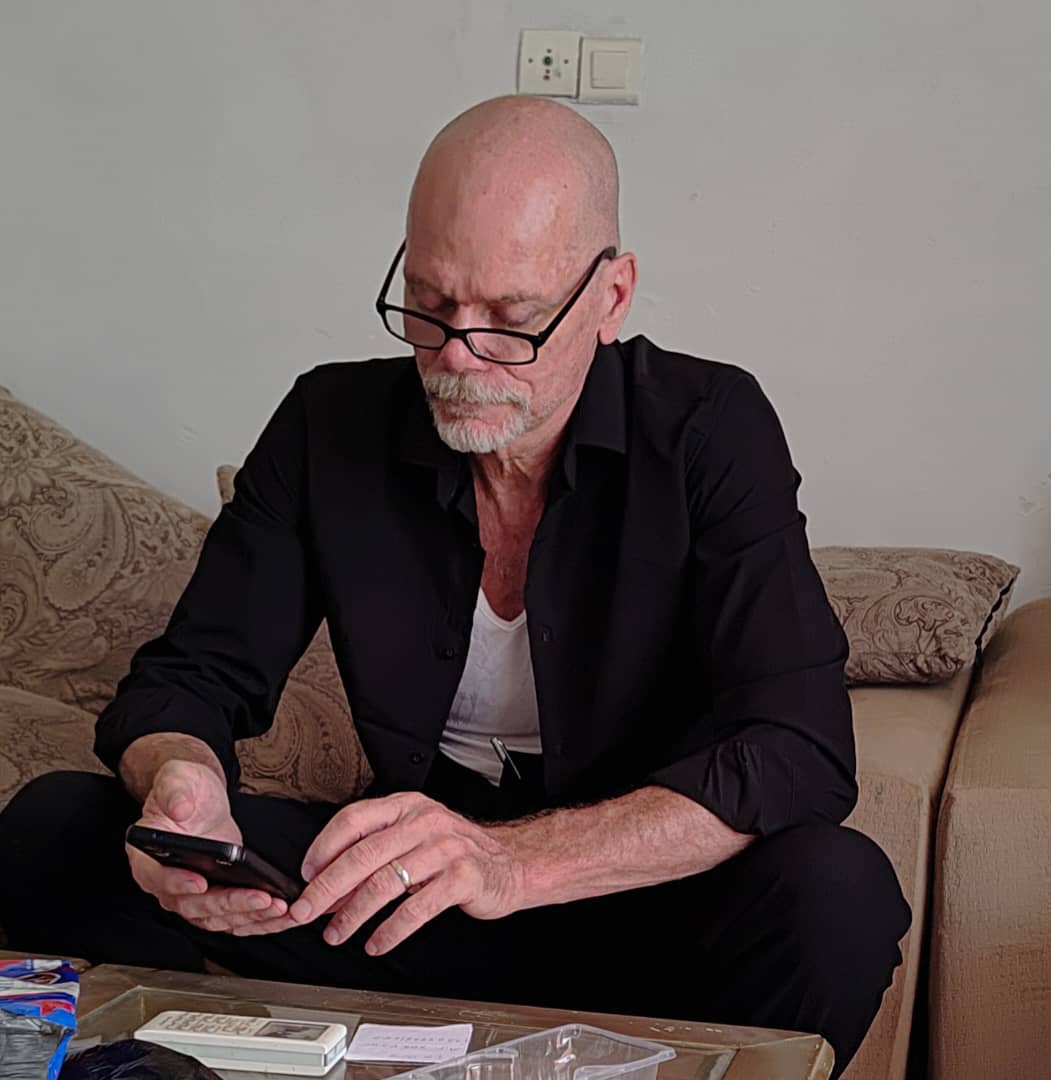
Held Between Law and Power: The Ordeal of an American Pilot Trapped in Guinea’s Shadow Justice System
By Matthew Eloyi
In a case that starkly exposes the fragile intersection of justice, geopolitics, and human survival, a U.S. pilot lies gravely ill in detention thousands of miles from home, despite a court order declaring he should be free.
For more than three months, Bradley Scott Schlenker, a veteran pilot from Chicago, has remained confined in Conakry, Guinea, in what his family describes as a chilling example of “judicial hostage-taking.” Their plea is urgent, their fears mounting: without immediate medical evacuation and diplomatic intervention, they say, he may not survive.
At the heart of the crisis is a rapidly deteriorating health condition. According to medical assessments cited by the family, Schlenker is showing symptoms consistent with adenocarcinoma, a serious form of cancer. A U.S.-based aviation medical examiner has reportedly warned that without urgent surgical care, he faces the risk of irreversible kidney failure or death in custody.
But in Guinea, such specialised treatment is out of reach.
“He is not just detained; he is dying,” the family said in a statement, describing a situation where each passing day without intervention significantly reduces his chances of survival.
What makes Schlenker’s detention particularly alarming is that it persists in direct defiance of a judicial ruling. On December 26, 2025, the Court of Appeal in Conakry issued an order granting his provisional release. Yet, more than 90 days later, that order has not been enforced.
Instead, the family alleges that powerful elements within the country’s military establishment have overridden the judiciary, effectively holding Schlenker captive.
This breakdown of legal authority points to what investigators describe as a “shadow state”, a network within Guinea’s security apparatus accused of exploiting legal processes for financial gain.
Read Also: Who Sanctions the State When It Misses Its Deadlines on it Promises?
According to the family’s findings, this shadow network operates through a system of coercion and extortion, targeting foreign nationals caught in legal disputes. Victims are allegedly pressured to pay exorbitant “facilitation fees”, sometimes reaching as high as $1 million, in exchange for their release.
In Schlenker’s case, the situation is compounded by reports of constant surveillance and intimidation, with security forces maintaining strict control over his movements and access.
Such practices, if verified, would raise serious concerns about the rule of law and the safety of foreign nationals operating within the country.
Schlenker’s ordeal began with what appeared to be a routine professional assignment. Contracted through a pilot service, he was tasked with flying a charter for an individual later identified as Kelton Reis.
What he allegedly did not know was that the aircraft, a 1989 Gulfstream GIV, had been obtained through fraudulent means involving forged documentation. U.S. aviation authorities have since revoked its registration.
Reis is now accused of links to drug trafficking, and the case has taken on an increasingly complex dimension. Reports suggest that other parties connected to the flight, including legal representatives and associates, may be attempting to shift blame onto Schlenker, potentially using him as leverage in their own legal battles.
Beyond the courtroom, the case is unfolding against a backdrop of significant geopolitical stakes.
Guinea is emerging as a critical player in global resource politics, holding the world’s largest reserves of bauxite and substantial supplies of gallium, minerals essential to industries ranging from aerospace to semiconductors.
Its strategic Atlantic location further enhances its importance, particularly in efforts to stabilize the Sahel region and counter competing global influences.
For the United States, maintaining strong ties with Guinea is increasingly seen as vital to securing supply chains and advancing broader strategic interests.
The Schlenker family fears these considerations may be contributing to what they describe as a “strategic silence” from Washington, a reluctance to act decisively in a case that could strain diplomatic relations.
Adding to their concern is a reported upcoming meeting between Guinea’s leader, Mamadi Doumbouya, and U.S. President Donald Trump. They worry that the optics and priorities surrounding such high-level engagement may be overshadowing the urgency of Schlenker’s situation.
In response, the family has launched a multi-pronged appeal to the U.S. government.
They are urging the State Department to officially designate Schlenker as “wrongfully detained” under the Robert Levinson Act, a classification that would trigger enhanced diplomatic efforts and resources.
They are also calling for direct engagement with Guinean authorities to secure his immediate release and medical repatriation, as well as a formal travel advisory warning Americans about alleged patterns of judicial extortion in the country.
Appeals have been made to lawmakers, including Tammy Duckworth and Marco Rubio, with hopes that congressional pressure might accelerate action.
For the Schlenker family, the crisis is both political and painfully personal. They describe a man who took on a routine assignment, only to find himself ensnared in a complex web of fraud, power struggles, and international politics.
Now, as his health declines, their fight has taken on a singular focus: bringing him home alive.
