

New Book Revisits Final Hours of Gen. Sani Abacha, Offers Fresh Account of His Death
New Book Revisits Final Hours of Gen. Sani Abacha, Offers Fresh Account of His Death

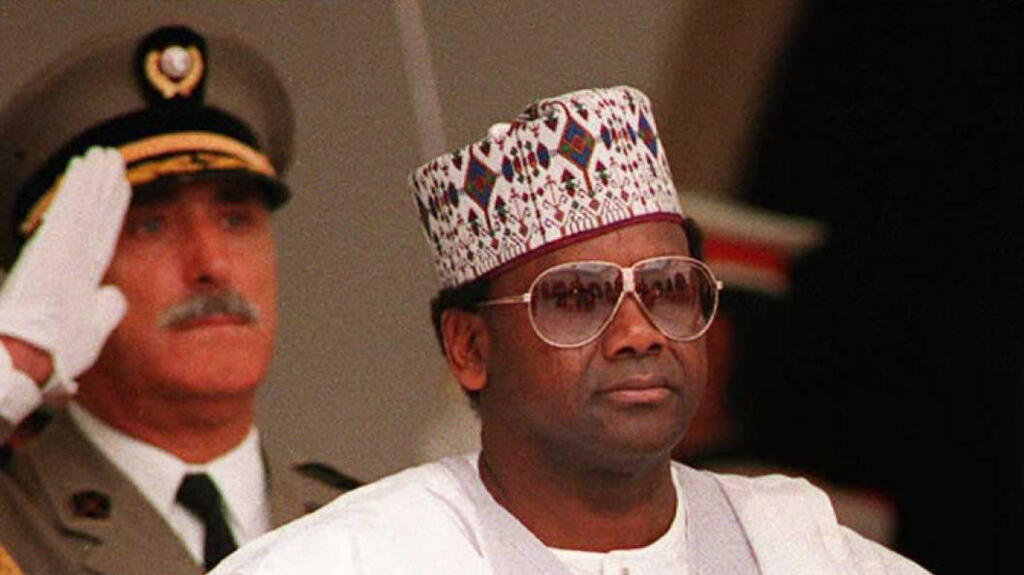
New Book Revisits Final Hours of Gen. Sani Abacha, Offers Fresh Account of His Death
A newly released memoir by retired Department of State Services (DSS) officer Dennis Amachree has offered fresh insights into the circumstances surrounding the death of Nigeria’s former Head of State, General Sani Abacha, nearly three decades after the incident.
The revelations are contained in Amachree’s 348-page book titled “DSS @40: My Journey Behind the Shield,” where the retired intelligence officer recounts his experience as part of the security operations following Abacha’s sudden death on June 8, 1998.
According to Amachree, who served as Assistant Director of Operations and Intelligence at the Lagos State Command of the State Security Service (now DSS), the woman reportedly present with the former military ruler during his final moments denied any involvement in his death.
The author stated that the woman, whom he described as an Igbo pharmacist, was traced and questioned shortly after the incident.
According to Amachree, the woman told investigators that General Abacha suddenly became unresponsive during an intimate encounter.
He wrote that following her account, she was returned to Abuja after consultations with senior security officials.
Amachree maintained in the book that this version of events represents what he considers the factual account of Abacha’s final moments, arguing that it differs from the numerous conspiracy theories that have circulated over the years.
General Sani Abacha, who ruled Nigeria as military Head of State from November 17, 1993, until his death on June 8, 1998, remains one of the country’s most controversial leaders.
Born on September 20, 1943, in Kano State, Abacha joined the Nigerian Army in 1963 and received military training in Nigeria, the United Kingdom and the United States. During his military career, he participated in several major political transitions and was involved in the coups of 1966, 1983 and 1985, becoming one of the few officers associated with multiple changes of government.
In November 1993, following the collapse of the Interim National Government led by Ernest Shonekan, Abacha assumed power and became Nigeria’s Head of State.
His administration embarked on infrastructure development, including work on roads, petroleum projects and foreign reserve accumulation. However, his government was also widely criticised over allegations of human rights abuses, suppression of political opposition, restrictions on press freedom and the detention of pro-democracy activists, including the late Chief Moshood Abiola.
General Abacha died unexpectedly at the Presidential Villa, Abuja, at the age of 54. His sudden death generated widespread speculation both within Nigeria and internationally, with numerous theories emerging over the years regarding its cause.
Following his death, General Abdulsalami Abubakar assumed leadership as Head of State and initiated Nigeria’s transition to democratic rule, culminating in the country’s return to civilian government on May 29, 1999.
Amachree’s publication has renewed public interest in one of the most discussed episodes in Nigeria’s political history, adding another perspective to the longstanding debate surrounding the final hours of the late military ruler.
New Book Revisits Final Hours of Gen. Sani Abacha, Offers Fresh Account of His Death
