


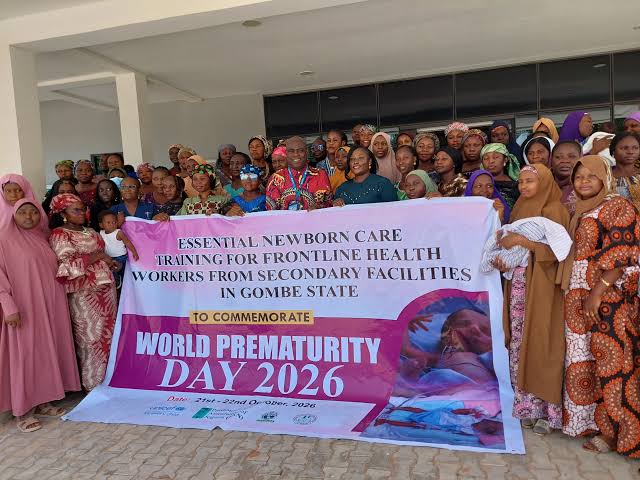
Nigeria’s Newborn Death Burden: Gombe, UNICEF Train Frontline Health Workers
By Auwal Umar, Gombe
Nigeria continues to face a major public health challenge as thousands of newborns die from preventable causes, highlighting the urgent need to improve maternal and child healthcare, strengthen medical facilities and equip frontline health workers with the skills to save lives.
Against this backdrop, the Gombe State Government, in partnership with the United Nations Children’s Fund (UNICEF), has trained 104 healthcare workers to improve the quality of care for newborns and reduce deaths, particularly among premature babies and infants requiring specialised medical attention.
The initiative is part of efforts to address persistently high neonatal mortality, especially in northern Nigeria, where access to quality healthcare remains a critical concern in many communities.
The two-day training involved 48 health workers from secondary healthcare facilities, following an earlier programme that equipped 56 personnel from primary healthcare centres with relevant skills in newborn care.
Speaking in Gombe on Thursday, the Executive Secretary of the Gombe State Primary Health Care Development Agency, Abdulrahman Shuaibu, said strengthening the capacity of healthcare personnel was essential to preventing avoidable newborn deaths.
Shuaibu explained that some babies were delivered in communities before being referred to secondary health facilities when they developed complications, making it necessary for medical personnel at referral centres to be adequately prepared to manage their conditions.
He said neonatal and infant mortality remained a concern in the state, stressing that reducing the figures required coordinated action by government institutions, healthcare providers and development partners.
The executive secretary expressed hope that the training would improve newborn survival rates across communities in Gombe.
He also urged participants to share the knowledge and skills acquired with colleagues who did not attend the programme, noting that extending the benefits of the training to other healthcare workers would improve the standard of care available to newborns.
Shuaibu said the intervention complemented the state government’s ongoing efforts to strengthen primary and secondary healthcare services. He commended UNICEF and other development partners for their support in improving healthcare delivery.
A UNICEF health officer at the organisation’s Bauchi Field Office, Oluseyi Olosunde, said the training was organised to commemorate the 2026 World Prematurity Day.
He explained that the programme focused on improving the quality of medical attention provided to newborns, particularly premature infants and babies requiring specialised care.
Olosunde said the survival of mothers and children depended significantly on the quality of healthcare provided during pregnancy, childbirth and the period immediately after delivery.
He added that the training targeted nurses, midwives and doctors responsible for caring for expectant mothers and newborns at different stages of the maternal healthcare process.
The UNICEF official urged participants to apply the knowledge gained to improve clinical practices and ensure that mothers and babies received appropriate and timely medical attention.
He also expressed concern over the high rate of newborn deaths in several northern states, emphasising the need for sustained investment in healthcare workers’ skills and professional development.
Similarly, a consultant paediatrician at the Federal Teaching Hospital, Gombe, Raymond Mercy, called on healthcare workers to prioritise proper newborn care to improve survival outcomes.
Mercy, a member of the Paediatric Association of Nigeria and the Nigerian Society of Neonatal Medicine, said Nigeria’s neonatal mortality rate stood at between 34 and 41 deaths per 1,000 live births.
She said the country’s substantial burden of newborn deaths demonstrated the urgency of strengthening healthcare systems and improving the quality of services available to mothers and infants.
The programme is expected to contribute to improved newborn care in Gombe State by equipping frontline health workers with the expertise needed to identify complications, provide appropriate treatment and help prevent avoidable deaths.
