

Northern Security Trust Fund: ₦1 Billion Is a Beginning, Not the Solution
Northern Security Trust Fund: ₦1 Billion Is a Beginning, Not the Solution

Northern Security Trust Fund: ₦1 Billion Is a Beginning, Not the Solution
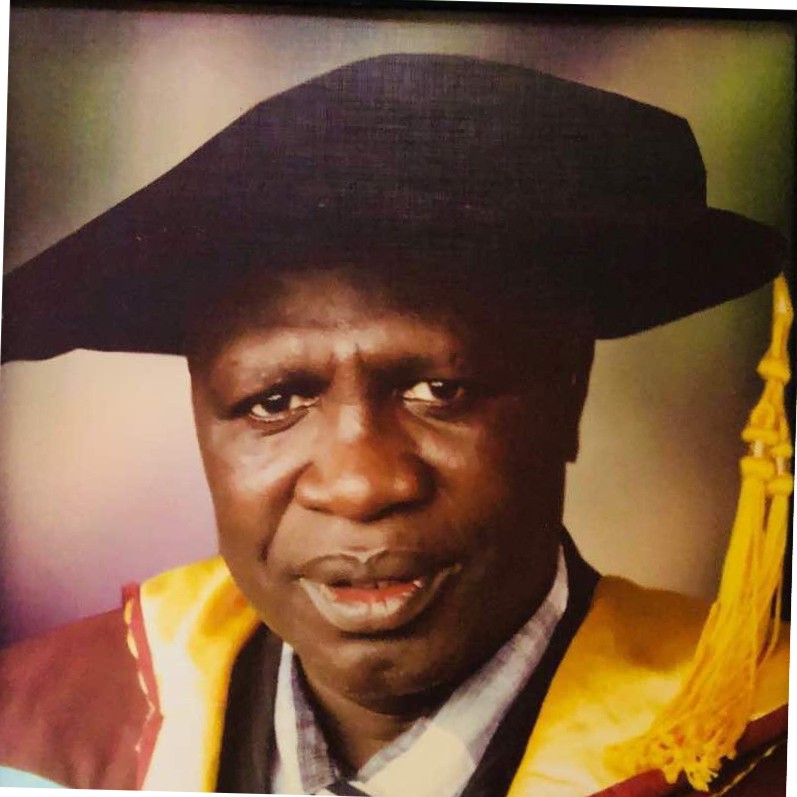
By Prof. M.K. Othman
Confession: I am not a security expert, but my interest in security matters has led me to read widely and to write more than 10 articles on insecurity in Nigeria over the last 5 years. I also submitted a 12-page security memorandum during a stakeholders’ security interaction with the Katsina State Governor, Mallam Dikko Umar Radda, in September 2025. I also had a one-on-one interview on security challenges with the current Minister of Defence, General Christopher Gwabin Musa OFR (Rtd), when he was Chief of Defence Staff, and wrote a 2-part article, publishing the interview in my column and in several other online papers.
These experiences have deepened my conviction that insecurity in Nigeria demands urgent, informed, and collective action.
As a concerned citizen, born, raised and educated in the northwest, Nigeria, like millions of others who call this region home, I grew up knowing a North that was not without its challenges, but one where long-distance road journeys were undertaken with little apprehension, farmers returned from their fields at dusk with peace of mind, and parents worried more about their children’s education than about whether they would return safely from school. Years later, I watched that familiar landscape gradually give way to one increasingly defined by fear, apprehension and uncertainty. Like countless families across the region, mine has not been insulated from the pain that insecurity has brought, as my friends, neighbors, and colleagues have been victims of bandit attacks, kidnappings, and senseless killings. Communities that once bustled with commerce now count their losses in abandoned homes, deserted farmlands and interrupted dreams. Starting especially in the early 2010s, I found myself asking a question that many Northerners quietly ask: how did a region blessed with such enormous human and natural resources become one of Africa’s most persistent theatres of violent crime? Why is insecurity in Nigeria becoming this complex monster? This personal and regional experience explains why the issue cannot be ignored.
As I noted in one of my articles, the complexity of Nigeria’s security challenges seems beyond human comprehension, defying logic and common sense. If not, how do we explain that some citizens work against the nation’s collective success just for a pot of porridge? Our security challenges are mainly man-made and driven by self-interest.
A critical reflection on insecurity in Nigeria reveals four categories of Nigerians: on one hand, criminals—the architects of the problems and the direct beneficiaries—parading as warlords fighting their motherland for worldly gains, pleasure, and adventure, unknowingly serving as tools of neo-colonial masters and destroying their country. The second category comprises Nigerians who are working hard and relentlessly to overcome these issues.
The third category comprises people who are responsible for addressing the problems but benefit from the largesse of heavy security investment and blood money; they are thus apprehensive about the logical end of the issue—namely, corrupt government officials, including security personnel, civil servants, and politicians.
The rest of Nigerians, the fourth category, are the victims, watching the events unfold helplessly but fervently praying for divine intervention to halt the trend. What a hopeless situation. This division shows why the crisis persists and why solutions are repeatedly undermined.
These issues are especially concerning given the North’s critical importance to Nigeria’s future. As the largest region, covering over two-thirds of the land, it produces a significant share of the country’s grains and legumes, and livestock, and contains extensive mineral deposits. Northern Nigeria has over 44 distinct mineral resources across more than 500 sites, valued at trillions of US dollars. It also acts as a vital commercial link to neighboring West and Central African nations.
Nevertheless, the North is now widely associated with terrorism, banditry, kidnapping, communal conflicts, and mass displacement. In rural areas, farmers often consider whether they might survive before deciding to farm or travel for trade. Parents question whether the risks of sending their children to school outweigh the educational benefits, regardless of the school’s distance. Businesses factor insecurity into the cost of every truckload of food, every delayed investment, and every journey.
As a result, security, once viewed as a public good, now incurs a daily economic toll on ordinary citizens. While these issues affect the entire country, they are especially severe in the North.
Amid this painful reality, I welcomed the decision by the nineteen Northern governors to establish the Northern Nigeria Security Trust Fund and commit ₦1 billion every month to combat insecurity.
As someone who has lived in this region for almost all of my life, I greeted the announcement with cautious optimism. It reflects a growing recognition that the security crisis can no longer be viewed solely as the Federal Government’s responsibility. It is a collective responsibility.
The governors’ resolve to work more closely with the Northern Traditional Rulers’ Council, strengthen intelligence sharing, and continue advocating constitutional reforms such as state policing suggests an appreciation that today’s security challenges require coordinated regional action rather than isolated state responses. It requires political will, determination, concerted efforts, and teamwork towards a single goal: addressing insecurity from head to toe. This makes the trust fund a necessary response, even if it is not yet the full answer.
What is particularly inspiring confidence in this matter is not merely the financial commitment but the caliber of individuals entrusted with guiding the initiative. At the inauguration held on Wednesday, July 8, 2026, at Sir Kashim Ibrahim House in Kaduna, the Northern States Governors’ Forum appointed former Chief of Defence Staff General Martin Luther Agwai (rtd) and former Head of the Civil Service of the Federation and former Minister Alhaji Mahmud Yayale Ahmed as Co-Chairmen of the Board of the Trust Fund. Both men have distinguished careers in public service, leadership, and national administration, drawing on decades of experience in security management, governance, and institutional coordination. Their appointment strengthens confidence that the pledge can be directed with purpose.
The composition of this Board reflects a deliberate effort to assemble individuals whose careers have been defined by public service at the highest levels. Other members of the Board include former Chief of Army Staff Lieutenant General Faruk Yahaya (rtd); former Inspector-General of Police Usman Alkali Baba; former Secretary to the Government of the Federation Boss Mustapha; Senator and retired Air Vice Marshal Napoleon Bali; former Deputy Inspector-General of Police Hafiz Inuwa; Air Vice Marshal Kabiru Aliyu; Professor Usman Tar; Major General A. M. Dikko; Assistant Inspector-General of Police Sunday Babaji; Air Vice Marshal Farouk Omeiza Umar; Major General Muhammad Sani; Major General Bello Sarkin Yaki; Major General John Malu; and Brigadier General Ibrahim Agbab, alongside several other distinguished retired military officers, security professionals, and public administrators from the nineteen northern states. Collectively, they represent decades of operational experience, strategic planning, and public administration that few institutions can readily assemble. What are the mandates of the Trust Fund? Will the Trust Fund end up similar to Trust Funds established a few decades ago without tangible results? Will the state governors fulfill their one-billion-naira monthly pledge? To be continued next week.
Northern Security Trust Fund: ₦1 Billion Is a Beginning, Not the Solution
