

The Pitching Contours within the 256 Odus Ifa in the Digital Age

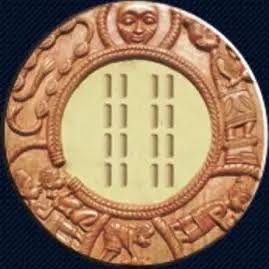
The Pitching Contours within the 256 Odus Ifa in the Digital Age
By Professor Ojo Emmanuel Ademola
Introduction
In the restless hum of our digital civilisation—where satellites orbit silently, sensors pulse with data, and artificial intelligence parses the unseen—humanity finds itself drawn back to an ancient compass. The Yoruba intellectual heritage, embodied in the 256 Odus Ifa, offers not merely a cultural artefact but a profound architecture of thought. These Odus, long revered as a matrix of wisdom, provide a symbolic landscape for interpreting signals, discerning hidden realities, and navigating uncertainty. In the Digital Age, their contours resonate anew, inviting us to consider how ancestral frameworks of observation and interpretation can illuminate the pathways of remote sensing, predictive analytics, and cybersecurity. To explore the Odus today is to rediscover the timeless human quest: the search for meaning within complexity.
READ ALSO: Algorithms on Trial: Meta Lawsuit Signals Africa’s AI Governance Wake-Up Call
Rediscovering Ancient Patterns in a Digital World
In an era dominated by satellites, sensors, artificial intelligence, predictive analytics, and continuous streams of digital information, humanity is returning to an ancient instinct: the search for patterns that reveal hidden realities. Within Yoruba intellectual heritage, the 256 Odus Ifa have long been revered as a comprehensive framework for observing relationships, interpreting signals, and understanding the interplay between visible events and invisible causes.
While Ifa belongs to a traditional knowledge system rooted in culture, philosophy, and spirituality, its conceptual architecture offers an intriguing metaphor for understanding contemporary digital ecosystems. The idea of “pitching contours” within the Odus may be approached as a symbolic landscape of signals, trajectories, and interpretive pathways. In the Digital Age, these contours can be explored as conceptual parallels to remote sensing technologies, data acquisition platforms, and networked intelligence systems.
Remote Sensing and Ancient Insight
Remote sensing is fundamentally about perception at a distance. Satellites observe the earth from space. Drones survey agricultural fields from above. Environmental sensors measure temperature, rainfall, land use, and vegetation health without physical contact. Cybersecurity platforms identify anomalies across digital infrastructures without standing physically beside every device.
In each case, information is gathered through patterns, correlations, and signals. The observer interprets traces in order to understand realities that are not immediately visible. Conceptually, the Odus Ifa may be imagined as a vast knowledge matrix composed of interconnected symbolic configurations. Each Odu represents a distinct arrangement, carrying narratives, lessons, warnings, opportunities, and strategic insights.
Viewed through a digital lens, these arrangements resemble a multidimensional database in which meaning emerges from relationships among data points rather than isolated observations. Just as modern analytics engines identify trends from large datasets, traditional interpretive frameworks organise knowledge through recurring patterns and contextual understanding.
Contours as Pathways of Knowledge
Within this conceptual landscape, the notion of pitching contours can be compared to the way digital systems map changing conditions. Geographic information systems generate contour maps showing elevation, gradients, and topographical relationships. Machine-learning models construct decision surfaces that distinguish one outcome from another. Network analysts chart the pathways through which information travels.
Similarly, the symbolic contours of the Odus can be viewed as intellectual pathways that guide movement from observation to interpretation and from interpretation to decision-making.
Early Warning Systems: Tradition Meets Technology
One of the most fascinating parallels concerns early warning mechanisms. Modern remote sensing excels in detecting subtle changes before they become major events. Agricultural satellites identify crop stress before visible damage occurs. Climate-monitoring systems observe environmental shifts that may signal future challenges. Cybersecurity solutions recognise unusual behaviour before a cyberattack escalates.
In a conceptual sense, the Odus function as a framework for recognising indicators, encouraging reflection on emerging conditions and possible consequences before they fully materialise.
Predictive Intelligence and Wisdom
The Digital Age increasingly depends upon predictive intelligence. Organisations collect enormous volumes of information and seek actionable insight. Governments monitor infrastructure, businesses analyse consumer behaviour, and health systems track indicators of public wellbeing. The underlying objective is anticipation.
The value of data does not lie merely in collection but in interpretation. This observation resonates with a broader philosophical principle found across many knowledge traditions: wisdom emerges not from information alone but from the disciplined interpretation of information.
Distributed Intelligence and Holistic Interpretation
Remote sensing systems rarely depend upon a single instrument. Instead, they integrate satellites, aerial platforms, ground sensors, analytics engines, and human expertise. Meaning arises from synthesis.
The conceptual richness of the 256 Odus similarly invites holistic interpretation. Individual signs acquire deeper significance when viewed within wider contexts. Contemporary digital environments demonstrate the same reality. A single data point may be insignificant, yet patterns across multiple sources can reveal critical insights.
Navigation in Complex Landscapes
The language of contours also evokes navigation. Throughout history, maps have enabled travellers to move through unfamiliar terrain. Today, digital maps guide movement across both physical and virtual spaces. Recommendation engines direct consumer choices, navigation systems guide transportation, and cybersecurity dashboards steer organisational responses.
Conceptually, the Odus can be understood as navigational frameworks within a landscape of uncertainty. Their enduring relevance lies not in offering mechanical predictions but in encouraging reflective engagement with complexity.
Artificial Intelligence and Human Judgement
The convergence of artificial intelligence and remote sensing further enriches this discussion. AI systems process imagery, detect anomalies, classify objects, and generate forecasts from vast datasets. Yet even the most sophisticated algorithms must operate within interpretive frameworks developed by human beings.
Data requires context. Signals require meaning. Actions require judgement. The symbolic structure of the Odus reminds contemporary societies that the interpretation of knowledge remains as important as its acquisition. Technology may enhance perception, but wisdom remains essential for responsible decision-making.
Cybersecurity and Pattern Recognition
From a cybersecurity perspective, the metaphor becomes particularly compelling. Cyber defenders monitor networks continuously, searching for patterns that indicate risk. Threat intelligence platforms aggregate signals from countless sources. Analysts examine seemingly unrelated events and construct coherent narratives.
This process mirrors the broader human challenge of transforming fragments into understanding. The Digital Age is increasingly characterised not by a scarcity of information but by an abundance of signals requiring interpretation.
Social Observation and Africa’s Knowledge Opportunity
The concept of remote sensing extends beyond technology into the realm of social observation. Social media analytics, public opinion monitoring, and digital participation platforms generate vast streams of behavioural data, as organisations strive to understand sentiments, emerging concerns, and societal trends. The challenge lies in discerning meaningful patterns amidst the noise. Symbolically, the Odus Ifa embody structured approaches to pattern recognition, emphasising context and memory, and accumulated wisdom.
For Africa, this dialogue offers a profound opportunity. Indigenous knowledge systems are too often dismissed as relics, while advanced technologies are celebrated as purely modern innovations. Yet both domains share a common pursuit: observation, interpretation, adaptation, and decision-making. By building conceptual bridges between traditional intellectual heritage and contemporary digital tools, scholars and practitioners can enrich conversations about innovation, ethics, and culturally grounded approaches to knowledge management. In this synthesis lies Africa’s chance to demonstrate that wisdom and technology are not opposites but complementary forces shaping a resilient future.
The Metaphorical Geography of Insight and Enduring Relevance
The pitching contours within the 256 Odus Ifa may be understood as a metaphorical geography of insight, encouraging reflection on how societies perceive, interpret, and respond to complex realities. Satellites survey landscapes, sensors capture signals, analytics reveal trends, and human judgement transforms information into action; in a comparable sense, the symbolic architecture of the Odus illustrates the enduring human quest to discover order within complexity.
Far from being eclipsed by modernity, ancient frameworks of thought remain vital in the Digital Age. Remote sensing technologies expand humanity’s capacity to observe the world, yet the philosophical lessons of pattern recognition, contextual interpretation, and responsible decision-making are indispensable. The dialogue between the Odus and contemporary digital systems is therefore more than a comparison between past and present—it is a reminder that across generations, cultures, and technologies, human beings continue to seek wisdom in the signals that surround them.
Conclusion
As the Digital Age accelerates, with its torrents of information and relentless expansion of technological perception, the wisdom of ancient frameworks becomes not obsolete but indispensable. The pitching contours within the 256 Odus Ifa remind us that knowledge is not merely about signals gathered but about the disciplined interpretation that transforms fragments into insight. Satellites may map landscapes, algorithms may forecast outcomes, and sensors may capture invisible shifts, yet it is human judgement—anchored in cultural memory and philosophical reflection—that ensures responsible action.
The dialogue between Ifa and digital systems is more than metaphor; it is a call to integrate heritage with innovation, to balance data with wisdom, and to recognise that across generations, cultures, and technologies, humanity continues to seek order amidst complexity. In this convergence lies a profound truth: the future of knowledge is not only digital, but also deeply human, enriched by the echoes of ancient voices guiding us through the signals of tomorrow.
Professor Ojo Emmanuel Ademola, is the first African Professor of Cybersecurity and Information Technology Management, Global Education Advocate, Chartered Manager, UK Digital Journalist, Strategic Advisor & Prophetic Mobiliser for National Transformation, public intellectual, and African governance thinker and General Evangelist of CAC Nigeria and Overseas
