


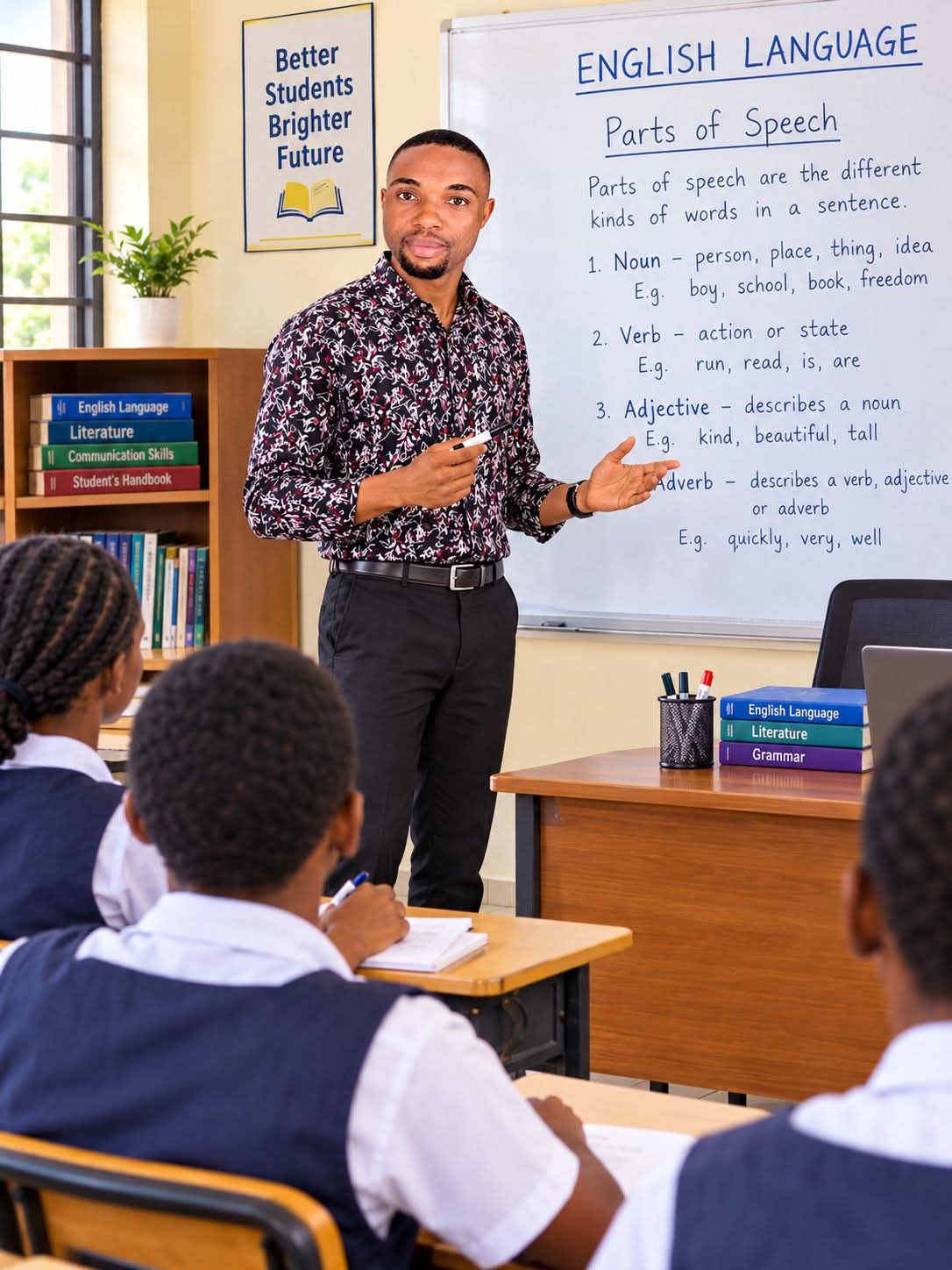
The Teacher Nobody Planned to Become
By Matthew Eloyi
Every year, schools across Nigeria hold a Career Day. Children arrive in costumes and borrowed uniforms, each one a rehearsal of the future. There are small doctors with stethoscopes hanging from their necks, pilots in oversized caps, lawyers in wigs that slide over their eyebrows, engineers with hard hats, bankers in their fathers’ ties. The parents cheer, the phones come out, and the photographs go up on social media.
Look closely at the crowd and you will notice who is missing. It is rare, almost startling, to see a child dressed as a teacher.
And on the day one does, watch the adults. There is a polite smile, a pause, and sometimes a nervous laugh. Then comes the gentle correction: “Are you sure, my dear? Maybe a doctor? Or an engineer?”
In that small exchange, a nation reveals what it truly thinks about the people it entrusts with its children.
Picture a seven-year-old I will call Amina. She spends her afternoons lining up her dolls, writing on an imaginary board, and scolding them for not paying attention. When the school asks what she wants to be, she answers without hesitation: “A teacher.”
Her mother, who loves her, feels something tighten in her chest. She is not unkind. She simply knows what the world has told her about this profession: the salaries that arrive late, the respect that arrives later, the stories of teachers who retired with little to show for decades of service. So at home that evening, she says softly, “Think about medicine, my love. Teaching is not for someone as brilliant as you.”
Amina is a composite, but she lives in every neighbourhood in this country. Somewhere between Career Day and graduation, her dream is quietly edited by the very adults who claim to cherish education. We do not forbid children from becoming teachers. We simply make it clear, with a look, a sigh, or a sentence, that it is a dream they should outgrow.
By the time Amina grows up, the lesson has been fully absorbed. The evidence is in the job market.
Today, it is not hard to find young graduates, some of them holders of degrees in Education, who would rather work as waiters, servers, or cashiers than step into a classroom. Ask why, and the answers are honest and uncomfortable. The restaurant pays better and on time. The tips are immediate. Nobody at the café asks them to do the work of three people, buy their own chalk, or wait four months for a salary. And at the end of the shift, no one makes them feel small for what they do.
Let that sink in. In our country, carrying plates of jollof rice has begun to look like a more dignified and rewarding choice than shaping young minds. There is nothing wrong with honest work in any form, and a waiter deserves respect like anyone else. But when a graduate trained to teach decides that serving tables is the better offer, the problem is not the graduate. The problem is what we have made teaching worth.
We say teachers are the architects of the nation. We say it every October 5th, with banners and speeches and hashtags. But a nation’s values are written in its budgets, not its slogans.
Look at the receipts. Salaries that cannot keep pace with the cost of living. Arrears that stretch for months in some states. Classrooms with leaking roofs and no desks. Strikes that have become annual rituals. In many private schools, teachers earn so little that their own children could not afford the fees they collect. And we expect miracles: higher pass rates, better behaviour, brighter futures, all from people we have been unwilling to pay, equip, or celebrate.
You cannot underpay a profession for decades and then act surprised that your brightest graduates no longer dream of joining it.
The cost of this neglect never appears in a ministry’s annual report, yet every one of us pays it. We pay it in pupils who reach secondary school unable to read with confidence. We pay it in graduates with certificates but few skills. We pay it when passionate teachers burn out, leave the profession, or leave the country altogether.
And remember: the doctor in the stethoscope, the pilot in the cap, the lawyer in the oversized wig, every one of them learned their first letters from a teacher. When we tell our best minds to avoid the classroom, we are quietly draining the source from which every other profession drinks.
How to make teaching attractive
A holiday will not fix this. Respect has to be built, and it can be, through deliberate choices:
Pay teachers well and on time. Nothing says “we value you” like a salary that arrives when it is supposed to.
Make teaching competitive and prestigious. The countries with the strongest classrooms recruit their brightest into teaching, train them rigorously, and give them a clear path to grow. We should do the same.
Invest in training and tools. A teacher in 2026 needs digital skills, modern methods, and a classroom that works.
Honour teachers in ways that matter. Housing support, scholarships for teachers’ children, and national awards with real weight, not just a certificate and a bag of rice on one afternoon a year.
Change what we say at home. Parents, this one is ours. The next time your child says “I want to be a teacher,” try something radical: say “that is a noble dream,” and mean it.
Imagine Career Day, ten years from now
Imagine a school hall where a dozen children march proudly onto the stage in teachers’ gowns, chalk in hand, rehearsing the profession that raises all the others. Imagine parents leaning forward, not with a nervous laugh, but with admiration. Imagine a graduate who chooses the classroom over the restaurant because the classroom offers a living, a future, and respect.
That Nigeria is possible. But it starts with a decision, made in our homes, our budgets, and our policies, that teaching will no longer be what we settle for.
