

‘How Government Engages Youth Will Determine Nigeria’s Stability or Turmoil’ — Buratai

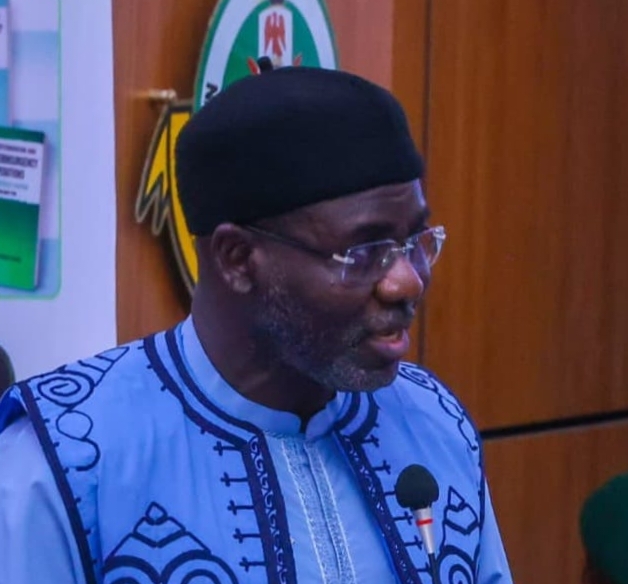
‘How Government Engages Youth Will Determine Nigeria’s Stability or Turmoil’ — Buratai
By Matthew Eloyi
Former Chief of Army Staff, Lt.-Gen. Tukur Yusuf Buratai (Rtd), has warned that Nigeria’s future stability will depend largely on how effectively governments at all levels and the Armed Forces of Nigeria (AFN) engage, empower, and integrate young people into national security structures.
Buratai gave the warning while delivering a lecture at the University of Ilorin, where he stressed that Nigeria’s worsening insecurity cannot be addressed through military force alone without tackling youth unemployment, exclusion, and social discontent.
According to him, the country’s youthful population represents either a strategic national asset or a major security risk, depending on how government responds to their aspirations.
“How effectively the government at all levels and the AFN engage, empower, and integrate youth into national security frameworks will determine Nigeria’s trajectory towards stability or turmoil,” Buratai stated.
The retired army chief identified security, employment, justice, national belonging, and civic relevance as the core aspirations of Nigerian youths, warning that failure to address them leaves many vulnerable to recruitment by insurgent groups, criminal gangs, separatist movements, and extremist organisations.
“When these aspirations are frustrated, youth become a recruitment pool for insecurity. When cultivated, they become Nigeria’s first line of defence,” he said.
Buratai argued that Nigeria requires a comprehensive “whole-of-society” security framework that combines military operations with economic inclusion, intelligence coordination, education, civic orientation, and community participation.
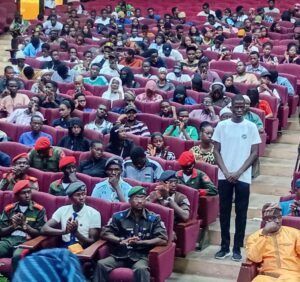 He stressed that military force alone cannot resolve ideological extremism and deeply rooted social conflicts.
“Military force alone cannot defeat an ideology,” he said.
As part of his recommendations, Buratai proposed a “Massive Youth Recruitment Drive” involving the enlistment of 50,000 young Nigerians annually into the Armed Forces over the next five years through transparent and merit-based processes.
According to him, such a programme would not only strengthen national security but also reduce unemployment, build discipline, and promote national integration among youths.
He also proposed a “National Youth Service for Security,” which would provide tertiary institution graduates with 12 months of mandatory civic security training as an alternative to aspects of the existing NYSC structure.
The former army chief said the programme could prepare young Nigerians for intelligence gathering, cyber defence, emergency response, and community-based security operations.
Buratai further recommended the establishment of state-level intelligence fusion centres bringing together the military, police, Department of State Services (DSS), and local vigilante groups to improve coordination and information sharing.
He also advocated the creation of a Defence Industrial Corps that would engage Nigerian youths in manufacturing drones, armoured vehicles, and small arms locally under the DICON Act of 2023.
According to him, Nigeria must strengthen indigenous defence production capacity while reducing dependence on imported military equipment.
The retired general traced the evolution of the Armed Forces of Nigeria from a colonial military structure into one of Africa’s most active security institutions involved in peacekeeping and counter-insurgency operations across the continent.
He highlighted Nigeria’s participation in peacekeeping missions in Liberia, Sierra Leone, Mali, Sudan, Guinea-Bissau, and The Gambia, describing Nigerian troops as key contributors to regional peace and stability.
On the domestic front, Buratai acknowledged that Nigeria continues to face complex security challenges including terrorism, banditry, kidnapping, cybercrime, piracy, separatist agitations, oil theft, and farmer-herder conflicts.
He also expressed concern about rising instability in the Sahel region and the activities of extremist groups linked to Al-Qaeda operating in Mali, Burkina Faso, and Niger.
According to him, the withdrawal of some Sahel states from ECOWAS has weakened regional cooperation and increased pressure on Nigeria’s borders.
Buratai stressed that national security policies and laws would remain ineffective without implementation, institutional coordination, and political commitment.
“The constitutional mandate alone cannot defend the nation,” he said.
Reflecting on lessons from the Nigerian Civil War, the former army chief argued that sustainable peace depends not only on military victories but also on justice, development, and inclusion.
“The Nigerian Civil War teaches that military force can defeat secession, but only justice, development, and inclusion can build lasting peace,” he stated.
He ended the lecture by urging Nigerian youths to see the Armed Forces as a noble institution capable of shaping both national development and personal growth.
