


ADC Leaders Storm Abuja in ‘Occupy INEC’ Protest Over Electoral Concerns
By Matthew Eloyi
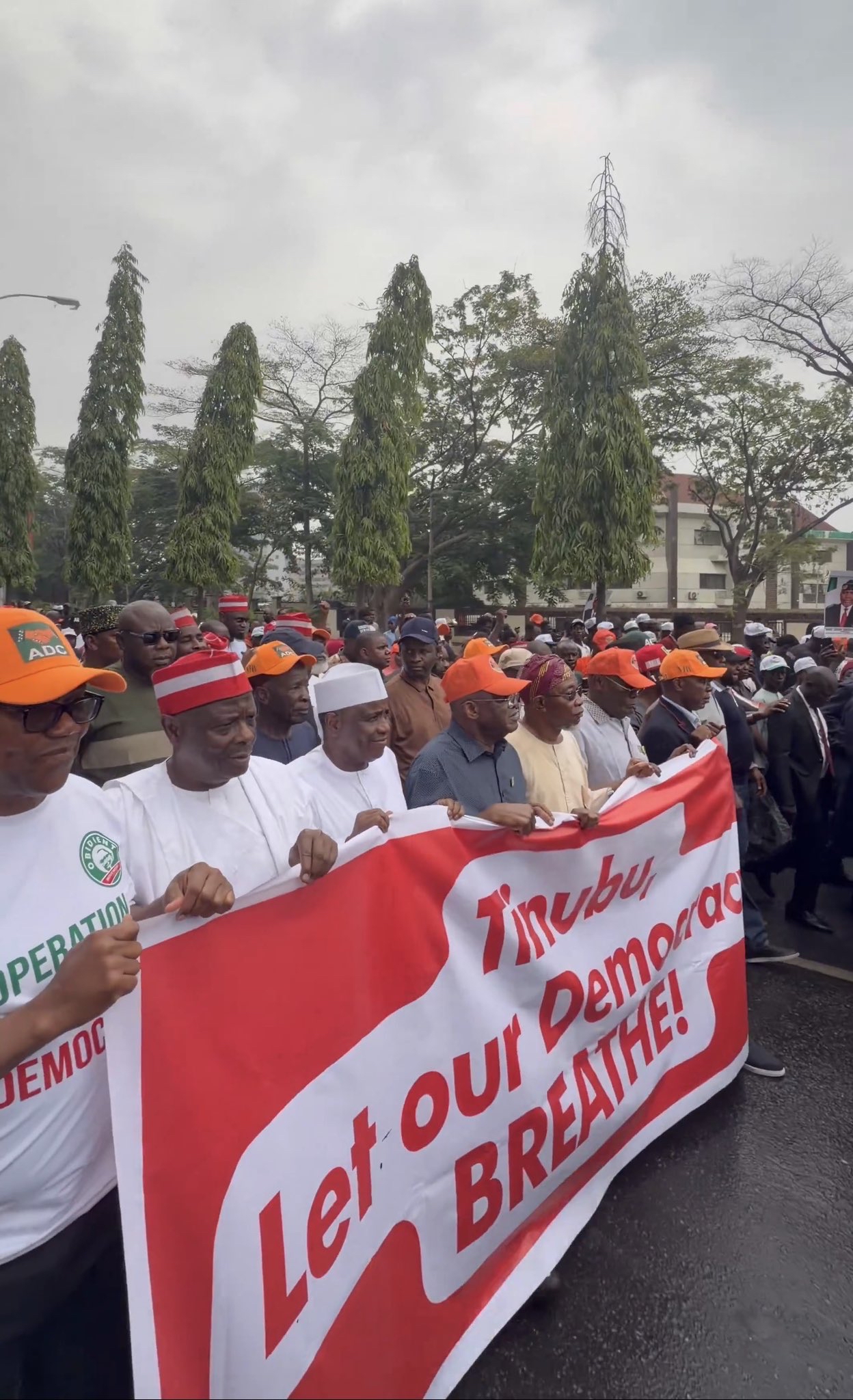
Abuja is currently witnessing a significant political demonstration as prominent opposition figures converged on the nation’s capital for a protest tagged “Occupy INEC,” raising fresh concerns about the state of Nigeria’s electoral process.
Among those leading the protest were former Vice-President Atiku Abubakar, National Chairman of the African Democratic Congress (ADC) David Mark, and former Minister of Transportation Rotimi Amaechi.
They were joined by other high-profile political figures, including Peter Obi, former Osun State governor Rauf Aregbesola, former Kano State governor Rabiu Kwankwaso, and ex-senator Dino Melaye.
The protest, organised by leaders of the African Democratic Congress, was aimed at drawing attention to what participants described as the “partisanship” of the Independent National Electoral Commission (INEC).
Read Also: Pope Leo Welcomes Iran War Ceasefire, Condemns Escalating Rhetoric, Calls for Diplomatic Resolution
Announcing the protest earlier via his X (formerly Twitter) account, Atiku stated: “Myself and other leaders of the ADC are peacefully protesting against the partisanship of the electoral umpire,” he said.
“Our patriotic stance is aimed at safeguarding our democracy and preventing the enthronement of a dictatorship.”
At the protest venue, demonstrators voiced their grievances through chants and placards bearing strong political messages. Chants of “Ojoro” echoed through the crowd, while banners displayed inscriptions such as “Tinubu, why are you afraid?”, “Judges must give justice”, and “Tinubu, let democracy breathe”.
The demonstration comes amid heightened political tension following INEC’s recent decision to de-recognise the ADC leadership, a move linked to a ruling by the Court of Appeal.
Observers say the protest underscores growing friction between opposition groups and electoral authorities, raising broader questions about trust, transparency, and the independence of democratic institutions in Nigeria.
