

Corruption Perceptions Index 2026: South Sudan, Somalia Ranked World’s Most Corrupt as Global Governance Concerns Persist
Corruption Perceptions Index 2026: South Sudan, Somalia Ranked World's Most Corrupt as Global Governance Concerns Persist

Corruption Perceptions Index 2026: South Sudan, Somalia Ranked World’s Most Corrupt as Global Governance Concerns Persist
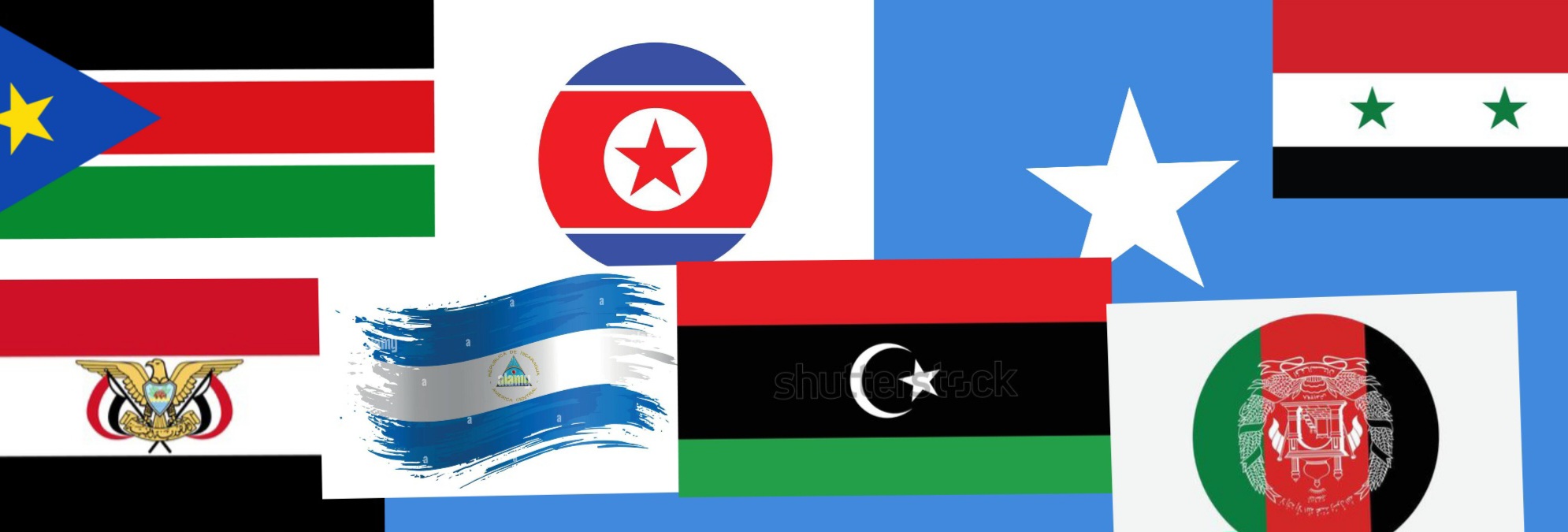
The latest 2026 Corruption Perceptions Index (CPI) released by the Transparency International has once again highlighted the countries perceived to have the highest levels of public sector corruption, with South Sudan and Somalia jointly occupying the bottom position, each scoring 9 out of 100.
The annual index, one of the world’s most widely referenced governance indicators, measures perceptions of public sector corruption based on assessments by experts and business leaders. Countries are scored on a scale of 0 to 100, where 0 represents highly corrupt public institutions and 100 reflects very clean public sectors.
According to the report, countries at the bottom of the rankings continue to struggle with prolonged conflict, political instability, weak institutions, poor accountability mechanisms and fragile governance systems.
Sharing the lowest position are South Sudan and Somalia, each with a score of 9/100.
South Sudan, the world’s youngest nation after gaining independence in 2011, has continued to battle years of political instability, economic hardship and armed conflict. Despite repeated peace agreements, allegations of corruption and weak public institutions remain major governance challenges.
Somalia, meanwhile, has endured decades of insecurity, terrorism, political fragmentation and institutional weakness, factors that continue to undermine transparency and effective public administration.
Other countries ranked among the world’s most corruption-prone include Venezuela (10/100), where years of political and economic crises have significantly weakened state institutions.
Yemen (13/100), Libya (13/100) and Eritrea (13/100) also featured prominently on the list. All three countries continue to face varying degrees of armed conflict, political repression or institutional fragility.
Nicaragua and Sudan each recorded 14/100, while Syria and North Korea scored 15/100, reflecting persistent concerns over governance, accountability and transparency.
Beyond the bottom ten, several other countries also recorded very low scores, underscoring the global nature of governance challenges.
Afghanistan scored 17/100, reflecting continued instability following years of conflict and political transition.
Equatorial Guinea, despite its substantial oil wealth, also received 17/100, amid longstanding concerns over transparency and public sector accountability.
Turkmenistan posted 18/100, while Haiti and Myanmar each scored 19/100, highlighting persistent governance, security and institutional challenges.
Transparency International noted that while the Corruption Perceptions Index measures perceptions rather than documenting individual criminal offences or proven corruption cases, it remains an important global benchmark for evaluating public sector integrity.
The organisation explained that the rankings are compiled using multiple independent data sources from reputable institutions, drawing on assessments by governance experts, analysts and business executives familiar with conditions in each country.
Analysts say countries with consistently low CPI scores often experience weaker public institutions, reduced investor confidence, slower economic growth and greater difficulty delivering essential public services.
Conversely, nations with stronger transparency frameworks, independent judicial systems, accountable public institutions and effective anti-corruption agencies generally record higher CPI scores.
The 2026 report serves as a reminder that strengthening governance, promoting accountability and enhancing institutional transparency remain central to sustainable development, economic progress and public trust worldwide.
According to Transparency International, combating corruption requires sustained political commitment, independent oversight institutions, protection for whistleblowers, an active civil society and stronger enforcement of anti-corruption laws to build resilient and accountable governments.
Corruption Perceptions Index 2026: South Sudan, Somalia Ranked World’s Most Corrupt as Global Governance Concerns Persist
