

Osun 2026: Why Competition, Organisation Made Electoral Manipulation Harder
Athena Election Observatory's preliminary review points to stronger party structures, higher voter participation, and an expanding digital audit trail as key safeguards in the Osun governorship election.

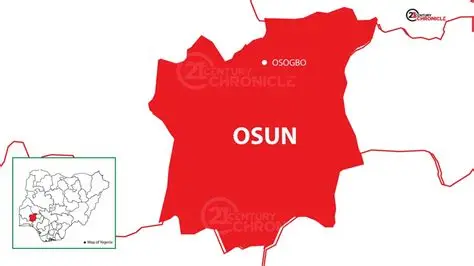
Osun 2026: Why Competition, Organisation Made Electoral Manipulation Harder
By Jerry Adesewo, Abuja
The dust may have settled on the Osun State governorship election with the declaration of Governor Ademola Adeleke as winner, but the more important work has only just begun. Beyond the political celebrations and inevitable recriminations, election observers are beginning to examine what the numbers say about the conduct of the poll and whether the electoral process has become more resilient than it was four years ago.
One of the earliest assessments has come from the Athena Election Observatory (AEO), whose preliminary comparative review of the 2022 and 2026 governorship elections presents an interesting thesis. The Observatory argues that while no election is immune from attempts at manipulation, strong political competition, better party organisation and the growing use of election technology have made large-scale interference increasingly difficult to carry out without detection.
READ ALSO: LEAH: How Theatre Is Keeping a Missing Girl’s Memory Alive
The figures behind that conclusion are striking.
Osun’s electorate grew considerably between the two elections. Registered voters increased from 1.95 million in 2022 to 2.34 million in 2026, representing a rise of almost 20 per cent. Accredited voters crossed the one-million mark, increasing from 827,218 to 1,010,684, while votes cast rose from 823,124 to just over one million. Yet, despite this significant growth in participation, the accreditation rate changed only marginally, moving from 42.37 per cent to 43.20 per cent.
That detail is more significant than it first appears.
A larger electorate does not automatically produce a cleaner election. However, it does mean that anyone seeking to influence the outcome through crude methods such as widespread vote buying or coordinated intimidation must contend with a much broader and more politically engaged voting population. According to the AEO, the sheer size and competitiveness of the electorate increase both the cost and uncertainty of any attempt to manipulate the process on a large scale.
The result itself also reflects a fiercely contested election.
Governor Adeleke improved on his 2022 performance, increasing his vote from 403,371 to 511,067. The APC candidate also gained significantly, rising from 375,027 votes in the previous election to 444,815. In other words, both major political camps were able to mobilise substantially more voters than they did four years earlier.
The difference was that Adeleke’s lead widened. His margin of victory increased from 28,344 votes in 2022 to 66,252 votes in 2026, a rise of more than 130 per cent. The numbers suggest not a low-turnout election decided by a narrow edge, but a competitive contest in which both sides expanded their support base while the incumbent succeeded in extending his advantage.
This is where the AEO’s argument about political organisation becomes particularly relevant.
Electoral integrity is often discussed only in terms of the electoral commission or security agencies. Yet, the Observatory notes that organised political parties themselves serve as an important check on the process. When competing parties have trained agents in polling units who understand the rules, independently track results, and maintain functioning structures through every stage of collation, it becomes much harder for anyone to alter outcomes unnoticed.
In Osun, both major parties entered the election with strong grassroots machinery. Whatever criticisms were made before polling day about security arrangements, political tensions, or administrative decisions, the election itself was watched by thousands of party agents with every incentive to challenge discrepancies. That kind of competition, the AEO suggests, is itself a safeguard.
Technology is the second pillar of the Observatory’s assessment.
The use of the Bimodal Voter Accreditation System (BVAS), uploads to the INEC Result Viewing Portal (IReV), and structured digital result capture increasingly creates an audit trail linking polling units to the final declaration. This does not mean the technology is perfect. The AEO is careful to point out continuing concerns about upload delays, system resilience, transmission timelines, and the need to reconcile different digital records. Nevertheless, it concludes that the overall direction is encouraging because the process now leaves more verifiable evidence than elections conducted entirely through paper records.
Importantly, the Observatory did not declare the election flawless.
Instead, it has moved from election-night observation to what it describes as the more rigorous stage of post-election auditing. That work involves reconciling polling-unit results with BVAS accreditation data and the statutory Forms EC8B through EC8E used during collation. The objective is not to reopen the political contest or speculate about who ought to have won, but to answer a narrower and more important question: whether the complete electoral record supports the result declared by INEC.
AEO Notes Preliminary statement Osun Gov Election
That distinction is worth emphasising in Nigeria’s often heated electoral environment.
Too frequently, public debate after elections quickly descends into partisan claims of victory or allegations of theft. Independent audits, by contrast, focus on documentary evidence. They seek to determine whether accreditation figures match votes cast, whether polling-unit results correspond with ward and local government collation, and whether the final declaration can be traced through the official records.
For Osun, the preliminary picture painted by the Athena Election Observatory is one of an election shaped by intense competition rather than easy dominance. Voter participation increased substantially; both major candidates attracted more votes than in 2022, and the winner emerged with a significantly wider margin. At the same time, digital systems have created a stronger trail for investigators and observers to examine, even though improvements remain necessary.
The final verdict on the election’s integrity will therefore depend not only on the announced figures but also on the outcome of the detailed reconciliation now underway. If the polling-unit records, BVAS data, and collation forms align with the declared result, the Osun election may come to be remembered as evidence that Nigeria’s electoral system, while still imperfect, is gradually becoming harder to manipulate through the old methods.
For now, the Athena Election Observatory’s preliminary conclusion is measured rather than celebratory: stronger competition, better organisation and an expanding technological audit trail do not eliminate electoral risks, but together they make manipulation more difficult and more likely to be detected. In a democracy where trust in elections remains fragile, that may be one of the most important lessons to emerge from Osun’s 2026 governorship contest.