

FRSC Strengthens Safety Framework for EV, CNG Adoption in Nigeria – Corps Marshal
FRSC Strengthens Safety Framework for EV, CNG Adoption in Nigeria – Corps Marshal


FRSC Strengthens Safety Framework for EV, CNG Adoption in Nigeria – Corps Marshal
The Corps Marshal of the Federal Road Safety Corps (FRSC), Shehu Mohammed, mni, FCA, has reaffirmed the Corps’ commitment to supporting the successful implementation of President Bola Ahmed Tinubu’s Renewed Hope Agenda by providing the regulatory, safety and enforcement framework needed for the smooth adoption of Electric Vehicles (EVs) and Compressed Natural Gas (CNG) vehicles across Nigeria.
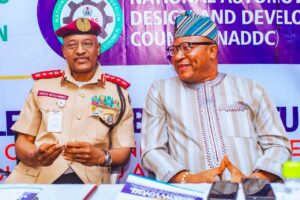
The Corps Marshal made this known on Thursday, July 30, 2026, while delivering a keynote presentation at the 3rd Nigeria Auto Industry Summit (NAISU) organised by the Nigeria Auto Journalists Association (NAJA) in collaboration with the National Automotive Design and Development Council (NADDC) at the Radisson Hotel, Ikeja, Lagos.
The summit, themed “Nigeria’s Clean Mobility Future: The EV and CNG Journey Under the Bola Tinubu Administration,” brought together policymakers, regulators, automobile manufacturers, energy experts and other stakeholders to examine the future of sustainable transportation in Nigeria.
Presenting a paper titled “The Safety of Electric Vehicles (EVs) and Compressed Natural Gas (CNG) Vehicles on Nigerian Roads,” Mohammed said the Federal Government’s reforms in the transportation and energy sectors had created an opportunity for Nigeria to transition towards cleaner, safer and more affordable mobility.
He noted that the transition could contribute to reducing dependence on fossil fuels, lowering transportation costs, stimulating economic growth and promoting environmental sustainability.
However, the Corps Marshal stressed that the success of the clean mobility initiative must be supported by a strong road safety ecosystem based on effective regulation, technical standards, public education and emergency preparedness.
FRSC Enhances Vehicle Inspection, Emergency Response
Mohammed disclosed that the FRSC had aligned its operations with the Federal Government’s clean energy transportation policy by strengthening vehicle inspection procedures for CNG-powered and converted vehicles.
He added that the Corps was also enhancing emergency response capabilities, improving crash reporting through the National Crash Reporting Information System (NACRIS) and intensifying nationwide public enlightenment campaigns on the safe use of emerging vehicle technologies.
According to him, the measures are aimed at building public confidence in EV and CNG technology while ensuring that the transition to cleaner energy does not compromise road safety.
The Corps Marshal further disclosed that the FRSC is working with key agencies and stakeholders, including the Presidential Initiative on Compressed Natural Gas (Pi-CNG), NADDC, the Nigerian Midstream and Downstream Petroleum Regulatory Authority (NMDPRA), the Standards Organisation of Nigeria (SON), the Nigerian Electricity Regulatory Commission (NERC) and the Nigerian Institute of Transport Technology (NITT).
The collaboration, he explained, covers the implementation of the National Gas Vehicle Management System (NGVMS), development of Standard Operating Procedures, coordinated inspections, emergency response protocols, dedicated EV/CNG number plates, structured data sharing and sustained public awareness campaigns.
He also highlighted the functionalities of the FRSC Mobile Application, which he said was designed to assist motorists in navigating the emerging mobility environment.
FRSC Supports EV Pilot Deployment in Abuja
Mohammed disclosed that the FRSC is supporting the pilot deployment of electric vehicles in Abuja, while working with relevant stakeholders to ensure that both factory-built and converted CNG vehicles comply with established safety requirements.
He stressed the importance of periodic vehicle inspections, certification of conversion centres, specialised training for emergency responders and continuous engagement among stakeholders in achieving a safe transition to cleaner transportation.
While acknowledging the environmental and economic benefits of EVs and CNG vehicles, the Corps Marshal cautioned that technological innovation must be accompanied by responsibility and strict compliance with safety standards.
He urged vehicle owners, transport operators, conversion centres and other industry players to adhere to approved regulations, emphasising that public safety must remain at the centre of Nigeria’s clean mobility transition.
Mohammed commended President Tinubu for what he described as visionary leadership in advancing Nigeria’s clean energy transition, noting that investment in alternative fuel transportation has the potential to reduce transportation costs, improve energy security, create employment opportunities, stimulate local automotive manufacturing and strengthen Nigeria’s position in sustainable mobility.
The Corps Marshal assured Nigerians that the FRSC would continue to provide the technical leadership, regulatory oversight and operational support required to ensure that the government’s clean transportation policy delivers its intended economic, environmental and road safety benefits for present and future generations.







FRSC Strengthens Safety Framework for EV, CNG Adoption in Nigeria – Corps Marshal
