

Get State Police Framework Right Before Implementation, Ex-DICON Boss Warns

Get State Police Framework Right Before Implementation, Ex-DICON Boss Warns
By Matthew Eloyi
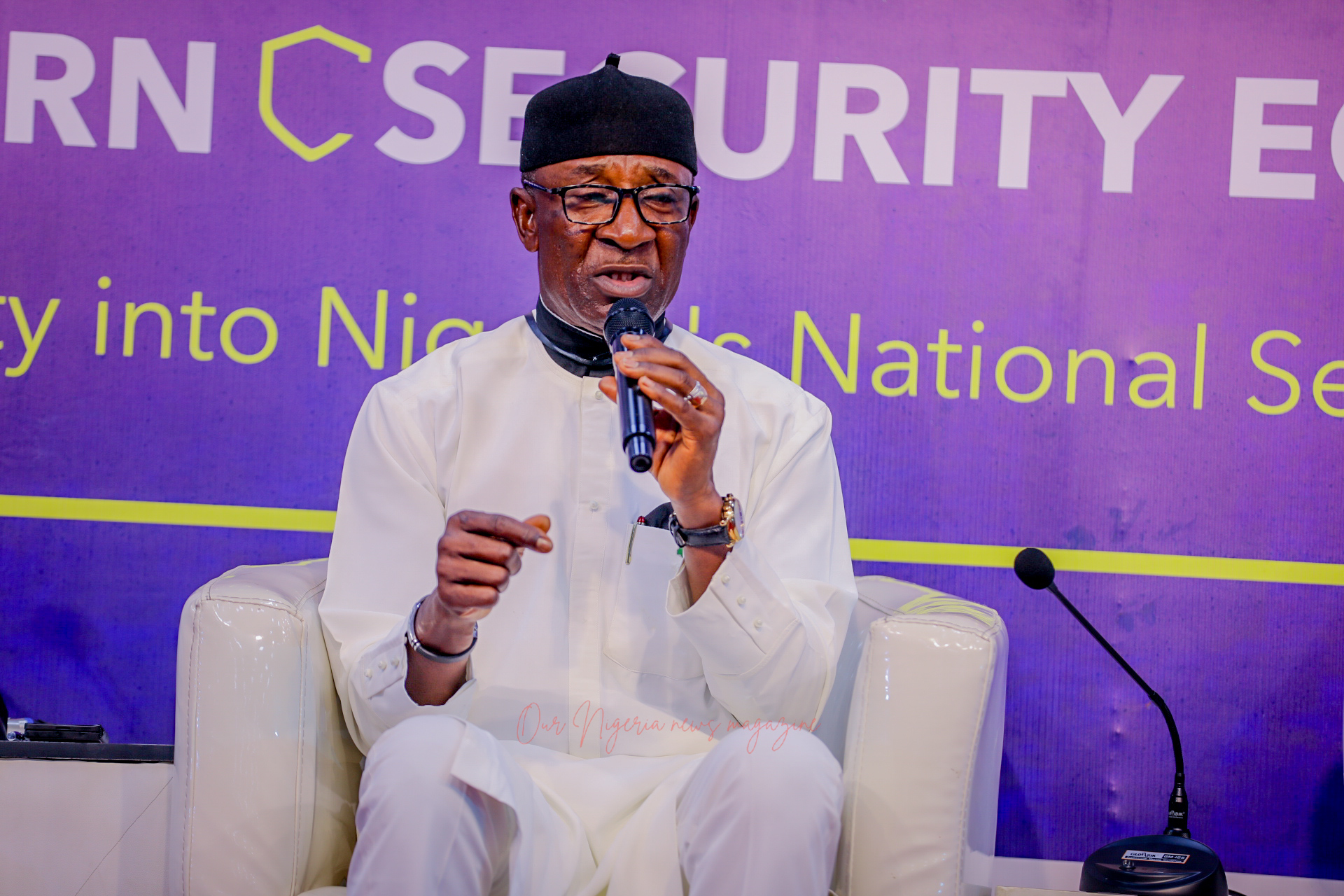
A former Director-General of the Defence Industries Corporation of Nigeria (DICON) and the first Nigerian to produce a Mine Resistant Ambush Protected (MRAP) vehicle, Major General Victor Ezugwu (retd.), has cautioned against the hasty implementation of state policing, urging stakeholders to clearly define the powers and operational boundaries of the proposed security structure before it takes off.
Speaking as a panelist at the Nigerian People’s Strategic Conference (NPSC) and Defence Exhibition 2026 in Abuja on Saturday, Ezugwu said the Federal Government, the Nigeria Police Force leadership, lawmakers, legal experts and other stakeholders must jointly establish clear benchmarks on where the authority of state police would begin and end, as well as the limits of federal police powers.
According to him, the absence of clearly defined jurisdictions could create conflicts among security agencies, noting that even existing federal security institutions sometimes clash over operational mandates.
“What I think I should suggest is that the Inspector-General of Police, state commissioners of police, legislators and all stakeholders who will midwife the state police should sit down and discuss where state police powers start and end, and where federal police powers begin and end,” he said.
Ezugwu pointed to instances of rivalry among federal security agencies, including reported confrontations involving military and paramilitary personnel, warning that the situation could worsen if a state police system is introduced without adequate coordination.
“You saw what happened when the President went to Bayelsa. You see naval personnel fighting with soldiers, and you also see Customs and Immigration officers having disagreements. If agencies under the same federal structure can have such issues, it will require careful planning when state police comes into existence,” he added.
The retired Major General welcomed the passage of the state police bill by the House of Representatives but stressed that the legislative process should go beyond the surface appeal of the proposal.
“I’m happy the way the House of Representatives has passed it, but one thing about Nigerian laws is that when they are passed, they often look very good on the surface. When you begin to dissect them page by page and line by line, you may notice gaps,” he said.
He also commended Senator Osita Izunaso’s position that the Senate would address any shortcomings in the bill, expressing hope that lawmakers would work in unity to strengthen the legislation in the interest of national security.
Ezugwu further advocated the involvement of the Nigerian Bar Association, constitutional lawyers and members of the judiciary in shaping the framework for state policing, noting that they would ultimately be responsible for interpreting the laws governing both federal and state police operations.
He warned against rushing the implementation process, suggesting that a transition period should be created after the bill becomes law.
“It is not a good thing to haphazardly pass this bill, make it a law and ask state governors to start implementing it immediately. If it is passed this year, it can become effective in one year’s time so that all the necessary planning can be done,” he said.
The former DICON chief also urged policymakers to incorporate existing community-based and paramilitary security outfits into the proposed framework. He listed groups such as the Civilian Joint Task Force, forest guards, hunters’ associations, rangers and other local security bodies as organisations that should be considered in the planning process.
According to him, integrating these existing structures would help streamline security operations and strengthen collaboration between federal and state agencies once the state police system is established.
READ ALSO: Senate Will Pass State Police Bill Within Two Weeks — Izunaso
Earlier, Deputy Speaker of the House of Representatives, Hon. Benjamin Kalu, disclosed that the House of Representatives had on Thursday passed the Constitution Alteration Bill on State Police, a landmark legislation he sponsored, describing it as a historic step toward improving security across the country.
He urged the Senate and state Houses of Assembly to give the bill speedy consideration, stressing that the reform should be viewed as a patriotic rather than a political undertaking.
Also, Senator Osita Izunaso, representing Imo West Senatorial District, had said the Senate would pass the proposed state police bill within the next two weeks, describing it as a critical step towards strengthening Nigeria’s security architecture.
According to him, the House of Representatives has already passed the bill, while the Senate is fine-tuning the legislation to close any identified gaps before its final passage.
On his part, the convener of the event, Dr Charles Awuzie explained that the theme of the conference, “Building a Modern Security Ecosystem: Integrating Private Sector Capacity into Nigeria’s National Security Architecture,” was designed to promote collaboration while recognising government’s constitutional role as the custodian of national security.
In his closing remarks, co-convener of the event, Dr Mohammed Sani Abubakar, said he still had reservations on the contentious issue of state policing, but noted that comments made by the Deputy Speaker of the House of Representatives, Benjamin Kalu, had shifted his position toward a cautious willingness to allow the proposal to be tested.
“We should give it a try. If there are issues along the way, we can fine-tune it,” he said, suggesting a flexible, reform-oriented approach rather than outright rejection.
