

How Ancient India Helped Shape Modern Plastic Surgery: The Story of Sushruta, The Anonymous Potter And The Birth of Rhinoplasty
How Ancient India Helped Shape Modern Plastic Surgery: The Story of Sushruta, The Anonymous Potter And The Birth of Rhinoplasty

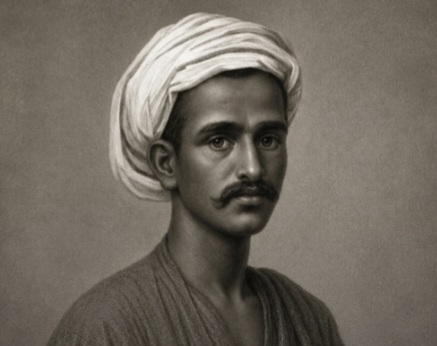
How Ancient India Helped Shape Modern Plastic Surgery: The Story of Sushruta, The Anonymous Potter And The Birth of Rhinoplasty
Modern plastic surgery is often associated with advanced hospitals, cosmetic clinics and celebrity makeovers. Yet the origins of one of its most famous procedures—the reconstruction of the human nose—can be traced back more than 2,000 years to ancient India.
The story spans centuries, connecting the pioneering work of an ancient surgeon, an anonymous village potter, British physicians and the development of modern reconstructive surgery.
Sushruta: The Father of Plastic Surgery
Long before modern medicine emerged, Sushruta, an Indian physician believed to have lived around the 6th century BCE (approximately 600 BC) in Kashi (modern-day Varanasi, India), transformed the practice of surgery.
Widely regarded as the Father of Plastic Surgery, Sushruta authored the Sushruta Samhita, one of the world’s oldest surviving medical texts.
The work documented more than 300 surgical procedures, over 120 surgical instruments, and detailed methods for treating fractures, burns, cataracts and wounds.
Among his most remarkable contributions was a technique for reconstructing noses using skin taken from a patient’s forehead—a procedure now recognised as one of the earliest forms of rhinoplasty, or nose reconstruction.
He also described surgical procedures for reconstructing ears and lips, skin grafting techniques, wound care, and methods of anaesthesia using herbal preparations.
Today, Sushruta’s legacy is recognised internationally. His statue stands at the Royal Australasian College of Surgeons in Melbourne, Australia, honouring his contributions to global medicine.
Why Nose Reconstruction Was Important
In ancient India, as in many other societies, amputation of the nose was sometimes used as punishment for crimes or as a consequence of warfare.
Losing one’s nose often meant severe social stigma and lifelong humiliation.
This created the need for reconstructive techniques capable of restoring both appearance and dignity.
The Remarkable Surgery of 1793
More than two millennia after Sushruta, one remarkable operation helped introduce Indian surgical knowledge to Europe.
During the Third Anglo-Mysore War, a man named Cowasjee (also spelled Cowasji or Kawasji), an Indian bullock-cart driver who had worked with the British East India Company, was captured by the forces of Tipu Sultan, the ruler of the Kingdom of Mysore.
As punishment, Cowasjee’s nose and one of his hands were amputated.
Months later, in 1793, an anonymous potter-surgeon near Pune (then Poona), Maharashtra, performed reconstructive surgery on Cowasjee.
Using a flap of skin taken from his forehead, the craftsman successfully rebuilt his nose.
The operation followed techniques that had been preserved in India for generations and closely resembled the methods first described by Sushruta centuries earlier.
British Surgeons Witness History
Two British surgeons serving in India, Thomas Cruso and James Findlay, witnessed the operation.
Amazed by what they saw, they carefully documented every stage of the procedure through detailed notes and illustrations.
Their account was later sent to Britain.
The World Learns About the Indian Method
In October 1794, the remarkable operation was published in The Gentleman’s Magazine, one of Britain’s leading publications of the time.
The article attracted enormous attention because many European surgeons believed such reconstruction was impossible.
The publication introduced Western medicine to what became known as the Indian Method of Rhinoplasty.
Joseph Constantine Carpue Brings the Technique to Europe
Inspired by the published reports, British surgeon Joseph Constantine Carpue (1764–1846) devoted years to studying the Indian technique.
In 1814, he successfully performed Britain’s first major nasal reconstruction using the Indian forehead flap method.
His operations proved highly successful.
In 1816, Carpue published “An Account of Two Successful Operations for Restoring a Lost Nose”, helping establish reconstructive plastic surgery as a recognised medical discipline in Europe.
A Technique Still Used Today
Although plastic surgery has evolved dramatically over the centuries, the forehead flap rhinoplasty pioneered in ancient India remains one of the most reliable methods for reconstructing severely damaged noses.
Modern reconstructive surgeons continue to use variations of the same technique for patients affected by trauma, burns, cancer and congenital deformities.
An Enduring Legacy
Today, plastic surgery encompasses cosmetic procedures, reconstructive operations and microsurgery performed using sophisticated technology.
Yet many of its fundamental principles can be traced back to Sushruta’s pioneering work over two millennia ago and the anonymous Indian potter who preserved and practised those techniques in the eighteenth century.
Their contributions not only restored faces but also restored confidence, dignity and hope.
Every successful reconstructive nose surgery performed today reflects a remarkable medical journey that began in ancient India—demonstrating how centuries-old knowledge continues to influence modern medicine across the world.
How Ancient India Helped Shape Modern Plastic Surgery: The Story of Sushruta, The Anonymous Potter And The Birth of Rhinoplasty
