

The Ships That Heard Titanic’s Distress Call — But Arrived Too Late
The Ships That Heard Titanic’s Distress Call — But Arrived Too Late

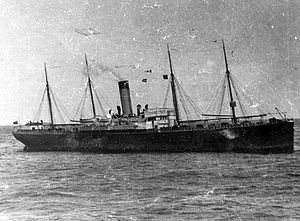
The Ships That Heard Titanic’s Distress Call — But Arrived Too Late
Shortly before midnight on April 14, 1912, the RMS Titanic struck an iceberg in the North Atlantic. As water poured into the supposedly “unsinkable” liner, wireless operators sent desperate distress calls into the darkness.
Several ships were somewhere within reach of the disaster. But distance, ice, communication failures and the timing of the wireless messages meant that only one would arrive in time to rescue those who survived.
The Californian: The ship that was closest
The Californian was approximately 17–20 nautical miles from the Titanic when disaster struck.
The vessel had stopped for the night after encountering a dangerous field of ice. Its wireless operator, Cyril Evans, had gone off duty shortly before the Titanic began transmitting its distress messages.
As a result, the Californian did not receive the calls for help.
Members of its crew later reported seeing rockets rising from the direction of the Titanic. However, they did not initially understand that the signals indicated a vessel in distress. By the time the seriousness of the situation became clear, the Titanic had already disappeared beneath the Atlantic.
The Californian’s failure to respond became one of the most controversial aspects of the disaster and was examined extensively during subsequent inquiries.
Mount Temple: Blocked by ice
Another vessel, the Mount Temple, was approximately 49 nautical miles from the Titanic when it received the distress signal.
Its captain immediately ordered the ship toward the reported position.
But the North Atlantic was filled with dangerous ice. The Mount Temple encountered a heavy ice field that prevented it from reaching the sinking liner in time.
The ship continued toward the area but arrived after the Titanic had already gone down.
Birma: Too far away
The Russian steamer Birma was even farther away—around 100 nautical miles from the Titanic.
Its captain responded to the distress communication and began steaming toward the liner’s position.
But at such a distance, there was simply no realistic possibility of reaching the Titanic before the sinking was complete.
Carpathia: The ship that made it
Then there was the RMS Carpathia.
The ship was approximately 58 nautical miles away when its wireless operator received the Titanic’s distress call.
Captain Arthur Rostron immediately ordered the vessel to turn around and head toward the disaster.
The journey was extremely dangerous. The Carpathia had to race through an area known to contain icebergs while its crew pushed the ship as hard as possible.
Rostron ordered additional stokers into the engine rooms to increase the ship’s speed. Heating systems were reduced so that more steam could be directed toward propulsion.
Every available effort was made to reach the sinking liner as quickly as possible.
But time was running out.
2:20 a.m. — Titanic disappears
At approximately 2:20 a.m. on April 15, the Titanic broke apart and sank into the freezing Atlantic.
Hundreds of passengers and crew members were already in lifeboats, scattered across the dark ocean.
For those survivors, the wait was agonising.
Then, at approximately 3:30 a.m., the lights of the Carpathia appeared.
The rescue ship finally reached the lifeboats roughly an hour and a half after the Titanic sank.
Over the following hours, the Carpathia rescued approximately 705 survivors from the lifeboats and brought them safely to New York.
A disaster measured in minutes
The tragedy of the Titanic was not simply that help was far away.
Ships were in the North Atlantic. Some received the distress calls. Others saw the rockets. One was remarkably close.
But the Carpathia was the vessel that combined the right distance, the right timing and immediate action.
The Titanic had only a little more than two hours between striking the iceberg and disappearing beneath the ocean.
For the people trapped in the lifeboats, every minute mattered.
The story of that night therefore became a haunting lesson in maritime communication and emergency response: help can be nearby, yet still be too far away when time is measured in minutes.
The Ships That Heard Titanic’s Distress Call — But Arrived Too Late
