


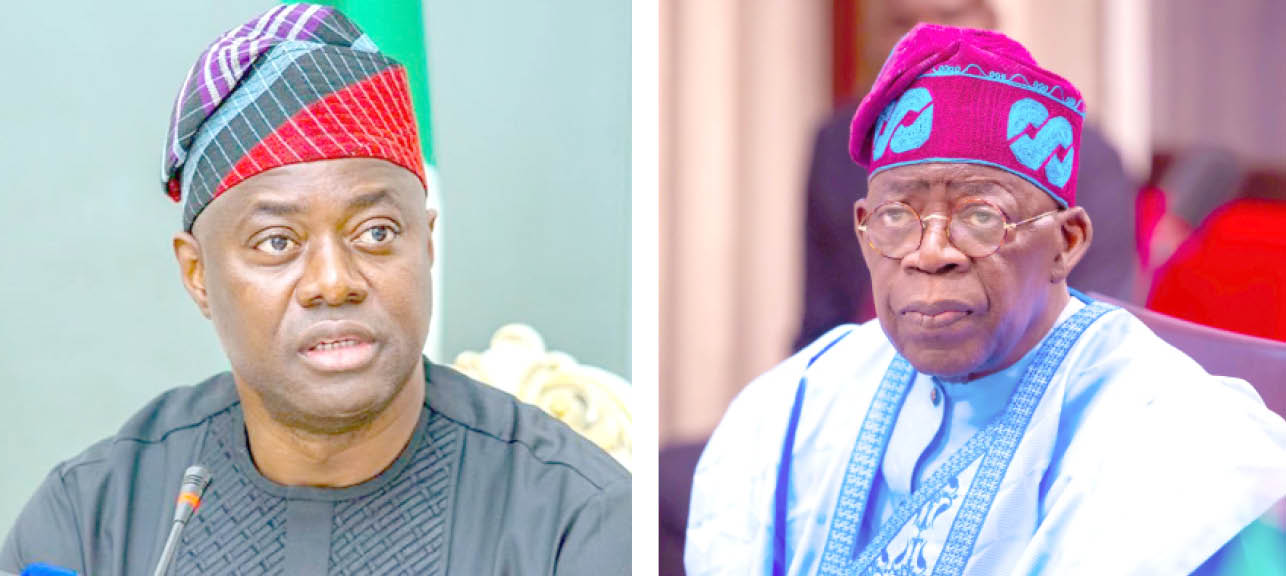
₦250bn for Every State? How NLNG Dividends Spark Fresh War Between Presidency and Makinde
By Matthew Eloyi
The controversy over an alleged ₦250 billion Nigeria LNG Limited (NLNG) dividend windfall for each state of the federation has opened another front in Nigeria’s intensifying political contest ahead of the 2027 general elections, pitting Oyo State Governor Seyi Makinde against the Presidency over the management, distribution and credibility of public revenue claims.
At the heart of the dispute is a question that goes beyond political accusations: was a massive dividend payment due to the states withheld by the Federal Government, or has a claim about public funds become another flashpoint in the struggle for political advantage?
The Presidency has offered a categorical answer. It says Makinde’s allegation is false, mathematically implausible and inconsistent with NLNG’s dividend payment history.
But the controversy also highlights the importance of transparent fiscal communication, the political sensitivity of revenue allocation and the need for public officials to support their claims with verifiable evidence.
In a statement issued on Sunday, October 18, 2026, the President’s Special Adviser on Information and Strategy, Bayo Onanuga, challenged Makinde’s account, arguing that the figures involved could not be reconciled with the known scale of NLNG dividend payments to the Federation.
The governor had reportedly raised the issue at the 2027 Budget Stakeholders’ Consultative Engagement held at the International Conference Centre, University of Ibadan, on Friday.
According to Makinde, the Federal Government had indicated that the money would not be released until after the 2027 elections. He said Oyo State had already identified projects that would expand its economy with the anticipated allocation.
“Is the election more important than the people of Nigeria?” the governor asked, expressing concern over the alleged delay.
It was a politically charged question, framed around the familiar tension between public welfare and electoral considerations. Yet, before the allegation could be accepted as evidence of deliberate withholding, the amount involved and the financial arrangements behind it required closer examination.
The ₦9 trillion question
The Presidency’s principal argument rests on the arithmetic of the claim.
If each of the 36 states were entitled to ₦250 billion from a single NLNG dividend distribution, the combined allocation would amount to ₦9 trillion. That calculation excludes the Federal Government, the Federal Capital Territory and the 774 local government councils.
Onanuga argued that, under the Federation Account Allocation Committee (FAAC) revenue-sharing formula cited in the statement, states receive 26.72 per cent of distributable Federation Account revenue.
For the states’ share alone to reach ₦9 trillion, he said, total NLNG dividends paid into the Federation Account would have to exceed ₦33.68 trillion, or approximately $25 billion, in a single declaration.
The Presidency maintained that NLNG had never made a dividend payment of that magnitude to the Federation.
The implication of its argument is straightforward: if the historical figures cited by the government are accurate, the alleged ₦250 billion entitlement for every state requires substantial clarification.
However, the calculation also points to a crucial distinction in public finance. A state’s share of distributable Federation Account revenue is not necessarily the same as a fixed, separate entitlement from a particular company’s dividend payment. Establishing whether a specific allocation was due would require details of the actual dividend proceeds, the amount paid into the Federation Account, applicable deductions and the distribution arrangements approved by the relevant authorities.
The Presidency’s arithmetic challenges the scale of Makinde’s claim, but a complete public accounting would also help establish precisely what revenue was received and what, if anything, remained outstanding.
What NLNG’s dividend history reveals
To reinforce its position, the Presidency cited NLNG’s historical dividend payments to the Federation.
According to Onanuga, the company had paid approximately $21.5 billion in dividends to the Federation over the preceding 25 years, with less than $3 billion realised since President Bola Tinubu assumed office.
The Presidency argued that it would make little economic sense to claim that a single payment exceeding the company’s entire historical dividend distribution was being withheld.
This is the strongest part of the government’s rebuttal: the alleged payment appears difficult to reconcile with the historical figures it has presented.
Nevertheless, the figures also raise questions about how NLNG revenue is recorded, distributed and communicated to the public. For an issue involving trillions of naira and the financial expectations of all 36 states, a detailed breakdown of dividend receipts and subsequent allocations would be more useful than an exchange of political accusations.
The public needs to know not only whether the alleged amount is plausible, but also what dividend proceeds have actually been received, how they have been treated under the applicable revenue-sharing arrangements and whether any sums remain undistributed.
Such disclosure would move the debate beyond competing assertions and give Nigerians an opportunity to assess the facts independently.
When fiscal disagreements become political battles
The dispute has taken on a more confrontational tone because of Makinde’s emerging presidential ambition ahead of the 2027 elections.
In the statement, Onanuga accused the governor of making misleading claims since embarking on his presidential bid. He also recalled Makinde’s previous description of substantial financial flows from the Federation Account to states, including Oyo, as “voodoo”.
The presidential spokesman maintained that the governor was constitutionally entitled to pursue his political ambition but should not make what he described as falsehoods and disinformation central to his campaign.
These comments have shifted the disagreement from the substance of the alleged dividend payment to the credibility and political conduct of one of the country’s prominent opposition figures.
Yet, the political context makes independent verification more important, not less.
A government spokesman’s categorical denial is significant, but it should not replace documentary evidence. Equally, a governor’s allegation about public revenue should be supported by relevant correspondence, official notices, allocation records or other documentation that establishes the basis of the claim.
Where public money is concerned, neither political office nor electoral ambition should exempt an assertion from scrutiny.
The Presidency has a responsibility to explain the management of federal revenue transparently. Makinde, for his part, should be able to provide evidence identifying the source of the alleged ₦250 billion allocation and the communication on which his claim was based.
If the governor’s account is mistaken, the relevant records should make that clear. If there are genuine questions about an allocation or a payment, those same records should help resolve them.
The states’ financial expectations
Beyond the political exchange, the controversy touches on a broader issue in Nigeria’s fiscal federalism: the dependence of state governments on revenue shared through the Federation Account.
For many states, federal allocations are essential to meeting salary obligations, financing infrastructure and sustaining public services. Expectations of an additional revenue windfall can therefore influence budget planning and decisions on projects.
Makinde’s claim that Oyo had identified projects to benefit from the anticipated funds underscores the practical implications of announcing or expecting a substantial allocation before its status has been established.
If the expected money was not supported by an approved distribution or confirmed revenue receipt, planning around it could create unrealistic expectations. Conversely, if a legitimate allocation had been approved but remained unpaid, the state would be entitled to seek clarification through the appropriate channels.
The public interest lies in establishing which of these circumstances, if either, applies.
It is also important to distinguish between revenue that has been declared, revenue actually received by the Federation Account and money ultimately allocated to the different tiers of government. These are separate stages, and confusion between them can generate mistrust and inaccurate public claims.
Beyond accusations: the need for verifiable facts
The Presidency has urged Nigerians to disregard Makinde’s allegation, describing it as an attempt to mislead citizens and create unnecessary hostility towards the Federal Government.
But dismissing a claim is only one part of resolving a public controversy. The more durable solution is to release sufficient information to allow the facts to speak for themselves.
A clear account of NLNG dividends received by the Federation, the applicable distribution formula, the amounts allocated to the three tiers of government and any outstanding payments would help settle the dispute. Makinde should also clarify the documentary basis for his assertion that ₦250 billion was due to each state and would be withheld until after the election.
Until such evidence is examined, the public should distinguish between the governor’s allegation and the Presidency’s rebuttal rather than automatically treating either political position as a complete accounting of the matter.
As the 2027 election approaches, disputes over public revenue are likely to feature prominently in political messaging. The temptation to turn fiscal questions into instruments of partisan combat will remain strong.
Yet, the management of public money is too consequential to be reduced to campaign rhetoric.
The ₦250 billion controversy has placed the Presidency’s fiscal credibility and Makinde’s evidentiary claims under scrutiny. The decisive issue is no longer simply who has made the stronger political statement, but who can produce the records that establish what happened.
In a democracy, public money demands public accountability, and claims involving trillions of naira must be settled by verifiable facts, not political declarations.
