


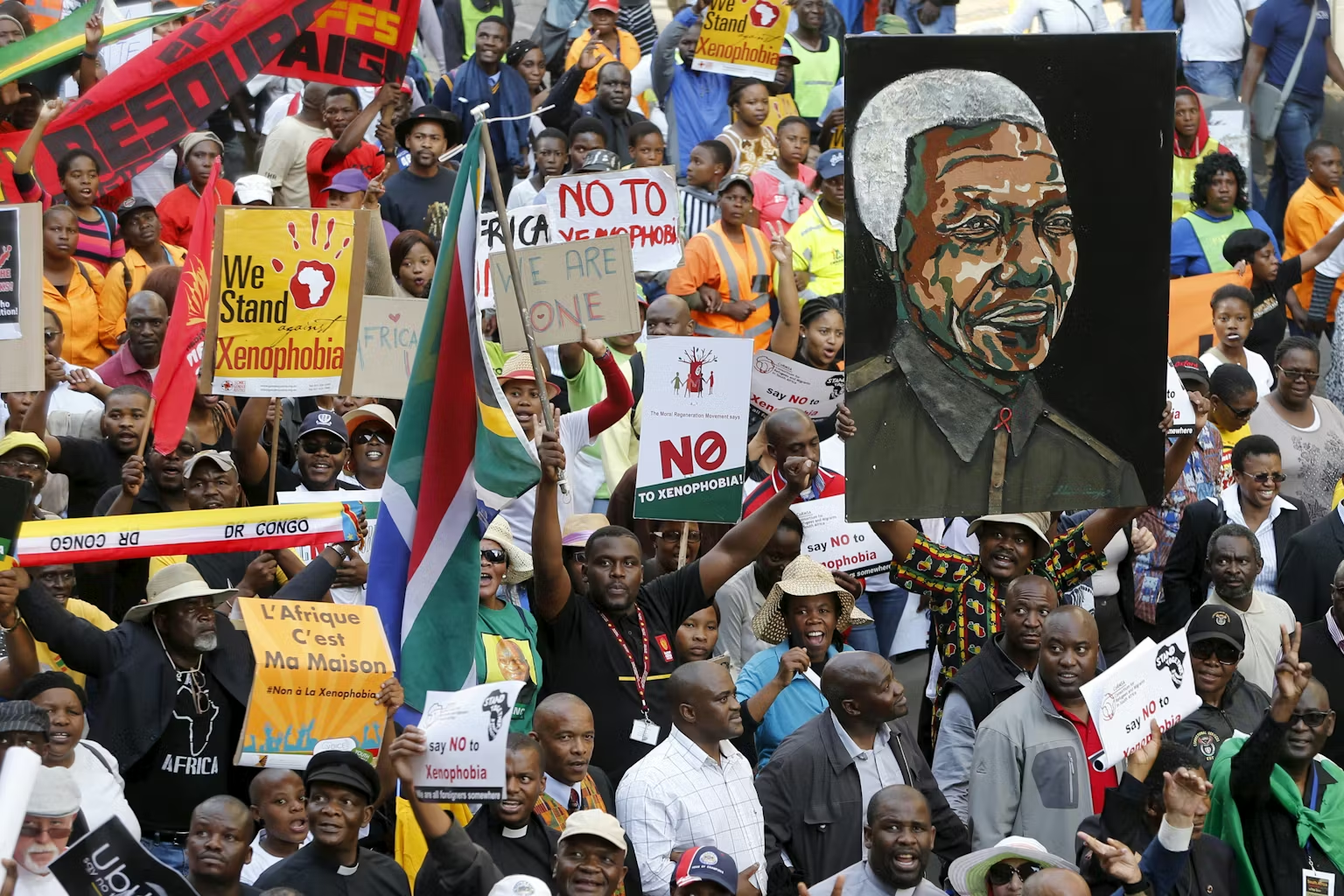
Xenophobia in South Africa: A Crisis of Memory, Leadership and Moral Failure
By Matthew Eloyi
Xenophobia in South Africa has become a recurring stain on a nation that once stood as a global symbol of unity, reconciliation and African solidarity. What is unfolding today is not new, nor is it accidental. It is the product of history, deep socio-economic frustration, and a troubling failure of leadership that continues to allow hatred to fester in plain sight.
When apartheid ended in 1994, South Africa was reborn with immense hope. The idea of a “Rainbow Nation” captured the imagination of the world; a country determined to rise above division and injustice. But beneath that hopeful narrative were unresolved structural problems: inequality, unemployment, poverty and uneven development. These conditions did not disappear with democracy; they simply evolved, creating a climate of frustration and disillusionment among many citizens.
Into that fragile environment came migrants from across Africa, drawn by South Africa’s relatively stronger economy. Instead of being seen as partners in development, they increasingly became convenient scapegoats. Foreign nationals were blamed for crime, job scarcity and pressure on public services. Over time, this narrative hardened, even though it ignored the deeper realities of governance failures and economic mismanagement.
The violence that erupted in 2008, killing dozens and displacing thousands, should have been a turning point. Instead, it became a pattern. Further outbreaks in 2015, 2019 and now in recent times show that the underlying issues were never properly addressed. What is even more concerning today is that xenophobia is no longer just sporadic mob action; it is becoming organised, vocal and, in some circles, socially acceptable.
Movements and groups openly targeting foreign nationals have emerged, emboldened by public frustration and, at times, careless political rhetoric. Migrants are harassed in their businesses, evicted from communities and subjected to violence, often with little consequence for perpetrators. The language of exclusion has crept into everyday discourse, normalising what should be unacceptable in any society that claims to uphold human rights.
READ ALSO: Abuja’s Expanding Edges: The Quiet Strain of Rising Rents in the Suburbs
The recent resurgence of attacks and protests targeting foreigners has once again exposed how fragile the situation remains. Reports of Africans seeking repatriation out of fear, and diplomatic tensions with other countries on the continent, are clear signs that this is no longer just a domestic issue. It is a continental embarrassment.
At the heart of the crisis lies a dangerous myth: that foreigners are responsible for South Africa’s socio-economic challenges. This belief is not only misleading, it is destructive. Migrants contribute significantly to the economy, particularly in sectors where labour is scarce or undesirable. Many create jobs through small businesses, pay taxes and add value to local communities. Blaming them diverts attention from the real issues: corruption, poor governance, weak service delivery and a struggling economy.
There is also a painful irony that cannot be ignored. During the darkest years of apartheid, many African countries stood firmly behind South Africa’s liberation struggle. They offered shelter, resources and unwavering support to those fleeing oppression. Today, citizens of those same countries are being attacked, humiliated and driven out. It is a betrayal not just of people, but of history itself.
The South African constitution is widely regarded as one of the most progressive in the world, guaranteeing dignity and equality for all who live in the country. Yet xenophobic violence reveals a gap between those ideals and lived reality. Government responses have often been reactive rather than proactive; strong statements followed by limited action. Without consistent enforcement of the law and accountability for offenders, the cycle continues.
This is ultimately a failure of leadership as much as it is a social problem. Leaders have a responsibility to shape public discourse, to challenge false narratives and to unite rather than divide. When that responsibility is neglected, silence and ambiguity create space for extremism to grow.
South Africa now faces a choice. It can continue to treat xenophobia as an occasional disturbance, or it can recognise it as a national crisis that demands urgent and sustained action. Addressing it will require more than security measures. It will require tackling inequality, restoring trust in institutions, promoting social cohesion and reaffirming the values that defined the country’s democratic rebirth.
Most importantly, it will require honesty – the courage to admit that the problem is not the foreigner, but the conditions that have made the foreigner a target.
Until that truth is confronted, the promise of the Rainbow Nation will remain incomplete, and the dream that once inspired the world will continue to fade under the weight of fear, anger and misplaced blame.
