

THE $2,500 THRESHOLD: WHY RAISING NIGERIA’S GDP PER CAPITA IS OUR BEST NON-KINETIC STRATEGY FOR PEACE
THE $2,500 THRESHOLD: WHY RAISING NIGERIA'S GDP PER CAPITA IS OUR BEST NON-KINETIC STRATEGY FOR PEACE

THE $2,500 THRESHOLD: WHY RAISING NIGERIA’S GDP PER CAPITA IS OUR BEST NON-KINETIC STRATEGY FOR PEACE
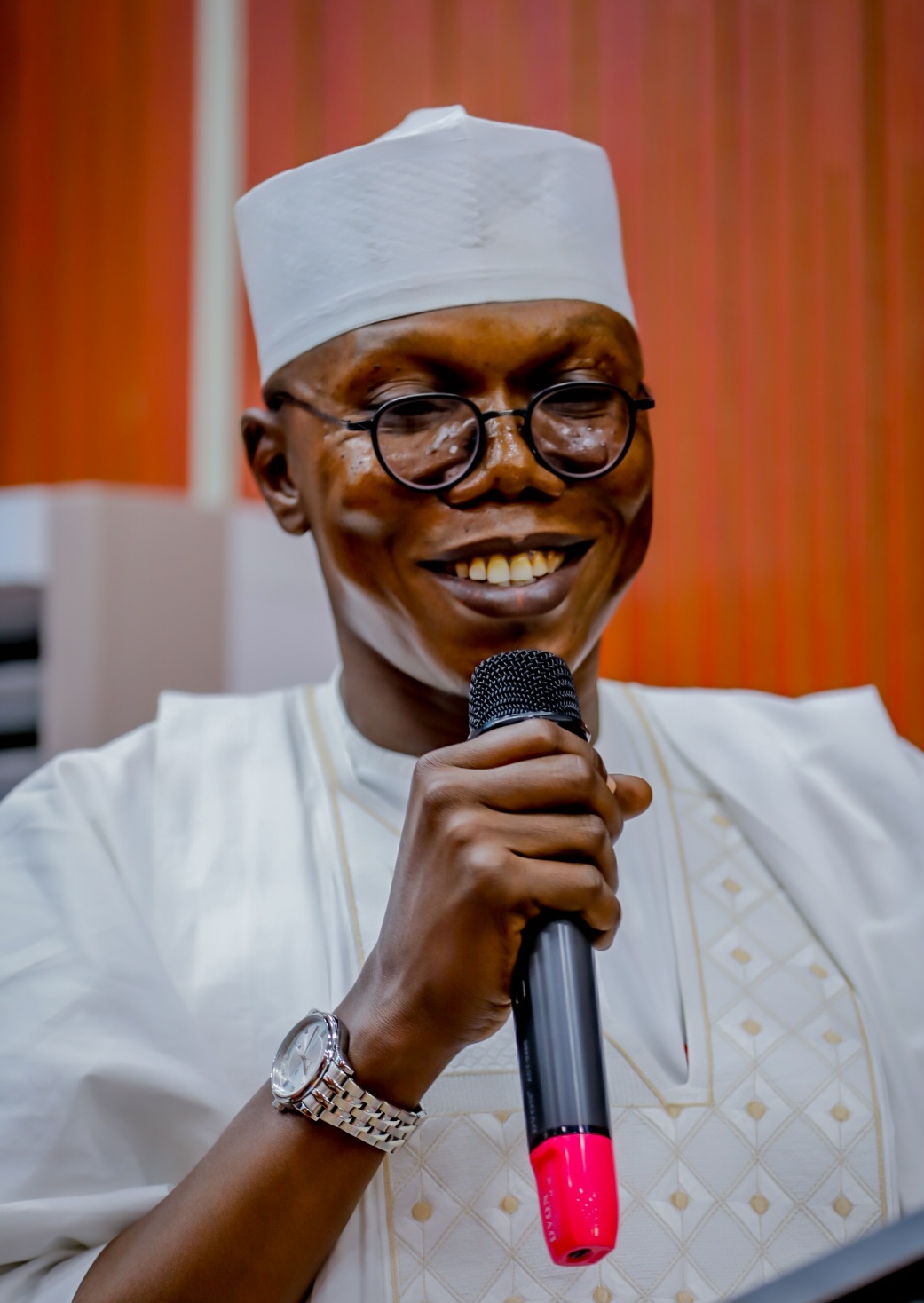
By Dr. MS Abubakar, PhD, CAC
One scholar I learnt a great deal from during my short course at Oxford University is Prof Sir Paul Collier.
In one lecture that has stayed with me, he made a simple but sobering point: democracies with a GDP per capita below $2,500 are statistically prone to crisis and conflict. For democracy to deliver prosperity and stability, a country must cross that $2,500 mark.
That lesson has never felt more urgent than now.
Here in Nigeria, our GDP per capita currently hovers between $1,069 and $1,200 according to 2024 IMF and World Bank data. We are less than half of Collier’s stability threshold. Meanwhile, countries with durable peace and development — the OECD states and Scandinavian countries — operate at $55,000 to $90,000 per capita.
If Collier is right, and the data suggests he is, then our security problem is, at its core, an economic and human development problem. And the solution cannot be guns alone.
What is GDP Per Capita and Why Should a Security Man Care?
GDP per capita is simply Gross Domestic Product divided by population. It tells us the average economic output per Nigerian in one year.
But it tells us something else too: the size of the national cake per citizen, and by extension, the resources available to the state to keep the social contract alive.
When GDP per capita is low, government revenue is low. When revenue is low, schools are underfunded, hospitals lack drugs, police lack equipment, and courts move slowly. When the state cannot provide, citizens look elsewhere — to ethnic militias, to bandits, to extremist preachers, to “self-help.”
Collier’s research in _Wars, Guns and Votes_ shows this clearly. New democracies that are poor are fragile democracies. Poverty creates grievances. Grievances create recruits. And recruits make conflict sustainable.
Above roughly $2,500 per capita, states begin to have enough fiscal space to pay workers, build roads, fund education, and respond to citizens. Democracy begins to “pay.” People have jobs to lose. Communities have businesses to protect. The cost of violence becomes too high.
Nigeria at $1,100 is therefore not just poor. We are in the danger zone for democratic stability.
Prof Paul Collier: The Oxford Scholar Who Linked Poverty to War
Prof Paul Collier is Professor of Economics at Oxford and former Director of the Development Research Group at the World Bank. He is not a theorist detached from Africa. He spent years studying why some of the poorest countries stay poor.
His book, “The Bottom Billion ” argued that about 50 countries are trapped in poverty. Two of those traps define Nigeria’s reality:
1. The Conflict Trap: Civil war destroys growth by about 2.3% per year. But poverty itself also causes war. So you get a vicious cycle.
2. The Natural Resource Trap: Countries rich in oil but poor in institutions often grow slower, because resources fuel corruption and conflict instead of development.
In “Wars, Guns and Votes,” Collier showed with hard data that democracy without development is dangerous. The $2,500 per capita figure was not plucked from the air. It is where states historically gained the capacity to tax, spend, and deliver enough to make democracy legitimate.
His core message for Africa has always been: you cannot shoot your way out of poverty. You must grow your way out of conflict.
That is what he taught us at Oxford. And that is what Nigeria must now apply.
Nigeria’s Reality: $1,100 and Rising Insecurity
Let us be blunt with the numbers.
In 2014, Nigeria’s GDP per capita was about $2,200. Today it is about $1,100. The drop is due to two things: rapid population growth, and the devaluation of the naira.
Compare that to our aspirations. OECD average is $55,000. Norway is above $80,000. Even Ghana and Kenya are ahead of us on some human development indices.
What has this meant on the ground?
Underfunded schools produce unemployable graduates. Underfunded hospitals push people into poverty. Underfunded police cannot cover our vast territory. And when the state is absent, non-state actors fill the gap.
This is why kinetic operations alone will not end banditry in the North West, insurgency in the North East, or cult and separatist violence in the South. You can degrade a group today. But if the economic conditions that produced it remain, another group emerges tomorrow.
The Non-Kinetic Answer: Grow GDP Per Capita Through Human Development
If the problem is economic, the deepest solution must also be economic. This is the non-kinetic strategy.
How do we move from $1,100 to $2,500 and beyond? Not by oil windfalls alone. By investing deliberately in Human Development Index, HDI — health, education, and decent living standards.
Here is the chain:
1. Invest in Health and Education → Productivity Rises
A healthy child attends school. An educated youth gets a skill. A skilled worker earns more. Higher earnings mean higher productivity. Higher productivity raises GDP per capita. When a young man in Zamfara or Benue has a job in agro-processing or tech, he is no longer available for recruitment.
2. Raise State Capacity → Security Improves
At $2,500 per capita, government revenue roughly doubles. That means better-paid police, functional courts, rural roads, and primary health centres. Citizens begin to see the state as a provider, not an extractor. Trust in democracy increases, and protests are less likely to turn violent.
3. Break the Conflict Trap → Stability Becomes Self-Sustaining
Collier warned that war causes poverty and poverty causes war. By growing the economy and spreading opportunity, we cut that loop. A man with a farm, a shop, or a salary has something to lose in a crisis. Communities police themselves.
4. Give Democracy Legitimacy → Politics Stabilizes
Below $2,500, citizens ask: “What has democracy done for me?” Above it, democracy delivers light, water, and jobs. That is when elections stop being existential and start being about policy.
This is not theory. This is what the Scandinavians did after World War II. This is what South Korea did in the 1960s. They did not start with perfect security. They started with human capital, and security followed.
What Must Nigeria Do Now?
Crossing the $2,500 threshold will not happen in one budget cycle. But we must start with deliberate policy choices:
1. Prioritize HDI in the budget: Shift spending from consumption to education, primary healthcare, and vocational training. A naira spent on a child’s nutrition today is a naira saved on security tomorrow.
2. Create jobs at scale: Agro-value chains, solid minerals, digital services, and manufacturing. Jobs are the fastest way to raise per capita income outside Abuja and Lagos.
3. Fix the business environment: Power, credit, and infrastructure. Small businesses are where most Nigerians will cross into the middle class.
4. Use oil revenue to diversify, not to subsidize: Save and invest in human capital, as Norway did. Don’t spend it to keep prices artificially low.
None of this replaces the military. We still need our Armed Forces and Police to hold the line. But we must recognize their limits. Soldiers can contain violence. Only prosperity can prevent it.
Conclusion
As Prof Collier taught us at Oxford, democracy is not self-sustaining. It rests on an economic foundation.
Nigeria is currently trying to run a 21st century democracy on a $1,100 economy. The result is predictable: instability, protests, and violence.
If we are serious about peace, then the path does not start only in the barracks. It starts in our classrooms, in our clinics, in our factories, and on our farms.
Raise Human Development. Raise GDP per capita. Cross the $2,500 threshold.
That is how we move from a democracy of survival to a democracy of prosperity. That is how we secure Nigeria, not just for one election cycle, but for a generation.
THE $2,500 THRESHOLD: WHY RAISING NIGERIA’S GDP PER CAPITA IS OUR BEST NON-KINETIC STRATEGY FOR PEACE
