

Facts, Not Fear: FG Responds To Atiku, Defends Tinubu’s Economic Reforms
Facts, Not Fear: FG Responds To Atiku, Defends Tinubu's Economic Reforms

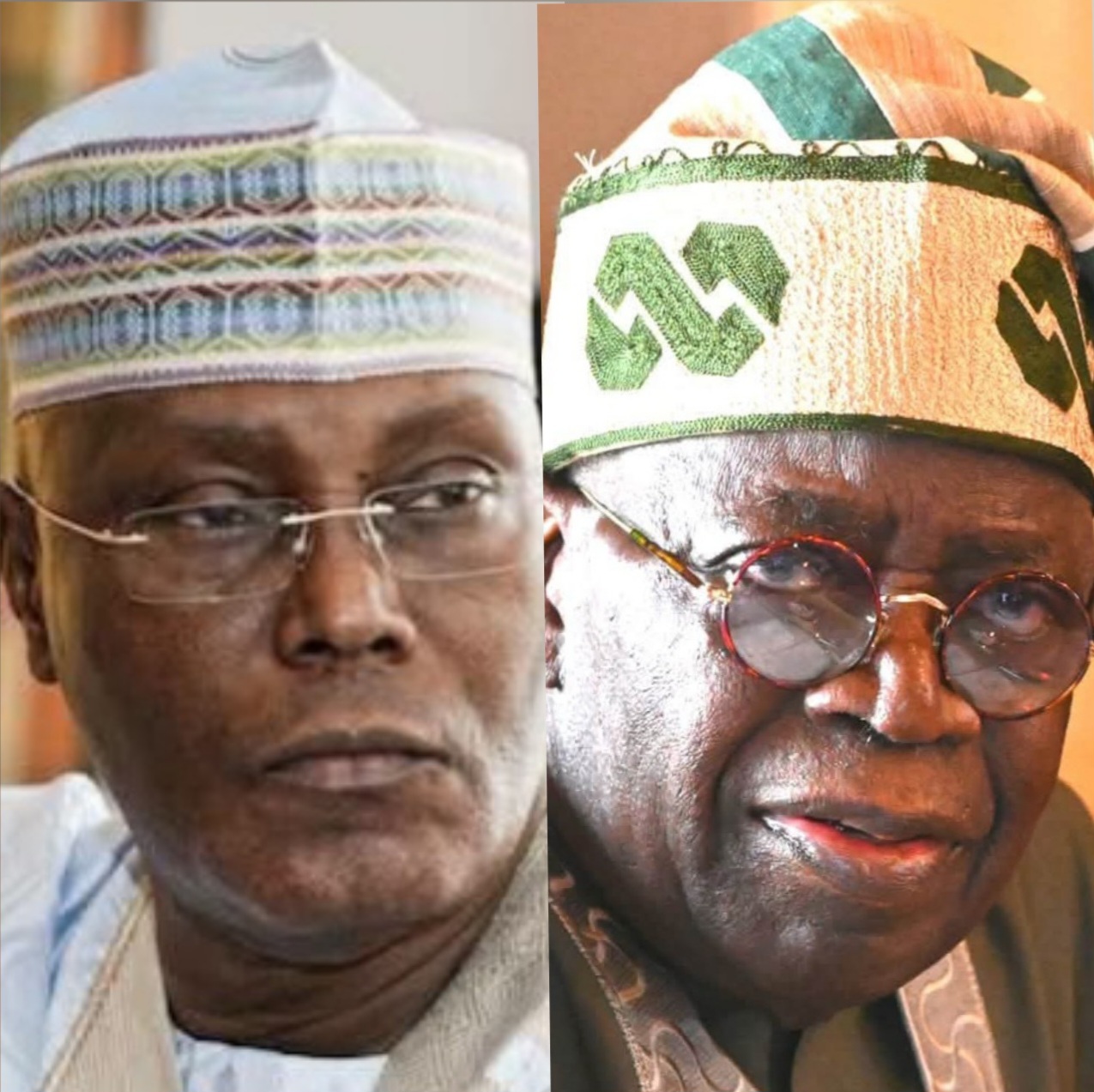
Facts, Not Fear: FG Responds To Atiku, Defends Tinubu’s Economic Reforms
The Federal Government has pushed back against former Vice President Atiku Abubakar’s criticism of President Bola Ahmed Tinubu’s economic policies, insisting that Nigeria’s economic story must be assessed using current data and broader context rather than figures from the early phase of the reforms.
In a detailed response titled “Facts, Not Fear: A Point-by-Point Response to Atiku Abubakar on Nigeria’s Reform Journey,” the Special Adviser to the President on Information and Strategy, Bayo Onanuga, said political disagreement is a necessary part of democracy but argued that public debate must be grounded in accurate and up-to-date information.
Government: Nigeria’s Economy Has Moved Beyond 2024
Onanuga argued that assessing Nigeria’s economic performance solely through the difficulties experienced in 2024 does not adequately reflect developments in 2025 and 2026.
According to figures cited from the International Monetary Fund, Nigeria’s nominal GDP was estimated at about $252 billion in 2024, rising to approximately $290 billion in 2025 and projected at about $377 billion in 2026. The IMF also projects real GDP growth of 4.1 per cent in 2026.
The presidential aide, however, acknowledged that the reforms have come with significant costs, particularly for households, stressing that the administration’s argument is that the measures were intended to correct long-standing structural weaknesses in the economy.
Debt: FG Says Capacity Matters
Responding to concerns over borrowing, Onanuga maintained that the size of Nigeria’s debt should be considered alongside the size of the economy, government revenue, debt-servicing obligations and the purposes for which borrowed funds are deployed.
He argued that the key question should be whether borrowing is being used to expand productive capacity and finance infrastructure and other long-term investments rather than simply funding recurrent expenditure.
The government said recent improvements in revenue mobilisation and fiscal management are helping to strengthen Nigeria’s capacity to manage its obligations, while acknowledging that revenue generation remains a major challenge.
Subsidy Removal and Increased Revenue
On fuel subsidy removal, Onanuga defended the administration’s decision to end the longstanding subsidy regime, arguing that the policy had consumed significant public resources without delivering sufficient benefits to Nigerians.
He said the reform has resulted in increased revenues available to the three tiers of government through the Federation Account, giving states and local governments greater fiscal space to finance infrastructure, salaries, healthcare, education and other public services.
The response also argued that the reform should be viewed within the broader objective of giving subnational governments greater financial responsibility for development.
Tax Reforms: Government Rejects Claims of Punitive Taxation
Onanuga rejected claims that the administration’s tax reforms were designed simply to impose heavier taxes on Nigerians.
He said the objective is to create a broader and more equitable tax system, with greater protection for low-income earners and small businesses while improving compliance among higher-income individuals and profitable enterprises.
The government maintains that the reforms are intended to improve revenue mobilisation without disproportionately burdening vulnerable Nigerians.
Healthcare Investment Highlighted
The presidential aide also pointed to ongoing investments in healthcare, including the rehabilitation and upgrading of primary healthcare facilities, improvements in tertiary hospitals, maternal and child healthcare interventions and access to essential medicines.
He cited government programmes supporting indigent women requiring critical maternal healthcare, as well as investments in cancer treatment facilities and the rehabilitation of thousands of primary healthcare centres.
According to the response, more than 3,000 primary healthcare centres had been revitalised, upgraded or refurbished by April 2026, alongside the retraining of tens of thousands of frontline healthcare workers.
Education and NELFUND
On education, Onanuga highlighted investments in basic education, technical and vocational training, digital learning and tertiary education financing.
Particular attention was drawn to the Nigerian Education Loan Fund (NELFUND), which the government says has enabled more than 1.64 million students to access financial support for tuition and upkeep.
The response also highlighted infrastructure investments and the government’s efforts to improve the stability of the university system.
Infrastructure Remains a Major Focus
The Federal Government said infrastructure development remains central to its economic strategy, citing ongoing projects in roads, bridges, rail transportation, energy, airports, housing, logistics and digital connectivity.
According to the administration, such investments are intended to reduce transportation and logistics costs, improve productivity and create an environment capable of attracting greater private-sector investment.
FG Challenges Atiku’s ₦7.98trn Oil Windfall Claim
One of the strongest responses was directed at Atiku’s claim regarding an alleged ₦7.98 trillion oil windfall.
Onanuga disputed the figure, arguing that higher international oil prices do not automatically translate into equivalent government revenue.
He pointed to Nigeria’s crude production levels, production costs, contractual arrangements, oil-company entitlements and previously committed crude volumes as factors that must be considered when calculating actual government revenue.
He therefore challenged Atiku and his economic advisers to provide the calculations behind the claimed ₦7.98 trillion windfall.
Inflation and Cost of Living Still Major Challenges
While defending the reforms, the government acknowledged that Nigerians continue to face economic difficulties, particularly concerning household purchasing power and the cost of living.
Official National Bureau of Statistics data showed headline inflation at 14.45 per cent in November 2025, following the rebasing of the Consumer Price Index.
However, more recent developments have demonstrated that external shocks can quickly affect Nigeria’s economy. Reports in July 2026 linked renewed inflationary and food-security pressures in parts of Northern Nigeria to the economic consequences of the Middle East conflict and higher fuel and food costs.
FG: Reforms Are Difficult but Necessary
Onanuga concluded that the Tinubu administration does not claim that Nigeria has solved all its economic problems.
Rather, he argued that the government is attempting to address structural weaknesses that successive administrations have struggled to resolve, including low revenue mobilisation, dependence on oil, inefficient subsidies and weaknesses in public financial management.
He said legitimate criticism should remain part of democratic discourse but maintained that economic performance should be judged through measurable outcomes rather than isolated figures from the most difficult period of the reforms.
“Nigeria’s economy is not yet where it aspires to be,” Onanuga acknowledged, while insisting that the country is moving toward a more sustainable economic structure.
The government’s position is that the reforms remain a work in progress and that the ultimate test will be whether they translate into stronger economic growth, improved public services, greater investment and better living standards for Nigerians.
Bayo Onanuga Special Adviser to the President (Information and Strategy) August 2, 2026.
Facts, Not Fear: FG Responds To Atiku, Defends Tinubu’s Economic Reforms
